Women Make Up Less Than 10% of Edo Assembly Candidates
By Wakirike Herald
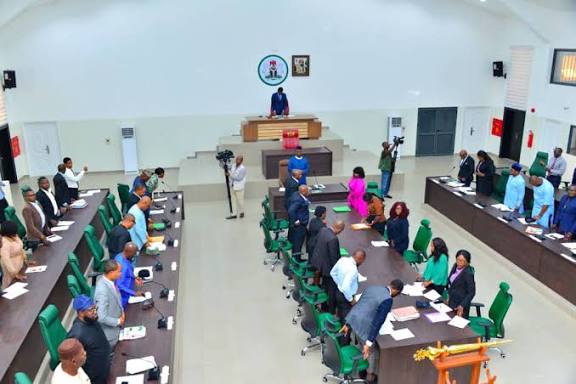
Women account for fewer than one in ten candidates seeking election into the Edo State House of Assembly, revealing a pronounced gender gap in the contest for the state’s 24 legislative seats.
An analysis of the final candidate list released by the Independent National Electoral Commission (INEC) on Saturday in Benin shows that 148 of the 164 candidates are men, while 16 are women.
The figures represent 90.24 per cent male participation and 9.76 per cent female participation, approximately nine men for every woman on the ballot.
Although candidacy figures cannot determine the eventual composition of the Assembly, the imbalance raises questions about women’s access to party nominations and opportunities to compete for public office.
Sixteen Women Across the Constituencies
Among the female candidates are Memo Akerele, 30, of the Social Democratic Party (SDP) in Akoko Edo I; Elizabeth Dauda, 51, of the Labour Party (LP) in Akoko Edo II; and Negbedion Shirley, 33, of the SDP in Esan North East I.
Also listed are Maria Edeko, 63, of the All Progressives Congress (APC) in Esan North East II; Mercy Bello, 37, of the African Action Congress (AAC) in Etsako West I; and Salamatu Izuagie, 63, of the African Democratic Congress (ADC), also in Etsako West I.
Egor Constituency has four female contenders: Bukky Ayetan, 30, of the Action Democratic Party (ADP); Bridget Obakpolor, 54, of the LP; Natasha Osawaru, 32, of the National Democratic Congress (NDC); and Imuetinyan Bright, 45, of the SDP.
The other women named in the list are Osarenkhoe Erhunmwunse and Tracy Ogiemwonyi in Ikpoba-Okha; Patience Edobor and Helen Omorogbe in Orhionmwon I; Uyigue Efosa in Ovia North East I; and Omosede Adenomo in Ovia South West.
Their participation gives voters female alternatives in these constituencies, but women remain a small minority across the overall field.
Younger Contenders Join the Race
The list also shows participation across different age groups, with candidates ranging from their twenties to their sixties.
Idriss Idriss, 26, of the SDP in Etsako West II, is identified as the youngest candidate.
Other younger contenders include Johnson Ipeshi, 28, of the SDP in Akoko Edo II; Odia Godwin, 29, of the Young Progressives Party (YPP) in Esan South East; and Patience Edobor, 29, of the ADP in Orhionmwon I.
At the older end of the field are Nosakhare Igbinedion, 66, of the Action Peoples Party (APP) in Orhionmwon II, and Helen Omorogbe, 65, also of the APP, in Orhionmwon I.
The age spread shows that younger and older candidates are seeking seats, although the list alone does not establish their relative chances of success.
Party Diversity, Uneven Representation
Political parties represented include the APC and Peoples Democratic Party (PDP), alongside the SDP, LP, ADC, ADP, NDC, APP, YPP and AAC.
The Allied Peoples Movement (APM), Action Alliance (AA) and National Rescue Movement (NRM) also feature.
Educational qualifications recorded for candidates range from school-leaving certificates and senior secondary qualifications to university degrees, postgraduate awards and professional credentials.
Listed qualifications include BSc, BEd, BEng, HND, LLB, MSc and MBA. Oyairo John Nosakhare, an SDP candidate in Orhionmwon, is recorded as holding a PhD.
However, educational credentials and the number of participating parties offer only part of the picture. Voters will also need to assess candidates’ legislative priorities, suitability for office and plans for representing their constituencies.
Disability Disclosure Requires Careful Interpretation
The Persons with Disabilities column records “None” against every candidate.
This means the published list identifies no candidate as a person with a disability. It does not, by itself, establish whether every candidate’s disability status was fully disclosed or accurately recorded.
Likewise, while the gender figures clearly show unequal participation, they do not explain how many women sought nominations, how parties selected their candidates or what obstacles aspirants encountered.
Those questions matter beyond Edo State. For communities seeking more representative government, inclusion must be examined at the point where candidates emerge, as well as when votes are counted.
Wakirike Herald
The Voice of Wakirike People Everywhere
Written by
wk-admin
Comments
- Be the first to comment.