Wike Defends SUVs for Upgraded FCT Traditional Rulers, Promises New Palaces in 2027
By Wakirike Herald
Minister of the Federal Capital Territory (FCT), Nyesom Wike, has defended the presentation of Sport Utility Vehicles (SUVs) to newly elevated traditional rulers in Abuja, dismissing allegations that the gesture amounts to political bribery.
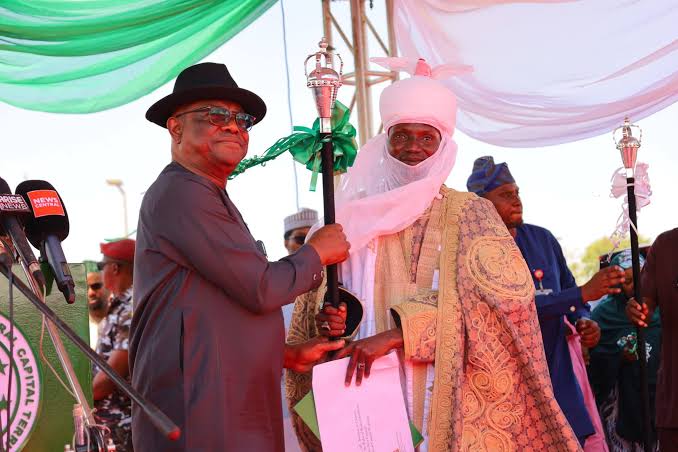
Wike spoke on Friday, November 20, 2026, during the presentation of certificates of office and official vehicles to traditional rulers elevated to first-class and second-class status across the FCT.
He described the exercise as an important development for traditional institutions, noting that it came 29 years after the establishment of the FCT Traditional Rulers Council in 1997.
According to the minister, only the Onah of Abaji had previously benefited from an elevation since the council's establishment, leaving other traditional stools without similar recognition for nearly three decades.
Wike rejects bribery allegations over official vehicles
The minister expressed dissatisfaction with criticisms suggesting that the distribution of SUVs was politically motivated or intended to influence traditional rulers.
He argued that government officials, including ministers, presidential aides and special assistants, routinely receive official vehicles without such benefits being characterised as bribes.
Wike said traditional rulers deserved similar institutional recognition, given their responsibilities in maintaining peace, resolving community disputes and supporting grassroots governance.
He questioned why traditional leaders should continue using commercial motorcycles and tricycles for official engagements when government had the opportunity to improve their mobility.
The minister maintained that President Bola Tinubu approved the elevation of the traditional stools and provision of vehicles under the Renewed Hope Agenda to promote inclusiveness and strengthen the relationship between traditional institutions and government.
FCTA promises construction of traditional rulers' palaces
Looking beyond the presentation of vehicles, Wike announced plans for the Federal Capital Territory Administration (FCTA) to make budgetary provisions in the 2027 fiscal year for the construction of befitting palaces for traditional rulers.
He said the programme would begin with first-class chiefs, following an appeal by Senator David Jimkuta, Chairman of the Senate Committee on FCT Area Councils and Ancillary Matters.
Wike also disclosed that third-class chiefdoms would be considered for elevation in subsequent phases to address outstanding vacancies within the traditional institution.
He urged the six area council chairmen to provide adequate logistical support, particularly fuel allocations, to ensure that the newly presented vehicles remained operational.
The minister commended the traditional rulers for their cooperation with the FCT Administration.
Government highlights grassroots development efforts
Wike recalled that following his appointment in 2023, the FCT Administration visited all six area councils on the President's mandate to identify and address pressing community needs.
He listed rural road improvements and the provision of fully furnished police stations with residential quarters among the interventions pursued by the administration.
The minister said traditional rulers remained important partners in maintaining stability, mobilising communities and supporting development initiatives at the grassroots.
The FCT Minister of State, Dr Mariya Mahmoud, also described the ceremony as an important step towards strengthening traditional institutions and promoting inclusive governance.
She said traditional rulers played significant roles in conflict resolution, community mobilisation and social cohesion.
Senate leaders urge inclusive traditional leadership
The Chairman of the Senate Committee on the FCT, Senator Ibrahim Bomai, congratulated the elevated traditional rulers and urged them to discharge their responsibilities with fairness.
He particularly encouraged the monarchs to create greater opportunities for women and young people to participate in community affairs.
Similarly, Senator Jimkuta commended Tinubu and Wike for what he described as the fulfilment of commitments to the territory, while appealing for the construction of a befitting palace and guest house for FCT traditional rulers.
Mrs Omolola Olanipekun, Director of Administration and Finance at the FCT Area Council Services Secretariat, said the elevation addressed a longstanding gap in the territory's traditional chieftaincy structure.
Newly elevated first-class traditional rulers
The six traditional rulers elevated to first-class status are:
-
Alhaji Awwal Mohammed Ijakoro – Sarkin Bwari, Bwari Chiefdom, Bwari Area Council.
-
Joseph Danfulani Narai – Sa'Karuyi of Karu, Karu Chiefdom, Abuja Municipal Area Council.
-
Alhaji Ismaila Mohammed – Sarkin Karshi, Karshi Chiefdom, Abuja Municipal Area Council.
-
Alhaji Haruna Jibrin – Gomo of Kuje, Kuje Chiefdom, Kuje Area Council.
-
Alhaji Mohammed Magaji – Aguma of Gwagwalada, Gwagwalada Chiefdom, Gwagwalada Area Council.
-
Luka Nizassan III – Etsu Kwali, Kwali Chiefdom, Kwali Area Council.
Traditional rulers elevated to second-class status
Those elevated to second-class status include:
-
Alhaji Yakubu Ndatsu – Etsu of Yaba, Yaba Chiefdom, Abaji Area Council.
-
Alhaji Idris Musa – Sarkin Jiwa, Jiwa Chiefdom, Abuja Municipal Area Council.
-
Alhaji Usman Nga Kupi – Sa'peyi of Garki, Garki Chiefdom, Abuja Municipal Area Council.
-
Mr Ibrahim Yaro – Esu Bwari, Bwari Chiefdom, Bwari Area Council.
-
Alhaji Hussaini Mam – Agabe of Gwargwada, Gwargwada Chiefdom, Kuje Area Council.
-
Alhaji Ibrahim Pada – Sa'Rubochi, Rubochi Chiefdom, Kuje Area Council.
-
Alhaji Ibrahim Usman – Etsu of Wako, Wako Chiefdom, Kwali Area Council.
-
Alhaji Abubakar Sani III – Sarkin Pai, Pai Chiefdom, Kwali Area Council.
-
Adamu Saba – Aguma of Gomani, Gomani Chiefdom, Kwali Area Council.
-
Alhaji Mohammed Umar – Agora of Zuba, Zuba Chiefdom, Gwagwalada Area Council.
Recognition must translate into stronger community institutions
The elevation of the traditional rulers and provision of official vehicles represent a significant administrative development for the FCT's traditional institutions.
However, the proposed construction of palaces and continued logistical support will require transparent budgetary allocations and effective implementation.
Beyond official recognition and ceremonial benefits, traditional institutions are expected to contribute meaningfully to peaceful coexistence, dispute resolution, cultural preservation and inclusive community development.
The proposed 2027 palace construction programme will therefore be an important test of the administration's ability to translate its assurances into tangible support for the traditional council.
Wakirike Herald
The Voice of Wakirike People Everywhere
Written by
wk-admin
Comments
- Be the first to comment.