WHO Urges Countries to Turn Antimicrobial Resistance Pledges into Action
By Wakirike Herald
The World Health Organisation (WHO) has called on countries to translate their commitments to tackling Antimicrobial Resistance (AMR) into adequately funded and measurable actions, warning that gaps in financing, surveillance and coordination are slowing the global response.
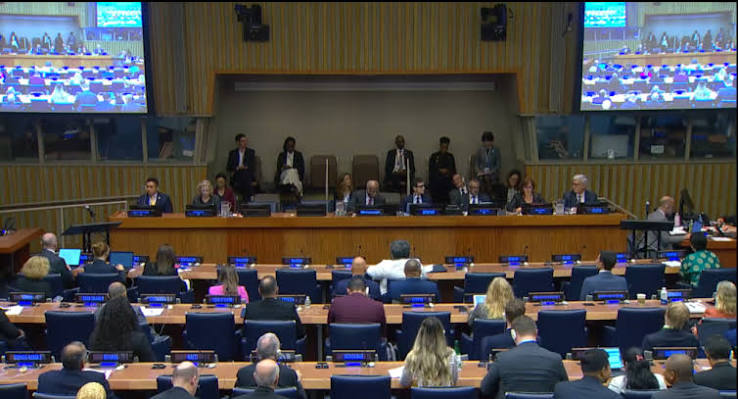
The call was made by Dr Jean-Pierre Nyemazi, Acting Director of WHO’s Department of Antimicrobial Resistance, during the sixth Global Media Forum webinar on AMR held on Monday, November 16, ahead of the 2026 World AMR Awareness Week.
Scheduled for November 18 to 24, this year's awareness campaign carries the theme, "One Health, One Action: Prevent AMR Now".
Nyemazi, who also directs the Quadripartite Joint Secretariat on AMR, described antimicrobial resistance as one of the most pressing global health and development challenges.
He disclosed that bacterial antimicrobial resistance was associated with more than 4.7 million deaths worldwide in 2021.
According to him, AMR threatens the ability of healthcare systems to treat infections, protect animal and plant health, ensure food safety and safeguard the environment.
Global Commitments Yet to Translate into Sufficient Action
Nyemazi recalled that world leaders, through the 2024 United Nations General Assembly Political Declaration on AMR, committed to reducing deaths associated with bacterial antimicrobial resistance by 10 per cent by 2030, using the 2019 baseline of 4.95 million deaths.
Other commitments include ensuring that at least 60 per cent of countries have funded national AMR action plans by 2030 and mobilising at least $100 million in catalytic funding.
However, he expressed concern that implementation remained far behind political commitments.
He identified inadequate financing, fragmented institutional coordination and weak surveillance systems as major obstacles.
To address these challenges, he said the updated Global Action Plan on AMR for 2026 to 2036 had been finalised to provide a stronger framework for implementing international commitments.
Dr Kefas Samson, WHO Senior Technical Officer and Lead of Multisectoral Coordination in the AMR Department, said the updated plan was designed to translate global ambitions into practical actions at country level.
He identified inadequate funding, limited diagnostic facilities, weak infection prevention in healthcare institutions and unequal access to quality-assured antimicrobials as persistent challenges.
Samson also highlighted two major 2030 targets: ensuring that 70 per cent of antibiotics used in human healthcare belong to the WHO Access Group, and that 80 per cent of countries have the capacity to test for priority bacterial and fungal pathogens.
FAO Warns Against Rising Antibiotic Use in Livestock
The Food and Agriculture Organisation of the United Nations (FAO) warned that antibiotic use in livestock could increase by nearly 30 per cent by 2040 if effective interventions were not introduced.
Dr Junxia Song, FAO Deputy Chief Veterinarian and Chief of the One Health and Disease Control Branch, said improved animal health services and better farm management could reduce antibiotic use by as much as 57 per cent.
She stressed that prevention must become central to efforts to combat antimicrobial resistance, with farmers playing a leading role.
Song highlighted FAO's 10-year initiative, Reduce the Need for Antimicrobials on Farms (RENOFARM), which promotes improved animal healthcare, better production practices, innovation, partnerships and alternatives to unnecessary antimicrobial use.
She disclosed that more than 400 partners, including over 80 FAO member countries, were participating in the initiative.
UNEP Highlights Environmental Contribution to AMR
The United Nations Environment Programme (UNEP) also called for greater attention to the environmental dimensions of antimicrobial resistance.
Aitziber Echeverria, AMR Coordinator at UNEP's Chemicals and Health Branch, warned that environmental pollution contributed to the emergence, transmission and spread of drug-resistant microorganisms.
She identified pharmaceutical manufacturing, agriculture and food production, healthcare facilities, municipal waste disposal and wastewater management as critical areas requiring stronger regulation and intervention.
Echeverria called for improved environmental surveillance, effective wastewater treatment, safe disposal of antimicrobial products and greater involvement of environmental authorities in national AMR coordination.
She maintained that environmental protection must form an integral part of the global response rather than being treated as a secondary consideration.
Animal Health Investment Seen as Critical
Dr Jane Lwoyero, Programme Officer at the World Organisation for Animal Health (WOAH), called for increased investment in veterinary services, vaccination, farm biosecurity and animal disease prevention.
She said animal diseases caused estimated annual economic losses of up to $300 billion globally, stressing that preventive measures could generate substantial financial returns.
According to her, every dollar invested in preventing animal diseases and strengthening animal health systems could generate a return of $28.
Lwoyero also urged countries to discontinue the use of antimicrobials for growth promotion in animals.
She cited findings indicating that countries permitting the practice used 45 per cent more antimicrobials than countries that prohibited it.
Media Urged to Strengthen Public Awareness
The Chairperson of the Global AMR Media Alliance (GAMA), Shobha Shukla, called on journalists to sustain public education and promote responsible medicine use.
She said the challenge was no longer simply getting governments to acknowledge antimicrobial resistance or develop national action plans, but ensuring that the necessary resources, laboratory capacity, surveillance systems and accountability mechanisms were available to implement them.
Shukla urged journalists to explain the human consequences of AMR and its implications for healthcare, agriculture, food production, animals and the environment.
Abuja to Host Global Ministerial Conference
Nigeria is expected to play a significant role in the next phase of international discussions on antimicrobial resistance as Abuja prepares to host the Fifth Global High-Level Ministerial Conference on AMR from December 6 to 8, 2026.
The conference is expected to provide an opportunity for governments and international partners to review progress, address implementation gaps and renew political commitments towards combating drug-resistant infections.
For Nigeria, the discussions carry important implications for healthcare delivery, pharmaceutical regulation, veterinary services, food production and environmental management.
The message emerging from the global health forum is clear: commitments alone cannot reverse antimicrobial resistance. Progress will depend on sustained investment, responsible use of medicines, stronger institutions and coordinated action across human health, animal health, agriculture and the environment.
As World AMR Awareness Week approaches, the challenge for governments is to demonstrate that promises are translating into practical measures capable of protecting lives and preserving the effectiveness of medicines for future generations.
Wakirike Herald
The Voice of Wakirike People Everywhere
Written by
wk-admin
Comments
- Be the first to comment.