VC Calls for Overhaul of Technical Education to Accelerate Nigeria’s Industrialisation
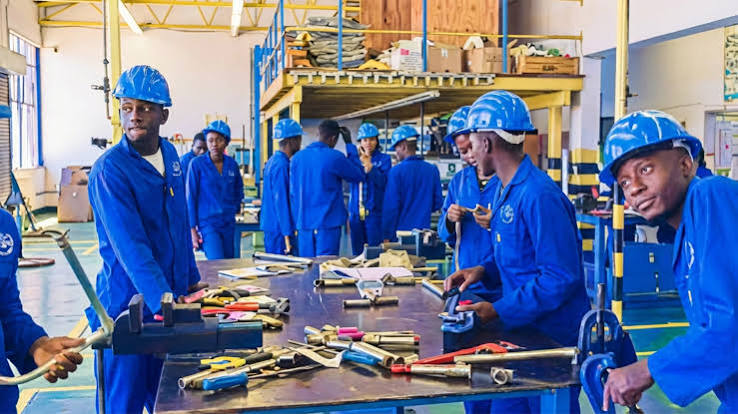
By Wakirike Herald
The Vice-Chancellor of Prince Abubakar Audu University, Anyigba, Kogi State, Prof. Salisu Usman, has called for a comprehensive repositioning of technical and vocational education to accelerate industrialisation, generate employment and strengthen Nigeria’s productive capacity.
Usman made the call on Friday, November 27, 2026, while delivering the 30th to 32nd Combined Convocation Lecture at Auchi Polytechnic, Auchi, Edo State.
The lecture, themed “Bridging the Gap Between Technical and Vocational Education for Industrial Needs in Nigeria”, examined the disconnect between the skills produced by educational institutions and the practical requirements of industries.
The vice-chancellor observed that despite Nigeria's abundant human and natural resources, the country continued to struggle with a weak manufacturing base, inadequate industrial capacity and a mismatch between academic qualifications and workplace demands.
He argued that expanding access to tertiary education without corresponding growth in productive industries would limit the country's ability to translate educational achievements into economic development.
“Nigeria must reposition technical and vocational education as a strategic instrument for industrialisation, employment generation, entrepreneurship and national development,” he said.
Education Must Respond to Industrial Needs
Usman noted that Nigeria's expanding tertiary education system had not produced a corresponding improvement in its productive base.
He expressed concern that manufacturing's contribution to the economy had weakened over the long term, stressing the need for educational institutions to produce graduates with relevant technical competencies.
According to him, technical and vocational education should move beyond the acquisition of certificates to emphasise practical knowledge, problem-solving abilities, innovation and workplace readiness.
He identified the disconnect between educational institutions and industries as a major obstacle to developing a skilled workforce capable of supporting industrial expansion.
Auchi Polytechnic's Role in National Development
The vice-chancellor described Auchi Polytechnic as an important institution in Nigeria's technical education landscape.
He said the institution could strengthen its contribution to national development by making practical competence, industry engagement and graduate employment outcomes central to its institutional priorities.
He encouraged polytechnics and other technical institutions to strengthen relationships with industries to ensure that training programmes reflected changing technological and production requirements.
Such collaboration, he suggested, would help graduates acquire skills that could be applied directly to manufacturing, engineering, construction and other productive sectors.
Industrial Growth and Skills Development Must Go Together
Usman also urged the Federal Government to expand Nigeria's educational and productive capacities simultaneously.
He warned that improving technical education without creating sufficient industrial opportunities could leave skilled graduates without adequate platforms to apply their knowledge.
Similarly, he noted that factories seeking to resume or expand operations could struggle to find the required local expertise if the country failed to produce enough technically competent graduates.
“Without an adequate supply of technical graduates, factories that resume or expand operations may remain dependent on imported expertise,” he said.
His position highlights the need for a coordinated national approach that connects education policy, industrial development, investment and employment generation.
A Critical Test for Nigeria's Development Strategy
Nigeria's ambition to strengthen local manufacturing and reduce dependence on imported goods requires more than the establishment of factories and industrial facilities. It also requires a workforce equipped to operate machinery, maintain production systems, develop technology and improve industrial efficiency.
Technical and vocational institutions therefore have an important responsibility in preparing young Nigerians for the demands of a changing economy.
However, government investment in vocational education must be matched by adequate workshops, modern equipment, qualified instructors, industry partnerships and opportunities for graduates to gain practical experience.
Ultimately, the success of any technical education reform will be measured not simply by the number of graduates produced, but by their ability to contribute meaningfully to production, innovation, entrepreneurship and national economic growth.
Wakirike Herald
The Voice of Wakirike People Everywhere
Written by
wk-admin
Comments
- Be the first to comment.