UCH Identifies Staff Shortage, Weak Primary Healthcare as Causes of Long Patient Waiting Times
By Wakirike Herald
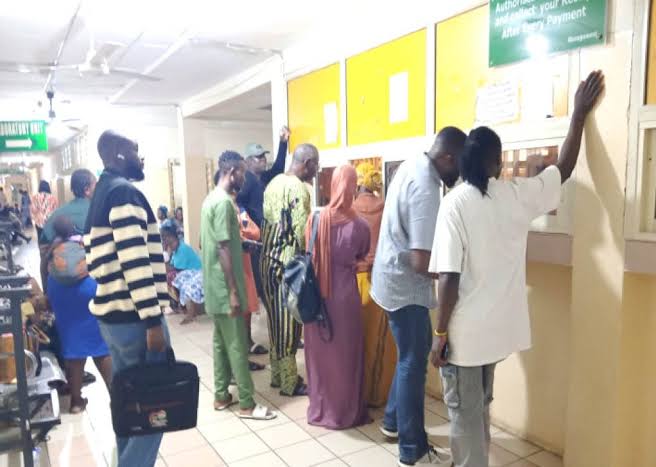
The University College Hospital (UCH), Ibadan, has attributed prolonged patient waiting times at the institution to staff shortages, increasing patient numbers and the inability of many primary and secondary healthcare facilities to adequately handle routine medical conditions.
The Chief Medical Director, Prof. Jesse Otegbayo, disclosed this on Thursday in Ibadan during activities marking the hospital’s 69th anniversary.
He said UCH was already experiencing serious manpower shortages before the wave of health worker migration popularly known as the Japa syndrome further worsened the situation.
According to him, the hospital is increasingly receiving patients whose conditions could ordinarily be managed at primary or secondary healthcare facilities.
Weak primary healthcare increases pressure on UCH
Otegbayo said many Nigerians preferred tertiary hospitals because they lacked confidence in the quality of services available at lower levels of the healthcare system.
Consequently, patients with relatively minor illnesses, including malaria, often report to UCH, adding to the workload of an institution established primarily to manage complex medical conditions.
He said strengthening primary healthcare centres would help reduce unnecessary referrals and allow tertiary hospitals to concentrate on cases requiring specialised attention.
“Nobody, whether young or old, should come to the hospital and wait for so long,” he said.
The CMD expressed optimism that addressing the manpower shortage would significantly reduce waiting times.
He added that effective primary and secondary healthcare services would improve the organisation of patient care and reduce pressure on specialist hospitals.
Staff migration compounds manpower challenges
Otegbayo said the hospital’s staffing challenges predated the increased migration of Nigerian health professionals but had become more severe because of the departure of trained personnel.
The development has implications for service delivery, particularly in a large teaching hospital that combines patient care with medical education and professional training.
He explained that UCH operates as a multi-speciality institution where patients may need assessments from different professionals before reaching the appropriate doctor.
He said some patients became discouraged because they expected the faster service associated with private hospitals.
However, he stressed that UCH had responsibilities beyond providing treatment, including training the next generation of healthcare professionals.
Diabetes and hypertension cases increasing
The CMD also expressed concern over the rising number of patients presenting with chronic conditions, particularly diabetes and hypertension.
He linked the increase partly to changing lifestyles and the adoption of dietary and behavioural patterns associated with Western societies.
The development highlights the importance of preventive healthcare, early diagnosis and public awareness, particularly as non-communicable diseases place growing demands on Nigeria’s health facilities.
UCH reports improvements in electricity supply
On the hospital’s electricity challenges, Otegbayo said several infrastructure interventions had improved power supply.
He disclosed that UCH had procured a transformer and replaced its analogue 33-kilovolt substation with a digital facility. The hospital had also commissioned a new 11-kilovolt substation.
He said the institution had lifted restrictions on electricity consumption and restored round-the-clock power supply.
According to him, interruptions now experienced at the hospital are largely associated with external supply cuts from the Ibadan Electricity Distribution Company (IBEDC).
Otegbayo further said the theft of underground electricity cables had reduced following the installation of CCTV cameras, which now cover approximately 80 per cent of the affected areas.
He added that the hospital was gradually replacing ageing cables, including some that had been in use since 1957, while installing armoured cables overhead rather than burying them.
Water supply remains a concern
Despite improvements in electricity, the hospital continues to face challenges with its water supply.
Otegbayo said UCH had installed several industrial boreholes at strategic locations, although geologists had advised against excessive drilling because of possible effects on building foundations.
He identified the Dandaroo River as the hospital’s only source of fresh water and said construction activities associated with a nearby estate had affected the natural flow into the hospital’s water system.
Previously, water flowed naturally into the hospital’s reservoir. However, UCH now uses a pumping system to transfer water from the river.
The CMD said the arrangement required regular payments and was financially unsustainable.
He expressed hope that the matter would be addressed to restore a more reliable water supply.
He explained that once water reaches the reservoir, it passes through the hospital’s treatment facility, with the institution regularly purchasing the necessary treatment chemicals.
Beyond infrastructure, healthcare delivery requires system-wide reform
The challenges identified by UCH point to wider weaknesses in Nigeria’s healthcare system.
While investment in tertiary hospitals remains important, the concentration of patients at specialist institutions also exposes gaps in primary and secondary healthcare delivery.
Strengthening community-level facilities, improving staffing and retaining trained professionals could help patients receive appropriate treatment closer to their homes while reducing pressure on teaching hospitals.
For UCH, the immediate priorities include addressing manpower shortages, sustaining electricity improvements and securing a reliable water supply.
The hospital’s 69th anniversary therefore provides an opportunity to examine not only its achievements but also the operational challenges affecting access to timely and effective healthcare.
Wakirike Herald
The Voice of Wakirike People Everywhere
Written by
wk-admin
Comments
- Be the first to comment.