Trump, Xi and Putin’s Shenzhen Meeting: A New Opening for Global Stability or Great-Power Rivalry?
By Wakirike Herald
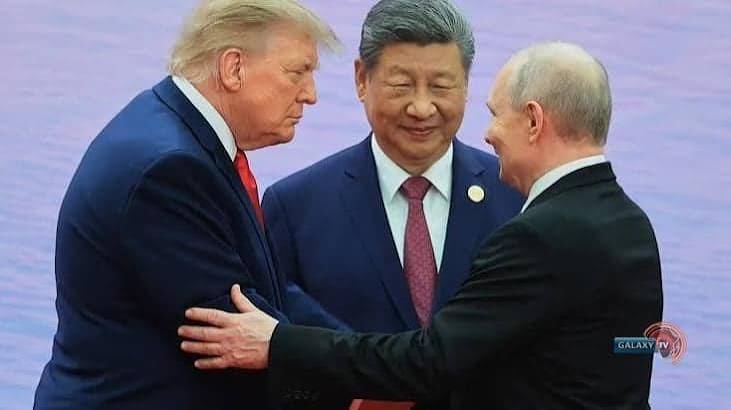
The reported trilateral meeting involving United States President Donald Trump, Chinese President Xi Jinping and Russian President Vladimir Putin in Shenzhen, China, has generated considerable debate over its potential implications for global peace, international security and the changing balance of geopolitical power.
The meeting, reportedly held on the sidelines of the Asia-Pacific Economic Cooperation (APEC) Summit on Thursday, has attracted attention because of the strategic influence wielded by the three countries across international politics, security and the global economy.
Analysts have expressed mixed expectations about the gathering, with some viewing it as an opportunity to reduce tensions among major powers, while others caution that its significance may be more symbolic than practical.
Among the issues identified for possible discussion are the Russia-Ukraine war, maritime security in the Strait of Hormuz, the continuing Gaza crisis, global supply chain resilience and nuclear arms control.
However, the extent to which the meeting could produce concrete agreements or influence these international challenges remains uncertain.
Three global powers and the search for strategic stability
The United States, China and Russia occupy influential positions in the international system. They are founding members of the United Nations and permanent members of the UN Security Council, giving them significant responsibilities in matters of international peace and security.
Chinese Foreign Ministry spokesperson Mao Ning described the reported gathering as groundbreaking, expressing the view that cooperation among the three countries could contribute to global peace and stability.
She said the leaders were expected to exchange views on safeguarding world peace and promoting strategic stability in relations among major powers.
Mao also stressed that the three countries had important responsibilities in addressing global challenges, particularly under prevailing international circumstances.
The argument for cooperation reflects the recognition that disagreements among major powers can have consequences far beyond their immediate diplomatic relationships, affecting international trade, energy security, military stability and developing economies.
Economic interests behind geopolitical tensions
Beyond security considerations, the economic relationship among the three countries provides another important dimension to the discussions.
According to figures cited in the original report, their combined trade in goods stood at approximately $807 billion in 2025.
China-US trade accounted for more than 70 per cent of the reported volume, while China-Russia trade represented approximately 28 per cent. Trade between the United States and Russia accounted for less than one per cent.
These figures illustrate the considerable economic interdependence between the major powers, particularly between Washington and Beijing, despite their strategic and political differences.
For the international community, maintaining predictable economic relationships among the three countries could help reduce disruptions to global markets and supply chains.
Nevertheless, economic cooperation does not automatically resolve disagreements over territorial disputes, military influence, trade restrictions or competing geopolitical interests.
Symbolism or a turning point in great-power diplomacy?
The reported meeting has attracted differing interpretations from international observers.
Russian presidential aide Yury Ushakov reportedly considered the engagement necessary in addressing concerns about conflicting interests among the three powers and identifying possible areas of common understanding.
However, Xiaoyu Pu, an associate professor of political science at the University of Nevada, offered a more cautious assessment, describing the meeting as potentially more symbolic than significant from the perspective of great-power diplomacy.
The distinction is important.
A meeting involving influential world leaders can create diplomatic opportunities, establish communication channels and reduce the risk of misunderstandings. Yet its actual value depends on whether discussions lead to sustained engagement, practical agreements and measurable progress.
The challenges confronting the international community cannot be resolved through diplomatic appearances alone.
What Africa can learn from the gathering
For Africa, the reported Shenzhen engagement offers an opportunity to reconsider the continent's approach to international diplomacy and economic partnerships.
Dr Collins Nweke, author of Economic Diplomacy of the Diaspora and a global affairs analyst, argued that African governments should learn from China's ability to use its position as APEC host to facilitate engagement with major international powers.
He said African countries could adopt a similar approach by using regional and international gatherings to bring political leaders, investors and development finance institutions together around shared priorities.
According to Nweke, African governments should engage major powers with clearly defined interests and proposals rather than approaching international partnerships without a coordinated development agenda.
He emphasised that Nigeria and other African countries could strengthen their influence by negotiating collectively where their interests coincide.
Such an approach could improve Africa's ability to negotiate on infrastructure financing, technology transfer, energy development, trade, maritime security and investment.
For Nigeria, stronger economic diplomacy would also require identifying national priorities, protecting strategic interests and building partnerships capable of delivering measurable benefits to citizens.
Global security and the challenge of sustaining dialogue
Another important dimension of the reported gathering is the possibility of improving communication among the three countries on sensitive security issues.
Analysts believe sustained engagement could create opportunities for discussions on nuclear arms control, tensions in the Gulf and other international security concerns.
They also expressed hope that improved communication could reduce the risk of escalation during periods of heightened geopolitical tension.
However, any meaningful progress on regional conflicts must involve the countries and communities directly affected. Decisions concerning the future of Ukraine, Gaza and the wider Middle East cannot be separated from the interests and legitimate concerns of the people involved.
Africa must move beyond diplomatic spectatorship
The wider significance of the reported Shenzhen meeting lies in the question of how countries outside the traditional centres of global power can protect their interests in an increasingly competitive international environment.
For Africa, the challenge is not simply to maintain relationships with Washington, Beijing and Moscow, but to develop a coherent diplomatic and economic strategy that allows the continent to negotiate from a position of stronger collective influence.
Nigeria, as one of Africa's major economies and a significant diplomatic player, has an opportunity to contribute to this process through regional cooperation, strategic partnerships and purposeful international engagement.
Ultimately, whether the reported gathering becomes a meaningful diplomatic breakthrough or remains largely symbolic will depend on the willingness of the three powers to translate dialogue into practical cooperation.
For the rest of the world, particularly developing nations, the enduring lesson is that global stability requires more than competition for influence. It demands responsible leadership, constructive engagement and recognition that international peace and economic progress are shared interests.
Wakirike Herald
The Voice of Wakirike People Everywhere
Written by
wk-admin
Comments
- Be the first to comment.