Sultan of Sokoto Urges Nigerians to Embrace Sokoto Caliphate’s Ideals for Good Governance
By Wakirike Herald
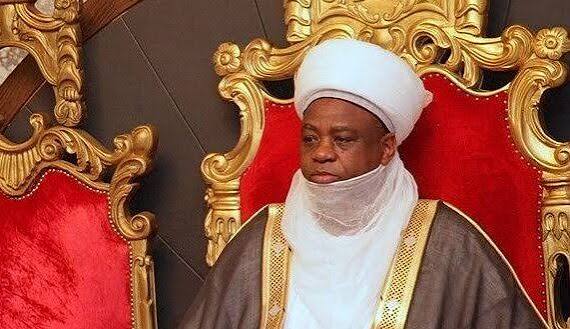
The Sultan of Sokoto, Alhaji Sa'ad Abubakar III, has urged Nigerians to draw inspiration from the founding principles, educational philosophy and intellectual heritage of the Sokoto Caliphate to promote good governance, justice, national unity and sustainable development.
Abubakar, who is also the President-General of the Nigeria Supreme Council for Islamic Affairs (NSCIA), made the call on Monday at the closing ceremony of activities marking his 20th anniversary on the throne and the 13th Sheikh Usmanu Bin Fodiyo Week in Sokoto.
The event, organised by the Sultanate Council in collaboration with the National Council of Muslim Youth Organisations (NACOMYO), was held under the theme: “The Sokoto Caliphate: An Egalitarian Model for Peace, Justice, Unity and Sustainable Development.”
The Sultan said the founding ideals of the Caliphate were rooted in quality human relationships, respect for human dignity and devotion to Allah, principles he described as essential for building a peaceful and purposeful society.
He maintained that the values promoted by the founding scholars and leaders of the Caliphate remained relevant despite the political, economic and social changes that had taken place over the years.
Sultan Criticises Colonial Legacy
Abubakar argued that British colonial rule disrupted the institutional foundations of the Sokoto Caliphate and introduced systems that, in his view, continued to affect Nigeria's development.
He said the experience of colonial administration had left structures and attitudes that required deliberate efforts to overcome.
“The nearly 60 years of this exploitative rule have had the misfortune of installing systems and structures that not only continue to benefit the colonial enterprise but also undermine our recovery from colonial morality and mentality,” he said.
The Sultan described the Caliphate as evidence of the capacity of African scholars to establish a society, government and economy guided by the rule of law.
He said its historical experience could provide useful lessons for African liberation, institutional development and responsible governance.
Calls for Religious Brotherhood and National Unity
The monarch urged Muslim scholars to promote the spirit of brotherhood taught by Prophet Muhammad and highlight the historical contributions of the Sokoto Caliphate to the integration of diverse ethnic communities.
He described the principle of human equality as an important foundation for national integration, recalling the Islamic teaching that all human beings descended from Adam and were honoured by Allah.
“The message of this brotherhood provides a strong pillar of modern Nigeria’s national integration,” he said.
Abubakar also reaffirmed his commitment to peaceful coexistence, describing himself as a soldier of Islam and a soldier of peace.
“Before I became Sultan here, I was a soldier. I am still a soldier, a soldier of Islam and a soldier of peace, because what I spend most of my time doing is bringing peace to communities,” he said.
He stressed that Islam did not encourage coercion or forced conversion, urging Muslims to demonstrate the values of their faith through good conduct and peaceful relationships with others.
The Sultan also expressed appreciation to his traditional lieutenants, supporters and volunteers for their encouragement and contributions throughout his 20-year reign.
Zamfara Governor Commends Sultan's Leadership
In his remarks, Governor Dauda Lawal of Zamfara congratulated the Sultan on his 20th anniversary on the throne, describing his reign as a period associated with humility, unity, stability, religious tolerance and national cohesion.
Lawal said the Sultan's counsel and interventions remained valuable in addressing Nigeria's socioeconomic and security challenges.
He called on Islamic scholars, traditional rulers, community leaders and youth organisations to promote peaceful coexistence, discourage extremism and restore values of honesty, compassion and respect for human life.
The governor also emphasised that lasting peace required more than security operations, identifying quality education, economic opportunities, moral orientation and community participation as essential components of sustainable stability.
Sokoto Government Highlights Caliphate's Intellectual Heritage
Similarly, Governor Ahmed Aliyu of Sokoto State, represented by his deputy, Alhaji Idris Gobir, commended the Sultan's contributions to religious tolerance, peaceful coexistence and national development.
Aliyu said the anniversary provided an opportunity to reflect on the intellectual and moral heritage of the Sokoto Caliphate.
He particularly highlighted the teachings of Sheikh Usmanu Bin Fodio, Abdullahi Fodio and Sheikh Muhammad Bello on scholarship, moral reform, social responsibility, justice, accountability and good governance.
He urged Nigerians to draw relevant lessons from these teachings in addressing contemporary national challenges.
Lecturer Calls for Recognition and Reparations for Enslaved Africans
Earlier, the guest lecturer, Dr Dawud Abdallah, Director of the Middle East Monitor (MEMO), London, called for greater recognition of the religious, intellectual and historical contributions of African Muslims who were enslaved in the Americas.
Delivering a lecture titled “The Religious and Intellectual Traditions of the Sokoto Caliphate: Changing the Condition of Africans in the Diaspora,” Abdallah argued that conventional historical accounts of slavery often overlooked the Islamic heritage and intellectual contributions of enslaved Africans.
He advocated reparations that would extend beyond financial compensation to include investments in African healthcare and educational institutions.
Other proposals included scholarships, technology transfer, psychological rehabilitation for descendants of enslaved Africans, debt cancellation and official apologies from Western countries for the injustices of slavery.
Preserving History While Promoting Contemporary Development
The Sultan's anniversary celebrations provided an opportunity to examine the historical contributions of the Sokoto Caliphate and consider the relevance of its intellectual and moral traditions to contemporary Nigerian society.
The discussions also highlighted the relationship between religious leadership, traditional institutions, education and national development.
For Nigeria, the challenge remains translating principles such as justice, accountability, human dignity, scholarship and peaceful coexistence into practical values that guide public institutions and everyday relationships.
Wakirike Herald
The Voice of Wakirike People Everywhere
Written by
wk-admin
Comments
- Be the first to comment.