Stakeholders Demand Stronger Community Protection and Access to Justice to End GBV
By Wakirike Herald
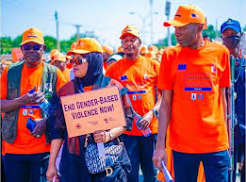
Stakeholders working to combat gender-based violence (GBV) in Nigeria have called for stronger community protection systems, improved access to justice and greater accountability for perpetrators, warning that fear, stigma and silence continue to prevent many survivors from seeking help.
The call was made in Abuja on Wednesday, November 25, 2026, during the unveiling of activities for the 2026 16 Days of Activism Against Gender-Based Violence.
This year's campaign is being observed under the theme: “Unite to End Violence Against Women and Girls: Ensure Justice, Protect Survivors, End Impunity.”
The participating organisations include International Alert Nigeria, Bernard-Doro Vision Foundation, The Mindset Reforms and Empowerment Initiative (TMREI) and Hadiza Yar'Adua Empowerment Foundation.
They emphasised that ending GBV requires more than public awareness campaigns. It demands functioning reporting channels, accessible support services, effective implementation of existing laws and community structures capable of protecting survivors.
Stakeholders call for lasting community interventions
The Country Director of International Alert Nigeria, Dr Kingsley Udo, said harmful gender stereotypes and growing intolerance, including expressions of hostility on social media, were reinforcing attitudes that threaten personal safety and peaceful coexistence.
He argued that GBV should also be addressed from a peacebuilding perspective because violence against women, girls, boys and men affects the wider stability and wellbeing of society.
According to Udo, the participating organisations intend to use the 16-day campaign to showcase interventions across different communities and develop recommendations for government and development partners.
He said the initiative would connect activities in Plateau, Kaduna, the Federal Capital Territory and Katsina, while creating opportunities for cooperation beyond the annual campaign.
Udo stressed that the campaign should deliver measurable and lasting improvements rather than remain an annual awareness exercise.
“We don't want it to be just 16 days. We want a programme that will last for 16 years, with more outcomes every year,” he said.
Women and girls must shape protection policies
The Founder of Hadiza Yar'Adua Empowerment Foundation, Hajiya Hadiza Yar'Adua, called for greater participation of women and girls in decisions concerning their safety, protection and empowerment.
She said interventions should reflect the actual experiences and needs of survivors rather than assumptions made on their behalf.
Yar'Adua also advocated the development of male advocates, particularly among young people, to challenge harmful practices and promote non-violence within communities.
She described GBV as a human rights, development, public health and societal concern, noting that boys and men could also experience abuse, bullying, exploitation and sexual violence.
To illustrate the importance of protecting children, she recounted the case of a nine-year-old boy who was allegedly sexually abused by a security guard who lured him with money while he was going to school.
She said the child reportedly suffered serious physical complications before the abuse was discovered.
The account, she explained, demonstrated why parents, schools and communities must pay closer attention to children's safety and teach them about personal boundaries, consent and safe spaces.
Survivors need protection, justice and economic independence
Yar'Adua called for stronger referral systems, accessible helplines and survivor-centred services to ensure that victims receive timely assistance.
She also emphasised the need to combine protection with empowerment, arguing that survivors require opportunities to rebuild their lives and achieve economic independence.
“Protection without empowerment can leave women dependent on the very structures that limit them, while empowerment without safety can expose them to further vulnerability,” she said.
Her position highlights the importance of addressing both the immediate safety needs of survivors and the social and economic conditions that may make it difficult for them to escape abusive situations.
Harmful attitudes must be confronted
The Founder and Executive Director of TMREI, Ms Nina Kanu, said efforts to end GBV must address the attitudes and beliefs that allow violence to persist within families and communities.
She identified the normalisation of controlling behaviour, victim-blaming and pressure on survivors to remain silent as factors that undermine accountability.
Kanu argued that prevention should involve individuals, families, institutions and entire communities rather than placing the burden of avoiding violence solely on potential victims.
She also urged stakeholders to assess the success of the campaign through practical improvements, including better reporting systems, access to support and more responsive institutions.
Foundation highlights challenges in securing justice
The Chairperson of Bernard-Doro Vision Foundation, Mrs Naomi Bernard-Doro, represented by board member Mr Davidson Madison, described violence against women and girls as a threat to human dignity, family stability and development.
She called for practical measures that would enable survivors to report abuse without fear of stigma and receive appropriate protection.
Bernard-Doro also recounted the case of a 13-year-old girl who was allegedly sexually abused by a 50-year-old man.
According to her, the victim's family reportedly resisted efforts to pursue justice because of concerns about exposing the child, despite the involvement of the police and human rights organisations.
She said the experience demonstrated how fear of public judgement and social stigma could obstruct justice and leave survivors without adequate support.
She urged parents and community members not to conceal abuse but to support victims through appropriate reporting and justice processes.
The foundation also called on traditional rulers, religious leaders, schools, government institutions and community organisations to work together to challenge harmful practices and ensure accountability.
Ending GBV requires more than annual campaigns
The stakeholders' message points to a fundamental challenge in Nigeria's response to gender-based violence: laws and public declarations cannot protect survivors effectively without accessible institutions and communities willing to report abuse and support those affected.
For many victims, the journey towards justice can be complicated by stigma, family pressure, financial dependence, fear of retaliation and difficulties navigating formal reporting procedures.
Strengthening community protection systems must therefore involve trained responders, confidential reporting channels, reliable referral networks, access to healthcare and psychosocial support, and timely investigation of allegations.
The involvement of men and boys is equally important in challenging harmful attitudes and promoting respectful relationships.
As the 2026 16 Days of Activism unfolds, the measure of progress will ultimately be whether survivors can obtain protection, support and justice without intimidation or discrimination.
The campaign's call to end impunity must translate into practical action that protects vulnerable people and holds perpetrators accountable.
SEO Title: Stakeholders Demand Stronger Community Protection to End GBV
URL Slug: stakeholders-demand-stronger-community-protection-end-gbv
Meta Description: Nigerian stakeholders call for stronger community protection, survivor support and access to justice to tackle gender-based violence and impunity.
Article Description: Advocacy organisations have called for stronger community protection systems, improved justice access and sustained accountability to address gender-based violence in Nigeria.
Source: News Agency of Nigeria (NAN)
Wakirike Herald
The Voice of Wakirike People Everywhere
Written by
wk-admin
Comments
- Be the first to comment.