Senate Advances Agricultural Revolution Bill 2026 to Boost Food Security, Mechanisation
By Wakirike Herald
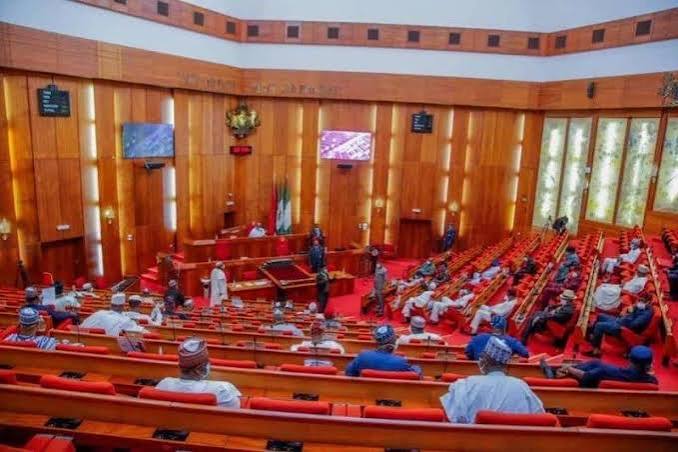
The Nigerian Senate has passed the Agricultural Revolution Bill 2026 for second reading, setting the stage for further legislative consideration of a proposed framework to transform the country's agricultural sector.
The bill, sponsored by Deputy Senate President Barau Jibrin (APC-Kano North), seeks to strengthen food security, promote mechanised farming, expand irrigation, improve agricultural financing and encourage agro-industrialisation and climate-resilient agricultural practices.
Leading the debate on the proposed legislation on Wednesday, Jibrin observed that agriculture, which once served as a major pillar of Nigeria's economy, was no longer performing at its full potential.
He recalled that between the 1950s and early 1980s, agricultural production supported numerous industries, including textile and processing companies in Lagos, Kano and Port Harcourt.
He expressed concern that several industrial establishments, particularly in Kano's Sharada and Bompai areas, which once supported vibrant industrial activities, had become largely dormant.
Lawmakers Seek Continuity in Agricultural Policies
Jibrin also recalled the introduction of the Green Revolution Programme by the Second Republic government, noting that the initiative lacked an enabling legal framework to guarantee its continuity.
According to him, the absence of statutory backing made it difficult to sustain the programme beyond the administration that introduced it.
He argued that Nigeria possessed the human and natural resources required to develop a strong agricultural economy but lacked effective mechanisms to harness the sector's enormous potential.
Describing the proposed legislation as an opportunity for broader national engagement, he said:
"The bill is to provoke conversation, bring in our expertise to look at the entire scenario and see how we can change the trajectory."
The Deputy Senate President urged his colleagues to consider the bill from the standpoint of patriotism rather than partisan politics, stressing the importance of collective action in addressing the country's agricultural challenges.
Senators Identify Funding and Infrastructure Gaps
Contributing to the debate, Senator Mohammed Monguno (APC-Borno North) described the proposed legislation as an opportunity to translate Nigeria's economic diversification policy from oil dependence into practical agricultural development.
Monguno said agriculture contributed approximately 40 per cent of Nigeria's Gross Domestic Product and provided about 70 per cent of employment.
He, however, lamented that the country had consistently fallen short of agricultural funding targets, noting that its highest allocation in recent years was approximately five per cent.
He said the bill addressed critical challenges affecting the sector, including mechanisation, agricultural financing, rural infrastructure and post-harvest losses.
Similarly, Senator Babangida Hussaini (APC-Jigawa Northwest) commended the bill's sponsor, observing that his contribution was informed by his experience as a practising farmer.
Hussaini recalled that despite the introduction of the Agricultural Credit Guarantee Scheme in 1976, Nigeria had yet to establish sustainable mechanisms for financing agricultural activities.
He said the proposed legislation would harmonise agricultural policies and programmes while addressing challenges across production, financing, marketing, storage and processing.
Highlighting the agricultural potential of Jigawa State, he cited its production of hibiscus and sesame seeds, noting that inadequate storage, marketing and processing facilities had limited the ability of producers to maximise their economic benefits.
He also urged lawmakers to give greater attention to livestock production, describing the subsector as an important economic opportunity.
Bill Targets Farmers, Research and Mechanisation
Also supporting the legislation, Senator Anthony Ani (APC-Ebonyi South), a professor of agricultural extension, described the bill as comprehensive, covering virtually every aspect of agricultural production.
He identified mechanisation, irrigation, research, innovation, extension services and financing as important areas requiring legislative attention.
Ani also highlighted the need for provisions supporting women, young people and small-scale farmers.
He said the proposed law would help address persistent challenges confronting farmers, including climate change, inadequate equipment and poor agricultural infrastructure.
In the same vein, Senator Adeniyi Adegbonmire (APC-Ondo Central) supported the bill, arguing that a statutory framework was necessary to guarantee continuity in Nigeria's agricultural development policies.
He said the legislation would establish a National Agricultural Revolution Programme with clearly defined national targets and implementation strategies.
According to him, the framework would place successive administrations under statutory obligations to pursue established agricultural development programmes.
Adegbonmire recalled that the Green Revolution Programme introduced in 1976 lacked an enabling law, making it vulnerable to discontinuation by subsequent administrations.
He described the proposed legislation as far-reaching, particularly in its potential to coordinate agricultural development, financing and other government interventions.
Senate Refers Bill to Committees for Further Consideration
Following contributions from senators, Senate President Godswill Akpabio put the bill to a voice vote, with lawmakers unanimously supporting its passage for second reading.
Akpabio subsequently referred the proposed legislation to the Senate Committees on Agricultural Production, Services and Rural Development, and Agricultural Colleges and Institutions for further legislative consideration.
He directed the committees to report back to the Senate within four weeks.
The next stage of consideration will provide an opportunity for lawmakers to examine the proposed framework in greater detail before determining its legislative direction.
For Nigeria's agricultural sector, the central challenge will be translating policy ambitions into effective implementation, reliable financing, accessible infrastructure and measurable improvements in the livelihoods of farmers and food producers.
Wakirike Herald
The Voice of Wakirike People Everywhere
Written by
wk-admin
Comments
- Be the first to comment.