Road Crashes Claim 3,445 Lives in Nigeria in Nine Months, FRSC Raises Alarm
By Wakirike Herald
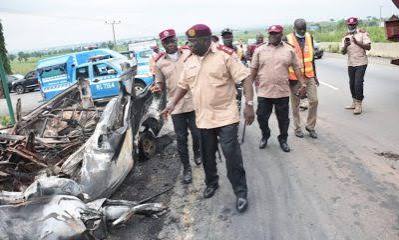
The Federal Road Safety Corps (FRSC) has disclosed that no fewer than 3,445 people lost their lives in road traffic crashes across Nigeria between January and September 2026.
The Corps Marshal, Malam Shehu Mohammed, announced the figures on Monday during a joint press briefing with key stakeholders in Abuja to commemorate the 2026 World Day of Remembrance for Road Traffic Crash Victims.
He said 7,156 road traffic crashes were recorded during the nine-month period, resulting in 22,292 injuries.
Mohammed described the statistics as a painful reminder of the human consequences of road accidents, noting that every reported fatality represented a lost life, a grieving family and an affected community.
“These figures represent more than statistics; they are human lives lost, families shattered and communities thrown into grief,” he said.
The 2026 commemoration, themed “A Light That Unites Us”, is scheduled to run from November 9 to November 15, with the objective of transforming remembrance into practical action and compassion into measurable commitment.
Speeding and Dangerous Driving Remain Major Concerns
The FRSC chief identified excessive speed and dangerous driving behaviours as major contributors to road traffic crashes in Nigeria.
He warned that reckless decisions by motorists could have devastating consequences for other road users and their families.
Mohammed said the corps had continued to intensify enforcement operations, public enlightenment campaigns and stakeholder engagement to reduce road crashes nationwide.
He explained that the FRSC was using its Road Traffic Crash Database Management System (RTCDMS) to identify accident-prone corridors and deploy personnel strategically for patrols, surveillance, enforcement and rescue operations.
According to him, data-driven interventions would help the corps direct its resources towards locations with higher crash risks.
FRSC Reaffirms Commitment to 2030 Road Safety Target
Mohammed reaffirmed the corps' commitment to implementing the United Nations Decade of Action for Road Safety 2021–2030, which seeks to reduce global road traffic deaths and injuries by at least 50 per cent by 2030.
He called on government agencies, transport unions, media organisations, civil society groups and emergency response institutions to strengthen collaboration with the FRSC.
He also urged motorists to obey traffic regulations, respect speed limits, avoid distractions and use appropriate safety restraints.
The Corps Marshal emphasised the need to protect vulnerable road users, including pedestrians, cyclists and motorcyclists.
He maintained that the most meaningful tribute to victims of road crashes would be to turn their memories into actions capable of preventing further deaths.
WHO Says 1.2 Million Die Annually in Road Crashes Worldwide
Speaking at the event, the World Health Organisation (WHO) Country Representative, Pavel Ursu, said the annual commemoration provided an opportunity to remember victims of road crashes and renew collective efforts to prevent future tragedies.
He explained that the theme, “A Light That Unites Us”, called for remembrance to be translated into action, empathy into support and public awareness into lasting commitment.
Ursu disclosed that approximately 1.2 million people die annually in road traffic crashes worldwide, while road traffic injuries remain the leading cause of death among children and young people aged five to 29.
He added that more than 90 per cent of global road traffic deaths occurred in low- and middle-income countries.
According to him, most road deaths and injuries are preventable through safer road infrastructure, stronger traffic enforcement, responsible road use, safer vehicles and improved emergency medical care.
African Road Safety Charter Enters Into Force
Ursu described the entry into force of the African Road Safety Charter on March 12, 2026, as an important development for road safety across the continent.
He said the charter provided Africa's first legally binding framework specifically dedicated to improving road safety.
He congratulated Nigeria for being among the countries that ratified the agreement.
The WHO representative stressed that sustained investment in safer roads, traffic enforcement, trauma care and reliable crash data systems would be essential to achieving the charter's objectives.
He reaffirmed the organisation's commitment, alongside the wider United Nations system, to supporting Nigeria through evidence-based policies, stronger institutions, improved infrastructure and enhanced emergency response services.
Stakeholders Remember Victims and Support Survivors
Also speaking, Dr Olarenwaju Olatunji, focal person for the United Nations Decade of Action on Road Safety and Traffic Injury Prevention (UNDARSTIP), said the annual commemoration extended beyond remembering people who had lost their lives.
He noted that it also recognised survivors living with injuries and disabilities, families affected by road tragedies and emergency responders who assist victims.
Olatunji appreciated the FRSC, WHO, relevant ministries, departments and agencies, development partners and other stakeholders for their contributions to road safety advocacy and implementation in Nigeria.
He also expressed solidarity with bereaved families and survivors who continue to live with the physical, emotional and economic consequences of road crashes.
Road Safety Requires More Than Enforcement
The latest FRSC figures highlight the continuing burden of road traffic crashes on Nigerian families and the country's public health system.
While enforcement and public enlightenment remain important, reducing fatalities will also require safer roads, effective vehicle inspections, responsible transport operations, reliable emergency services and sustained public cooperation.
For Nigeria, the challenge is to ensure that the 2030 road safety target translates into practical improvements that save lives across highways, urban roads and rural communities.
Every life lost on the road is a reminder that road safety must remain a shared national responsibility.
Wakirike Herald
The Voice of Wakirike People Everywhere
Written by
wk-admin
Comments
- Be the first to comment.