Rivers CDC Calls for Grassroots Development, Improved Security and Unity Across Communities
By Wakirike Herald
The Rivers State Community Development Council (CDC) has called for increased investment in grassroots development, stronger security arrangements and greater unity among communities across the state.
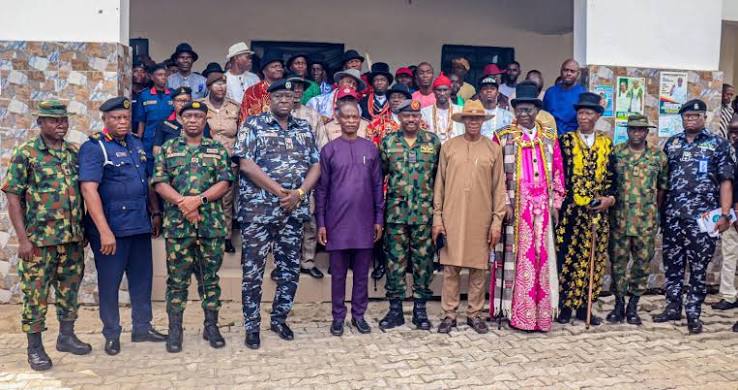
The call was made during the council's maiden congress in Port Harcourt, which attracted community leaders, security agencies, humanitarian organisations and other stakeholders representing the 23 Local Government Areas of Rivers State.
The congress provided a platform for community representatives to highlight pressing development challenges, discuss security concerns and explore ways of strengthening collaboration between grassroots institutions and government.
Addressing participants, the State Chairman of the CDC, Honourable Ralph Odili, expressed satisfaction with the turnout, noting that all 23 LGAs were represented by their respective CDC chairmen and community representatives.
Odili explained that the council was established to provide a collective voice for communities, particularly those facing infrastructural deficits and inadequate government presence.
He expressed concern that despite Rivers State's abundant natural resources, several rural communities continued to lack essential amenities, including accessible roads, electricity, healthcare facilities and other basic infrastructure.
According to him, the CDC would provide an organised platform for community leaders to identify their people's needs and present them collectively to relevant government authorities.
He stressed that the council was non-political and would work with any government in power to advance community development.
CDC Seeks Stronger Community-Based Security
On security, Odili disclosed that the initiative had attracted the involvement of relevant security agencies, including the police, military, navy and local vigilante groups.
He urged communities to take responsibility for protecting public infrastructure and government facilities, including hospitals, primary healthcare centres, roads and solar-powered streetlights.
He also appealed to local vigilante groups and community security structures to remain vigilant and report suspicious and criminal activities through appropriate channels.
Police Pledge Partnership Ahead of 2027 Elections
The Rivers State Commissioner of Police, Olatunji Rilwan Disu, represented by the Assistant Commissioner of Police in charge of Rumuokoro Police Command, reaffirmed the Nigeria Police Force's commitment to working with communities to maintain peace and security.
He said the police would remain politically neutral ahead of the 2027 general elections, emphasising that their responsibility was to provide adequate security and ensure a level playing field for all political parties and candidates.
He assured participants that the police would continue engaging host communities to prevent crime and support peaceful, free, fair and credible elections.
Oputa Warns Against Political Interference
In his contribution, Honourable Sylvester Oputa, a candidate of the People's Redemption Party (PRP), urged the Rivers State Government to recognise, empower and strengthen the CDC as an important grassroots development structure.
Oputa observed that government programmes and community development initiatives could not achieve meaningful results without the active participation of grassroots leaders.
He, however, cautioned against attempts by politicians to hijack the council's structure for partisan interests.
He urged members to remain united and focused on their objectives, insisting that the CDC should prioritise community welfare rather than become a political instrument.
Red Cross Offers Emergency Response Support
Also speaking, Aaron Boomode, who represented the Nigerian Red Cross Society in Rivers State, pledged the organisation's readiness to collaborate with the CDC on first aid training, public health awareness and emergency response.
He described the Red Cross as an apolitical, non-religious and non-ethnic humanitarian organisation committed to alleviating human suffering.
Boomode encouraged CDC leaders to support Red Cross division coordinators across the local government areas, particularly in educating residents on first aid and appropriate responses to emergencies.
Addressing the recurring challenge of flooding in Rivers State, he explained that the organisation maintained structures at national, state and divisional levels to facilitate emergency response and humanitarian assistance.
He urged the CDC to strengthen collaboration with the Red Cross to improve community preparedness, particularly in flood-prone areas, while promoting psychosocial support for disaster victims.
Communities Raise Concerns Over Roads, Healthcare and Insecurity
Several community representatives used the congress to draw attention to pressing infrastructural and security challenges confronting their respective areas.
Comrade Benjamin Allen, CDC Chairman of Ogbogon Community in Ogba/Egbema/Ndoni Local Government Area, raised concerns over persistent insecurity, particularly attacks allegedly carried out by suspected criminals operating from surrounding forests.
He appealed to the state government, local government authorities and security agencies to strengthen security operations in the area.
Allen also called for urgent rehabilitation of the Akabuka-Ogogo Road, which he said had become dangerous for commuters, particularly at night.
Similarly, Kenneth Nwala, CDC Chairman of Egedelen in Igbo Etche, lamented the inadequate provision of government infrastructure in Ibeche, including functional healthcare facilities, schools and security installations.
He expressed concern over the vandalisation of an existing primary school and the absence of adequate security presence along major access roads.
Nwala further alleged that some police officers were aiding land grabbers, a development he said had discouraged farmers and other residents from accessing their farmlands.
He called on the relevant authorities to investigate the allegations and strengthen security in the community.
In Okrika Local Government Area, Comrade Promise Dikibo, CDC Chairman of Tamina Ama, appealed for improved healthcare facilities and other essential amenities to address the needs of residents, particularly those in riverine communities.
Meanwhile, Comrade Promise Ikegwuru, CDC Chairman of Okwuta Clan in Obio/Akpor Local Government Area, identified substance abuse among young people as a growing security concern.
Although acknowledging the presence of security formations in his area, he appealed to the state government and police authorities to address the proliferation of illegal drug-selling points and associated criminal activities.
He also called for the upgrading of the primary healthcare centre in Rumuokuta, which serves three communities, to enable it to provide adequate medical services.
Ikegwuru further appealed for government intervention in employment concerns involving youths from Rumuokuta and issues surrounding the management of the Dr Peter Odili Cancer and Cardiovascular Hospital.
Similarly, Amadi Simeon, Ozuzu Clan CDC Coordinator in Etche Local Government Area, highlighted inadequate healthcare and security facilities serving the seven communities in his clan.
He noted that the entire clan depended on one poorly equipped health centre and a single police station despite its large geographical area and growing security concerns.
Simeon called for additional healthcare facilities, the employment of medical personnel and improved security presence, while acknowledging the contributions of local vigilante groups to maintaining peace.
RIVCHPP Explains Health Insurance Benefits
In a presentation, Dr MacMoses Isaiah, representing the Executive Secretary of the Rivers State Contributory Health Protection Programme (RIVCHPP), explained the state's health insurance initiative and its benefits to residents.
He said the programme was designed to reduce out-of-pocket healthcare expenses by providing access to affordable medical services through accredited public and private healthcare facilities.
Isaiah disclosed that the programme offered different insurance packages ranging from ₦25,000 to approximately ₦95,000, while certain categories of residents qualified for free enrolment.
He identified senior citizens aged 60 and above, pregnant women and children under five as beneficiaries of designated free-enrolment arrangements, subject to applicable requirements.
According to him, more than 200,000 residents had enrolled in the programme, with beneficiaries accessing medical treatment and surgical services.
He encouraged community leaders to intensify awareness campaigns and assist eligible residents in accessing the scheme.
From Community Demands to Measurable Results
The maiden CDC congress brought several longstanding grassroots concerns into a common forum, ranging from poor road networks and inadequate healthcare to insecurity, youth unemployment, substance abuse and environmental vulnerabilities.
For riverine communities, particularly those in Okrika and other coastal areas, access to functional healthcare facilities, safe transportation routes and reliable emergency response remains essential to everyday life and economic activities.
The effectiveness of the CDC will ultimately depend on its ability to translate these concerns into organised advocacy, sustained engagement with government and measurable improvements in the lives of residents.
The congress ended with renewed calls for stronger community participation, improved security collaboration and a more equitable distribution of infrastructure and social amenities across Rivers State.
Stakeholders expressed optimism that the council would emerge as a credible platform for articulating grassroots concerns, strengthening relations between communities and government, and advancing inclusive development across the state's 23 local government areas.
Wakirike Herald
The Voice of Wakirike People Everywhere
Written by
wk-admin
Comments
- Be the first to comment.