PECAN Moves to Strengthen Pest Control Regulation, Professional Training and Industry Standards
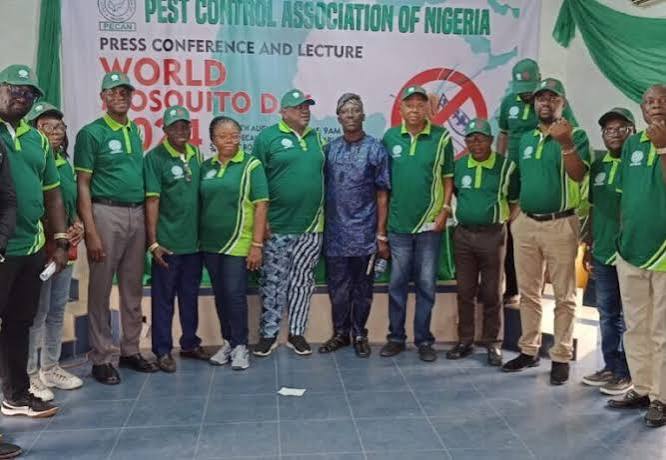
By Wakirike Herald
The Pest Control Association of Nigeria (PECAN) says it is intensifying efforts to strengthen professional standards, improve regulatory compliance and eliminate unqualified operators from the country's pest management industry.
The outgoing President of the association, Kunle Williams, disclosed this on Wednesday at PECAN's Annual General Meeting in Lagos, highlighting achievements recorded during his eight-year leadership across two terms.
Williams said the association had focused on bringing practitioners together, providing professional training and strengthening partnerships with regulatory authorities to address the growing challenge of quackery in the industry.
According to him, pest management in Nigeria has suffered from the activities of individuals operating without the necessary professional qualifications and regulatory approvals.
"We have, in the past few years, brought many people together, trained them and worked assiduously with regulatory bodies to push out quacks.
"It is an ongoing process, but we have achieved a lot," he said.
EHCON licensing key to professional practice
Williams identified the Environmental Health Council of Nigeria (EHCON) as the principal regulatory body overseeing pest management practice in the country.
He stressed that pest control practitioners must obtain the appropriate licence from EHCON before operating legally in Nigeria.
He also highlighted PECAN's collaboration with regulatory authorities at the local, state and federal levels, citing the Lagos State Environmental Protection Agency as one of its partners in regulating pest control and fumigation activities.
The outgoing president called on other regulatory agencies across the country to demand evidence of professional affiliation, appropriate certification and licensing before engaging pest control operators.
He said the association was working towards a regulatory environment in which illegal practices would be prohibited to safeguard lives, property and the environment.
Continuous training to improve professional standards
On professional development, Williams said PECAN had maintained an annual training programme in collaboration with regulatory agencies for the past six years.
He explained that the initiative was designed to expose practitioners to modern technologies, improved operational techniques and safer pest management methods.
According to him, continuous training had improved members' competence and strengthened their acceptance by regulatory authorities, corporate organisations and individual clients.
"PECAN members can stand on their own anywhere in the world today because we bring them updates on technological improvements in pest control and better and safer ways of doing the job," he said.
Williams added that organisations, food-handling companies, food manufacturers and hotels were increasingly requesting PECAN certification before engaging pest control service providers.
He attributed the development to sustained efforts by the association to improve professional credibility and ensure that members remained informed about developments in the sector.
Integrated Pest Management takes centre stage
The outgoing president also emphasised the importance of Integrated Pest Management (IPM), describing it as a monitoring-based approach that goes beyond the routine application of chemicals and fumigants.
He explained that effective pest management should involve identifying pest problems, monitoring their occurrence and applying appropriate control measures only when necessary.
The approach, he said, would help reduce unnecessary chemical exposure while protecting human health and the environment.
Integrated Pest Management is particularly important in food-processing facilities, hotels, homes, healthcare environments and other locations where improper chemical application could expose people to health and safety risks.
Incoming leadership expected to sustain reforms
Williams expressed confidence that the foundation established during his administration would provide a platform for the incoming leadership to deepen professional development, strengthen regulatory partnerships and improve standards across the industry.
He maintained that tackling quackery required sustained cooperation between professional associations, government agencies, businesses and other stakeholders.
Why professional pest control matters
The drive to regulate Nigeria's pest management industry has implications beyond professional recognition.
Poorly managed fumigation and indiscriminate chemical application can expose households, workers, food handlers and the wider environment to avoidable risks.
Stronger licensing, competent practitioners and proper monitoring are therefore essential to ensuring that pest control services are delivered safely and responsibly.
For PECAN, the next challenge will be to translate years of professional training and regulatory collaboration into wider compliance across the country, particularly among operators who remain outside recognised professional structures.
SEO Title: PECAN Strengthens Pest Control Regulation and Professional Training in Nigeria
URL Slug: pecan-strengthens-pest-control-regulation-training
Meta Description: PECAN intensifies efforts to eliminate quackery in Nigeria's pest control industry through licensing, professional training and regulatory partnerships.
Article Description: The Pest Control Association of Nigeria is strengthening professional standards, licensing compliance and safer pest management practices through training and regulatory collaboration.
Source: News Agency of Nigeria (NAN)
Wakirike Herald
The Voice of Wakirike People Everywhere
Written by
wk-admin
Comments
- Be the first to comment.