Oyo Proposes ₦1.1trn 2027 Budget, Prioritises Infrastructure and Job Creation
By Wakirike Herald
The Oyo State Government has announced that its proposed ₦1.1 trillion budget for 2027 will prioritise infrastructure development, job creation, entrepreneurship and efficient resource management as part of efforts to strengthen the state's economy and improve living standards.
The Permanent Secretary of the Ministry of Budget and Economic Planning, Mr Julius Ayanleke, disclosed this on Monday, November 16, 2026, during the presentation of the budget breakdown and analysis in Ibadan.
Ayanleke explained that the proposal was designed to consolidate achievements in key sectors while accelerating socio-economic development through investments in infrastructure, agriculture, human capital development and public-private partnerships.
He said the budget aligned with the administration's ambition of positioning Oyo State as Nigeria's fastest-growing economy.
Capital Projects Receive 60.1 Per Cent Allocation
According to Ayanleke, the proposed budget provides ₦670.03 billion for capital expenditure, representing 60.1 per cent of the total allocation.
Recurrent expenditure is projected at ₦445.31 billion, accounting for the remaining 39.9 per cent.
The government said the 60:40 capital-to-recurrent expenditure ratio reflected its intention to prioritise development projects while maintaining essential government operations.
Major infrastructure projects earmarked for funding include the Ibadan Circular Road, Ido-Eruwa Road and several rural road projects across the state.
Ayanleke said adequate provisions had been made to support the completion of ongoing projects and ensure timely delivery.
Government Targets Higher Internally Generated Revenue
The permanent secretary disclosed that the 2027 budget was prepared using the Medium-Term Expenditure Framework (MTEF), sectoral planning and consultations with stakeholders across the state's seven geopolitical zones.
He identified key fiscal priorities as:
-
Completing ongoing infrastructure projects.
-
Reducing non-essential government overheads.
-
Improving efficiency in personnel and recurrent expenditure.
-
Increasing internally generated revenue by at least 10 per cent annually between 2027 and 2029.
-
Supporting Micro, Small and Medium Enterprises (MSMEs).
-
Expanding infrastructure through public-private partnerships.
The government also intends to improve resource allocation and strengthen the role of private investment in delivering development projects.
Oyo Generates ₦618.72bn in Nine Months
Providing an update on the state's 2026 budget performance, Ayanleke disclosed that Oyo generated ₦618.72 billion between January and September 2026.
He said the revenue comprised ₦401.44 billion in recurrent revenue and ₦217.28 billion in capital receipts.
The figures provide an indication of the state's revenue performance during the first nine months of the year, although further details on the level of expenditure and project implementation were not provided in the presentation.
Also speaking, the Executive Assistant to the Governor on Finance, Budget and Economic Planning, Alhaji Gafar Bello, commended the state's budget performance since 2019.
He attributed the performance to transparency, fiscal discipline, efficiency and the effective application of public financial management tools.
Makinde Presents Budget Proposal to Assembly
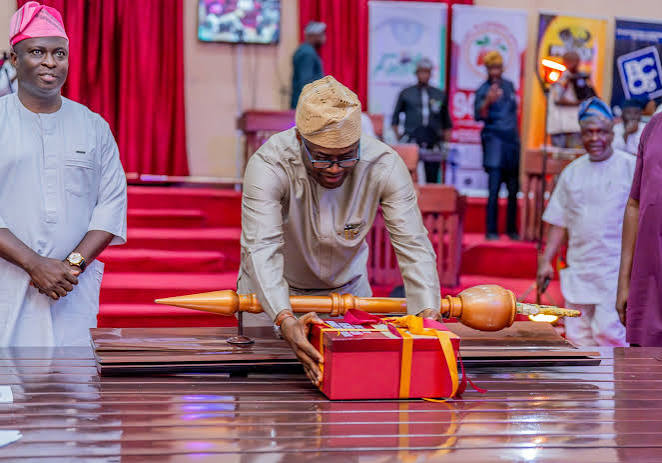
The 2027 budget proposal, tagged "Budget of Sustained Progress", was presented to the Oyo State House of Assembly by Governor Seyi Makinde on November 10, 2026.
The proposed ₦1.1 trillion spending plan will now undergo the necessary legislative consideration before approval and implementation.
Project Delivery Will Be Key to Budget Performance
The proposed spending plan places infrastructure, employment generation and private sector participation at the centre of Oyo State's development priorities.
However, the success of the budget will depend on actual revenue performance, effective project execution and transparent monitoring of public expenditure.
Of particular importance will be the completion of major road projects, the expansion of rural infrastructure and the extent to which government investments create employment and business opportunities.
As the proposal moves through the legislative process, residents and businesses will be watching how the planned allocations translate into visible improvements in transportation, economic activity and public services across the state.
Wakirike Herald
The Voice of Wakirike People Everywhere
Written by
wk-admin
Comments
- Be the first to comment.