NOA, Red Cross Launch Nationwide Campaign to Ensure Immediate Treatment of Gunshot Victims
By Wakirike Herald
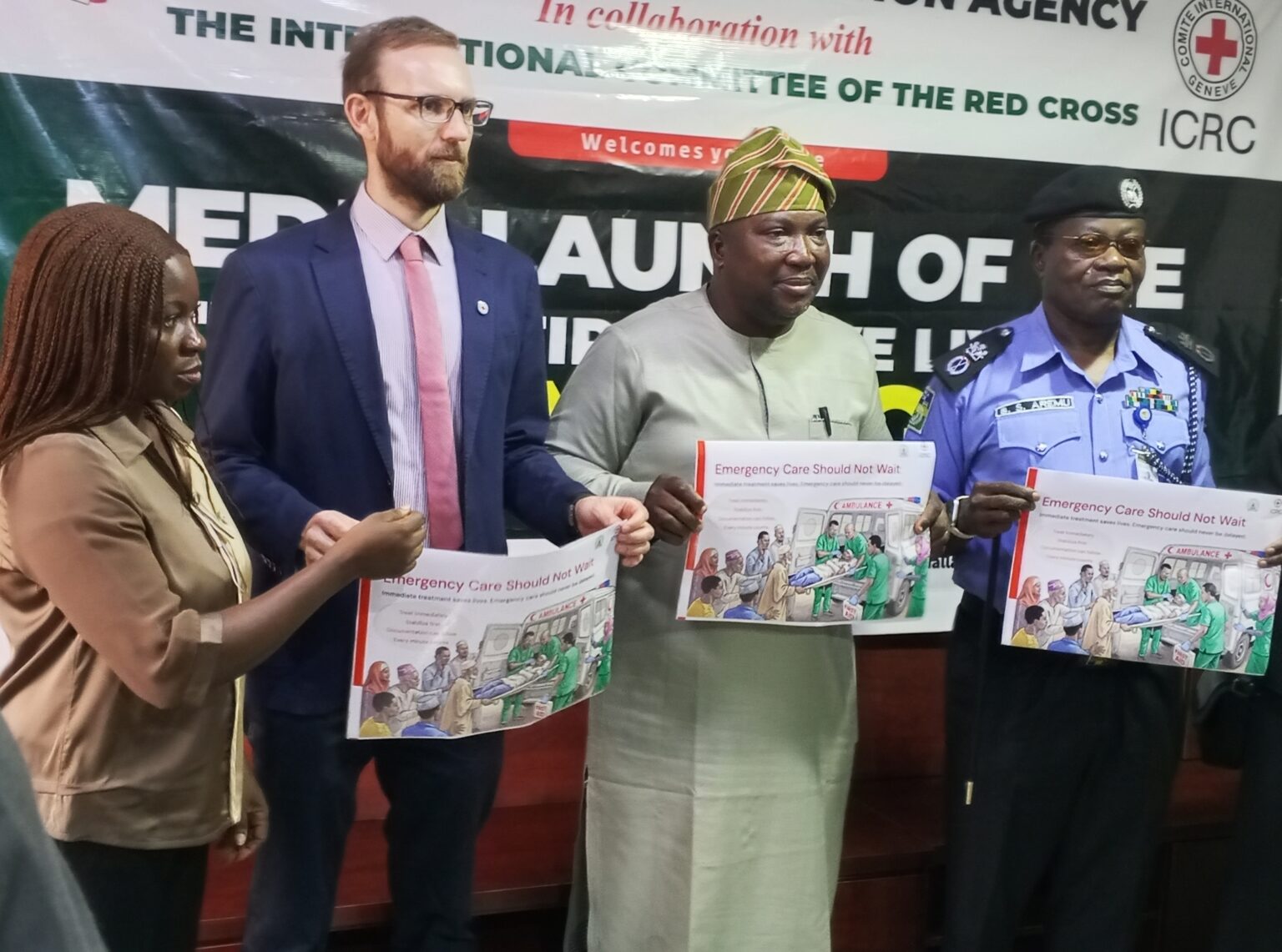
The National Orientation Agency (NOA), in partnership with the International Committee of the Red Cross (ICRC), has launched a nationwide public enlightenment campaign to promote immediate medical treatment for victims of gunshot injuries.
The campaign, tagged “Treat First. Save Lives.”, was inaugurated in Abuja on Thursday, November 12, 2026, to improve public understanding of the Compulsory Treatment and Care for Victims of Gunshot Wounds Act, 2017, and address misconceptions that often prevent injured persons from receiving urgent medical attention.
Speaking at the inauguration, NOA Director-General, Malam Lanre Issa-Onilu, represented by the agency's Director of Health and Social Care, Dr Ayoola Olufemi, said fear of police procedures, misinformation and uncertainty over hospital responsibilities had continued to create barriers to emergency treatment.
He stressed that the 2017 Act requires hospitals to provide immediate and adequate treatment to gunshot victims, irrespective of whether a police report is available.
According to him, saving lives must remain the priority, with hospitals, security agencies, healthcare professionals and members of the public sharing responsibility for ensuring that injured persons receive prompt medical attention.
Issa-Onilu urged Nigerians to assist gunshot victims in accessing medical facilities rather than allowing fear or misinformation to discourage them from offering help.
Campaign to reach Nigerians in five languages
The NOA director-general said the agency would deploy radio jingles, audiovisual materials, digital platforms and other public communication channels to spread the campaign's message nationwide.
He disclosed that campaign materials had been developed in English, Hausa, Yoruba, Igbo and Nigerian Pidgin English to ensure wider accessibility.
He also called on media organisations, traditional rulers, religious leaders, civil society organisations, healthcare institutions and security agencies to support the initiative by educating their communities and challenging misinformation.
Issa-Onilu commended the ICRC for its technical support and collaboration, while acknowledging the support of the Inspector-General of Police and the Coordinating Minister of Health and Social Welfare.
Police reaffirm commitment to protecting gunshot victims
Representing the Inspector-General of Police, IGP Olatunji Disu, the Commissioner of Police and Director of Legal Services, Aremu Silas, described the campaign as timely and important for national sensitisation.
Silas said the treatment of gunshot victims was not merely a medical responsibility but also a fundamental human rights and public safety concern.
He cited Section 33 of the 1999 Constitution, as amended, which guarantees the right to life, stressing that relevant institutions have responsibilities to protect human lives.
He further explained that the Gunshot Wounds Act, 2017, requires medical facilities to provide immediate treatment without making police reports a precondition.
According to him, the Nigeria Police Force has consistently directed officers not to harass, delay or deny gunshot victims access to medical attention because of procedural requirements.
He said the police remained committed to enforcing the law and working with healthcare professionals, civil society organisations and other stakeholders to prevent avoidable deaths.
Silas added that the campaign was consistent with the Force's commitment to professionalism, community partnership and respect for human rights under Section 4 of the Police Act, 2020.
ICRC identifies awareness gaps among health workers and police
The Deputy Head of Delegation of the ICRC also commended NOA for leading the campaign, describing access to life-saving healthcare without unnecessary delays as an important humanitarian priority.
He noted that although Nigeria had an established legal framework for protecting gunshot victims, its provisions needed to be better understood and translated into practical action by citizens and relevant institutions.
Also speaking, Ms Juliet Unubi, ICRC Humanitarian Affairs Adviser on Protection of Healthcare, explained that the campaign was designed to clarify the provisions of the law and the responsibilities of different stakeholders.
She disclosed that a 2021 study conducted by the ICRC and the Nigerian Association of Resident Doctors Research Collaboration Network identified significant gaps in awareness among healthcare workers and police officers.
The study involved approximately 900 healthcare workers and 1,200 police officers across Borno, Plateau, Kaduna, Abia, Rivers and Oyo states.
It also included interviews with 24 hospital chief executives and 24 divisional police officers to assess awareness, training and understanding of responsibilities in managing gunshot injuries.
Unubi said the findings reinforced the need for stronger public education and better institutional understanding of the law.
What the Gunshot Wounds Act requires
The ICRC representative outlined key provisions of the 2017 legislation, emphasising that emergency treatment must not be delayed because of police clearance or an initial financial deposit.
Among its major requirements are:
-
Immediate medical attention: Public and private hospitals must receive gunshot victims and provide immediate and adequate treatment, irrespective of police clearance.
-
Public assistance: Individuals, including security personnel, are required to assist victims and facilitate their transportation to the nearest hospital.
-
No initial deposit: Hospitals must commence emergency treatment without demanding an initial monetary deposit.
-
Police notification: Hospitals are required to notify the nearest police station within two hours of receiving a gunshot victim.
-
Protection during recovery: Police are required to investigate reported cases but must not invite victims for questioning unless the Chief Medical Director certifies that they are medically fit.
Unubi clarified that the requirement to notify the police does not mean hospitals must obtain police clearance before commencing emergency treatment.
She also explained that the law does not make all subsequent medical treatment free. Rather, it establishes obligations intended to prevent avoidable delays in providing emergency care.
Beyond awareness, effective enforcement is essential
The launch of the Treat First. Save Lives. campaign draws attention to a critical gap between the existence of protective legislation and its practical implementation.
For victims of gunshot injuries, delays caused by administrative procedures, fear of law enforcement or demands for upfront payments can have serious consequences.
The challenge now is to ensure that hospitals, police formations and members of the public understand their respective obligations and consistently act in accordance with the law.
While nationwide sensitisation is an important first step, sustained monitoring, institutional accountability and adequate emergency response systems will be necessary to translate the campaign's message into meaningful results.
Ultimately, the principle behind the initiative is straightforward: when a person suffers a gunshot injury, saving a life must come before paperwork.
Wakirike Herald
The Voice of Wakirike People Everywhere
Written by
wk-admin
Comments
- Be the first to comment.