NLC Urges NUJ to Strengthen Collective Bargaining for Better Welfare of Journalists
By Wakirike Herald
The Nigeria Labour Congress (NLC) has urged the Nigeria Union of Journalists (NUJ) to strengthen collective bargaining and negotiate better welfare packages for journalists and other media workers across the country.
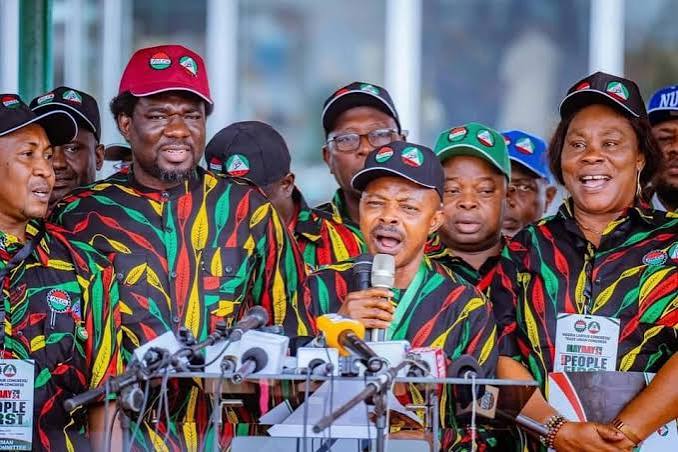
NLC President, Mr Joe Ajaero, made the call in Lagos during the 2026 Conference of the Labour Writers Association of Nigeria (LAWAN), which examined the role of workers in Nigeria’s political transition and the pursuit of economic justice.
The conference was held under the theme: “Workers at the Centre of Nigeria’s Political Transition: Defending Rights, Advancing Welfare and Building Economic Justice”.
Ajaero observed that journalists frequently championed the welfare and rights of other categories of workers but often paid insufficient attention to their own working conditions.
He urged the NUJ to build its members’ capacity for effective collective bargaining, noting that belonging to a professional association alone was not enough to equip journalists to negotiate favourable employment conditions.
NLC Raises Concerns Over Journalists’ Welfare
The labour leader challenged the NUJ to examine the minimum remuneration of media workers and determine the extent to which collective bargaining agreements existed between media organisations and their employees.
He called for improved salaries, transport support, affordable housing schemes, better pension benefits, social protection and stronger job security for journalists.
According to Ajaero, inadequate salaries affect pension contributions, while high staff turnover makes it difficult for many media workers to remain in employment long enough to enjoy the benefits of long-term service.
He also encouraged government and relevant institutions to explore partnerships that could expand workers’ access to affordable housing.
Labour Reporting Requires Specialised Knowledge
Ajaero said labour journalism should extend beyond reporting strikes and industrial actions, stressing the need for specialised knowledge of industrial relations and workplace issues.
He urged media organisations to expose journalists covering other beats to training in labour relations so they could better understand employment policies and industrial disputes.
He advised editors to encourage reporters to investigate the circumstances leading to industrial disagreements rather than concentrating only on whether workers intended to embark on strikes.
According to him, labour reporting encompasses collective bargaining, negotiation strategies, workplace rights, unfair labour practices, termination of employment, decent work and dispute resolution.
He also emphasised the importance of understanding the principles of negotiation, particularly the relationship between workers’ demands and employers’ financial capacity.
Ajaero said negotiations should consider employers’ ability to pay, available revenue and workers’ productivity, warning that agreements beyond an organisation’s financial capacity could eventually result in job losses.
NLC Proposes Stronger Collaboration with Labour Writers
The NLC president proposed closer collaboration between LAWAN and other labour writers’ associations through joint annual retreats and professional development programmes.
He said such engagements would create opportunities for journalists to interact directly with labour leaders and experts, ask questions about negotiation decisions and gain deeper insights into industrial disputes.
Ajaero expressed the NLC’s willingness to support the association’s proposed training and educational programmes.
He also commended labour reporters for their contributions to defending workers’ rights and promoting democratic and civic space, urging them to sustain their coverage of policies affecting workers.
LAWAN Calls for Workers-Centred National Policies
Earlier, LAWAN Chairman, Mr Toba Agboola, described the association as an important platform for shaping public discourse on labour relations, trade unions, employment policies and workers’ rights.
Agboola said the conference provided an opportunity for stakeholders to examine the place of workers in Nigeria’s political, social and economic development.
He maintained that workers should no longer be regarded merely as inputs in economic activities but should occupy a central position in national policy formulation and implementation.
The chairman urged speakers, panellists and participants to engage in open and practical discussions capable of producing solutions to the challenges confronting Nigerian workers.
He said the workshop would examine critical issues, including social security, pensions, healthcare, workers’ welfare, collective bargaining and freedom of association.
Agboola expressed appreciation to participants and stakeholders for their support and commitment to the association.
The discussions highlighted an important dimension of labour advocacy: the need to protect the welfare of journalists themselves while ensuring that the media continues to hold employers, government institutions and other powerful interests accountable for workers’ rights.
For Nigeria’s media industry, the challenge extends beyond reporting workplace grievances. It also involves building stronger professional institutions, improving employment conditions and ensuring that journalists can carry out their responsibilities without undue economic insecurity.
Wakirike Herald
The Voice of Wakirike People Everywhere
Written by
wk-admin
Comments
- Be the first to comment.