NLC Urges Nigerians to Join Organised Labour in Tackling Rising Cost of Living
By Wakirike Herald
The Nigeria Labour Congress (NLC) has called on Nigerians to unite with organised labour in addressing the economic challenges confronting the country, particularly rising fuel prices, transportation costs and the increasing cost of living.
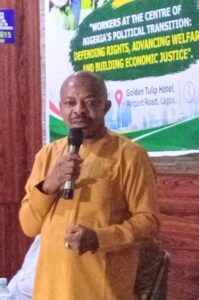
NLC President, Mr Joe Ajaero, made the appeal during the 2026 Conference of the Labour Writers Association of Nigeria (LAWAN) in Lagos.
The conference was held under the theme: “Workers at the Centre of Nigeria’s Political Transition: Defending Rights, Advancing Welfare and Building Economic Justice”.
Ajaero said the effects of rising living costs extended beyond wage earners and organised labour, stressing that Nigerians needed to work collectively to demand policies that would improve economic conditions.
He maintained that the labour movement was willing to collaborate with other stakeholders in addressing issues affecting households, businesses and the wider economy.
“We are available. Can we work together on things that affect us?” he asked.
According to him, reducing the pump price of petrol would benefit all Nigerians rather than workers alone.
“If we reduce pump price, every Nigerian will benefit from it,” he said.
Ajaero Questions Nigeria’s Petroleum Policy
The NLC president criticised what he described as the silence of some stakeholders on economic policies and their consequences, arguing that the responsibility for demanding accountability should not rest exclusively on organised labour.
He also questioned Nigeria’s continued exportation of crude oil alongside the importation of refined petroleum products, despite the country's domestic energy requirements.
Ajaero expressed concern over discussions about additional government borrowing, particularly against the background of rising international crude oil prices above the benchmark used in preparing the national budget.
He urged Nigerians to collectively demand transparency and engage government institutions over decisions affecting the economy and public welfare.
Reflecting on the historical contributions of labour and civil society organisations to democratic struggles and economic justice, Ajaero warned that weakening the labour movement would have wider consequences for society.
“If the labour movement breaks today, all of you are victims,” he said.
NLC Commends Journalists for Defending Workers’ Rights
Also speaking, the Deputy General Secretary of the NLC, Comrade Ismail Bello, commended journalists for their longstanding partnership with organised labour in promoting workers’ rights and social justice.
Bello said labour correspondents and other media professionals had played important roles in bringing workplace challenges and workers’ concerns to public attention.
He identified issues regularly covered by labour journalists to include wage negotiations, retrenchment, workplace accidents, pension challenges and violations of freedom of association.
According to him, journalists' contributions went beyond reporting meetings and industrial actions, as their reports provided a public record of workers' experiences, demands and struggles.
Bello also acknowledged journalists who had experienced intimidation and physical assaults while covering labour activities.
He stressed the importance of protecting media professionals and ensuring that journalists could report industrial relations issues without fear or undue interference.
Labour Leader Demands Accountability in Oil Revenue Management
In his remarks, the National President of the Precision, Electrical and Related Equipment Senior Staff Association (PERESSA), Comrade Rufus Olusesan, called for greater transparency in the management of Nigeria’s petroleum revenues.
Olusesan alleged that the Federal Government generated more than ₦5.1 trillion in additional revenue from the increase in international crude oil prices between March and April.
He said crude oil prices rose from the budget benchmark of $68 per barrel to between $109 and $110 during the period.
He questioned how the additional revenue had been utilised and called on Nigerians to demand accountability in the management of public resources.
Olusesan maintained that Nigeria's natural and human resources should translate into improved living conditions and economic opportunities for citizens through responsible public financial management.
Economic Accountability and the Role of Organised Labour
The discussions at the conference highlighted the growing concerns of organised labour over the relationship between government economic policies, public revenues and the everyday experiences of Nigerians.
Rising transportation and energy costs have implications for household budgets, business operations, workers' purchasing power and the prices of essential goods and services.
The additional revenue figure cited by Olusesan remains an attributed claim requiring examination against official revenue and expenditure records.
Ultimately, the central challenge raised by labour leaders is how Nigeria can translate its natural resources and public revenues into measurable improvements in citizens' welfare.
The conference also reinforced the importance of independent journalism in scrutinising economic decisions, documenting workers' experiences and holding public institutions accountable.
Wakirike Herald
The Voice of Wakirike People Everywhere
Written by
wk-admin
Comments
- Be the first to comment.