Nigeria Seeks Sustainable Funding for UN Resident Coordinator System
By Wakirike Herald
Nigeria has urged member states of the United Nations (UN) to ensure reliable and long-term financial support for the UN Resident Coordinator System, describing adequate funding as essential to effective development coordination and the delivery of sustainable development programmes across countries.
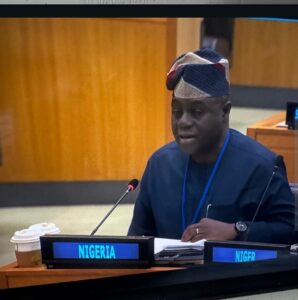
The call was contained in Nigeria's National Statement on Agenda Item 138, titled “Proposed Programme Budget for 2027: Resident Coordinator System”, delivered by the Head of the Civil Service of the Federation (HCSF), Mr Olumuyiwa Abel.
The Director of Press and Public Relations in the Office of the Head of the Civil Service of the Federation, Mrs Eno Olotu, disclosed this in a statement issued in Abuja on Wednesday.
According to the statement, Abel delivered the address at the 10th plenary meeting of the Fifth Committee, also known as the Administrative and Budgetary Committee, during the 81st Session of the UN General Assembly in New York.
In his presentation, Abel described the strengthening of the Resident Coordinator System as a shared objective in advancing multilateralism and improving the effectiveness of the United Nations development system.
He explained that a properly funded system was necessary to provide coordinated development support that aligns with the national priorities, development objectives and specific needs of member states.
The Nigerian representative stressed that adequate, predictable and sustainable financing was critical to maintaining the system's core coordination capacities, retaining institutional expertise and enabling Resident Coordinators to discharge their responsibilities effectively.
He noted that without reliable financial support, the system could face difficulties sustaining the institutional capacity required to coordinate development activities and provide consistent assistance to countries.
Africa's Significant Share of UN Resident Coordinator Offices
Abel also highlighted the strategic importance of the Resident Coordinator System to Africa, pointing out that 53 of the 132 Resident Coordinator Offices worldwide were located on the continent.
This represents approximately 40 per cent of the system's global geographical presence, reflecting the significant role it plays in supporting development coordination across African countries.
He said the extensive presence of the system in Africa demonstrated its importance in helping countries implement their national development priorities, the United Nations 2030 Agenda for Sustainable Development and the African Union's Agenda 2063.
According to him, the system provides an important coordination framework for aligning international development assistance with national priorities and regional development aspirations.
He stressed that strengthening the offices would help improve the coordination and effectiveness of development support provided to countries across the continent.
Nigeria Urges Wealthier Nations to Honour Development Commitments
The Head of the Civil Service of the Federation called on countries of the Global North to fulfil their development assistance commitments and urged major donor countries to maintain and substantially increase their core contributions to the United Nations development system.
He emphasised the need for predictable, sustained and multi-year funding arrangements to enable the system to plan effectively, retain experienced personnel and deliver its responsibilities without disruptions caused by financial uncertainty.
Abel maintained that a well-funded Resident Coordinator System remained indispensable to providing coherent, reliable and effective United Nations support for sustainable development.
He also reaffirmed Nigeria's willingness to participate constructively in discussions and initiatives aimed at strengthening the system and improving the effectiveness of the multilateral development framework.
"Nigeria reaffirmed its readiness to engage constructively in the consideration of the reports and in initiatives aimed at strengthening the system and promoting a more effective, responsive and adequately resourced multilateral development framework," he said.
Nigeria's Prominent Role at the UN Session
The meeting was particularly significant for Nigeria because the UN Secretary-General's report on the Resident Coordinator System was presented by the Deputy Secretary-General of the United Nations, Ms Amina Mohammed, who is Nigerian.
Nigeria's participation was further highlighted by the chairmanship of the Fifth Committee by the country's Permanent Representative to the United Nations, Ambassador Jimoh Ibrahim.
The Fifth Committee is responsible for considering administrative and budgetary matters of the United Nations, including programme budgets and the financial requirements of various UN operations.
The deliberations on the proposed 2027 programme budget therefore provided an opportunity for member states to examine the financial arrangements required to sustain the Resident Coordinator System and strengthen its development coordination responsibilities.
Sustainable Financing Remains Central to Global Development Cooperation
The Resident Coordinator System plays an important role in coordinating the activities of United Nations agencies at country level, helping to ensure that development programmes are aligned with national priorities and delivered through a more coordinated approach.
For developing countries, particularly those facing complex economic, social and environmental challenges, effective coordination of international development assistance can help reduce duplication, improve resource utilisation and strengthen the implementation of development programmes.
Nigeria's position reflects the importance it attaches to maintaining a properly resourced United Nations development structure capable of responding to the needs of member states.
However, the effectiveness of the system will depend not only on the availability of funding but also on transparent resource allocation, institutional accountability and the ability of development programmes to produce measurable results for the countries and communities they are intended to serve.
As discussions continue on the proposed 2027 programme budget, Nigeria has reiterated the need for sustained international cooperation and dependable financing to ensure that the Resident Coordinator System can continue supporting national development priorities, the 2030 Sustainable Development Agenda and Africa's Agenda 2063.
Wakirike Herald
The Voice of Wakirike People Everywhere
Written by
wk-admin
Comments
- Be the first to comment.