Nigeria Prize Laureate Ogaga Ifowodo Urges Students to Read Widely and Persevere in Creative Writin
By Wakirike Herald
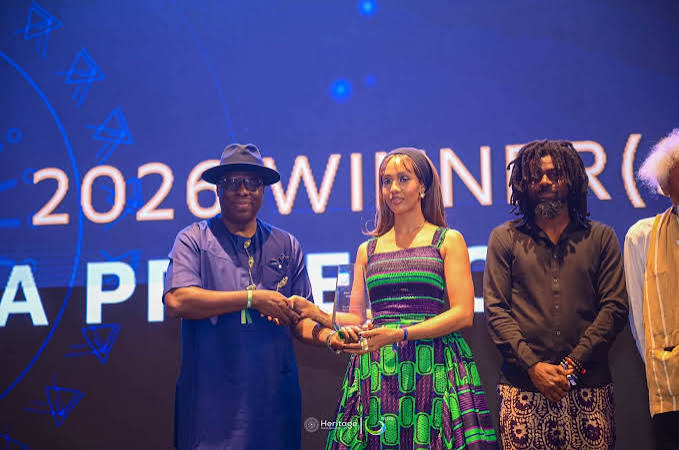
The 2026 Nigeria Prize for Literature winner, Ogaga Ifowodo, has urged secondary school students across Nigeria to cultivate the habit of reading widely, remain persistent in their creative pursuits and explore writing as a means of expressing their thoughts and experiences.
Ifowodo, a poet and lawyer, gave the advice during a mentoring session with students from various secondary schools at the 28th Lagos Book and Art Festival (LABAF) in Lagos.
The festival, organised by the Committee for Relevant Art, is holding from November 16 to 22, 2026, on Lagos Island, under the theme “REPAIR: The Workover Starts, Now.”
The 2026 edition also marks the organisation's 35th anniversary.
Ifowodo Shares His Journey into Poetry
Reflecting on his journey as a writer, Ifowodo encouraged students to develop their creative abilities by writing about personal experiences, observations, ideas and stories that matter to them.
He explained that creative expression was not restricted to poetry, noting that young writers could communicate their thoughts through fiction, essays and other literary forms.
He recalled writing his first poem at about 16 while attending Federal Government College, Warri.
According to him, a senior student challenged him to write a poem for his school house during an annual festival of arts and culture.
Although he had never written a poem before, he accepted the challenge and produced a piece titled “Ill Wind.”
The poem won first prize among the school's four houses and earned him an opportunity to read his work before the entire school.
He used the experience to encourage students not to allow a lack of experience to prevent them from exploring their creative potential.
'Read Voraciously' and Learn from Literary Masters
Ifowodo emphasised that reading remained fundamental to developing strong writing skills.
He urged aspiring writers to look beyond their school textbooks and explore the works of established literary figures, including William Shakespeare, Charles Dickens, Chinua Achebe and Wole Soyinka.
“Read voraciously. Read voraciously,” he advised.
He explained that studying accomplished writers could help young people understand language, develop their literary abilities and discover different approaches to storytelling.
However, he cautioned against simply copying established authors, encouraging students to learn from their techniques while developing their individual voices.
The laureate also described poetry as an elevated use of language, drawing attention to its figurative, rhythmic and musical qualities.
He identified literary devices such as rhyme, rhythm, alliteration and metaphor as important elements that could make written and spoken expressions more engaging and memorable.
Drawing from his experience teaching literature in the United States, Ifowodo encouraged students to memorise at least one poem, comparing the practice with remembering the lyrics of popular songs.
Winning Collection Explores Religious Extremism
Ifowodo's winning literary collection, Why Does God Need a Gun?, explores religious extremism and the use of religion to justify violence.
He explained that his decision to write some portions of the collection in the voice of Leah Sharibu was intended to restore her agency and provide a literary platform through which her voice could be represented.
His work earned him the 2026 Nigeria Prize for Literature, accompanied by a $100,000 award.
Akachi Ezeigbo Calls for Discipline and Continuous Improvement
Also speaking at the mentoring session, Prof. Akachi Ezeigbo, Chairman of the Advisory Board of The Nigeria Prize for Literature, urged aspiring writers to strengthen their craft through regular reading, sustained writing and careful editing.
She observed that the quality of literary submissions for the prize had improved considerably over the years.
Ezeigbo recalled that in 2004, when the prize was first held, none of the submitted books received the award because judges identified editorial shortcomings in the entries.
She, however, noted that writers and publishers had since made considerable progress in the quality of literary works being produced.
According to her, the quality of books shortlisted for the 2026 edition made the selection process particularly competitive.
She encouraged young writers to remain committed to reading and writing, stressing that consistent exposure to good literature was essential to producing quality work.
Aradel Highlights Investment in Literacy and Education
The Community Affairs Manager of Aradel Holdings Plc, Patrick Ekong, said the company's investment in literacy and education reflected its commitment to community development and human capital advancement.
He disclosed that the organisation had spent approximately $224 million on bursary payments to students from its host communities studying in tertiary institutions.
The support, according to him, covers tuition and accommodation for students from financially disadvantaged backgrounds.
Ekong also explained that literacy had expanded beyond the traditional ability to read and write to include digital, financial and information literacy.
He said these skills were increasingly important in helping young people navigate social, economic and technological challenges.
He further encouraged parents to introduce financial literacy to children by teaching them the importance of saving, budgeting and responsible money management.
Reading Remains a Foundation for the Next Generation
The conversations at LABAF 2026 highlighted the importance of reading, creativity and education in preparing young Nigerians for the future.
Ifowodo's personal experience demonstrated how a simple challenge at school could become the starting point of a remarkable literary journey.
Beyond writing competitions and literary awards, his message to students was that developing a strong creative voice requires curiosity, patience, discipline and continuous learning.
As digital technology increasingly shapes how young people access information and communicate, the encouragement to read widely and think critically remains particularly relevant.
For Nigeria's next generation of writers, the journey towards literary excellence begins with a willingness to read, observe, write, revise and persevere.
Wakirike Herald
The Voice of Wakirike People Everywhere
Written by
wk-admin
Comments
- Be the first to comment.