NICOLD Calls for Private Investment, Innovation to Improve Dam Safety in Nigeria
By Wakirike Herald
The Nigerian Committee on Large Dams (NICOLD) has called for increased private-sector investment, technological innovation and sustained training of young engineers to strengthen dam safety and management across Nigeria.
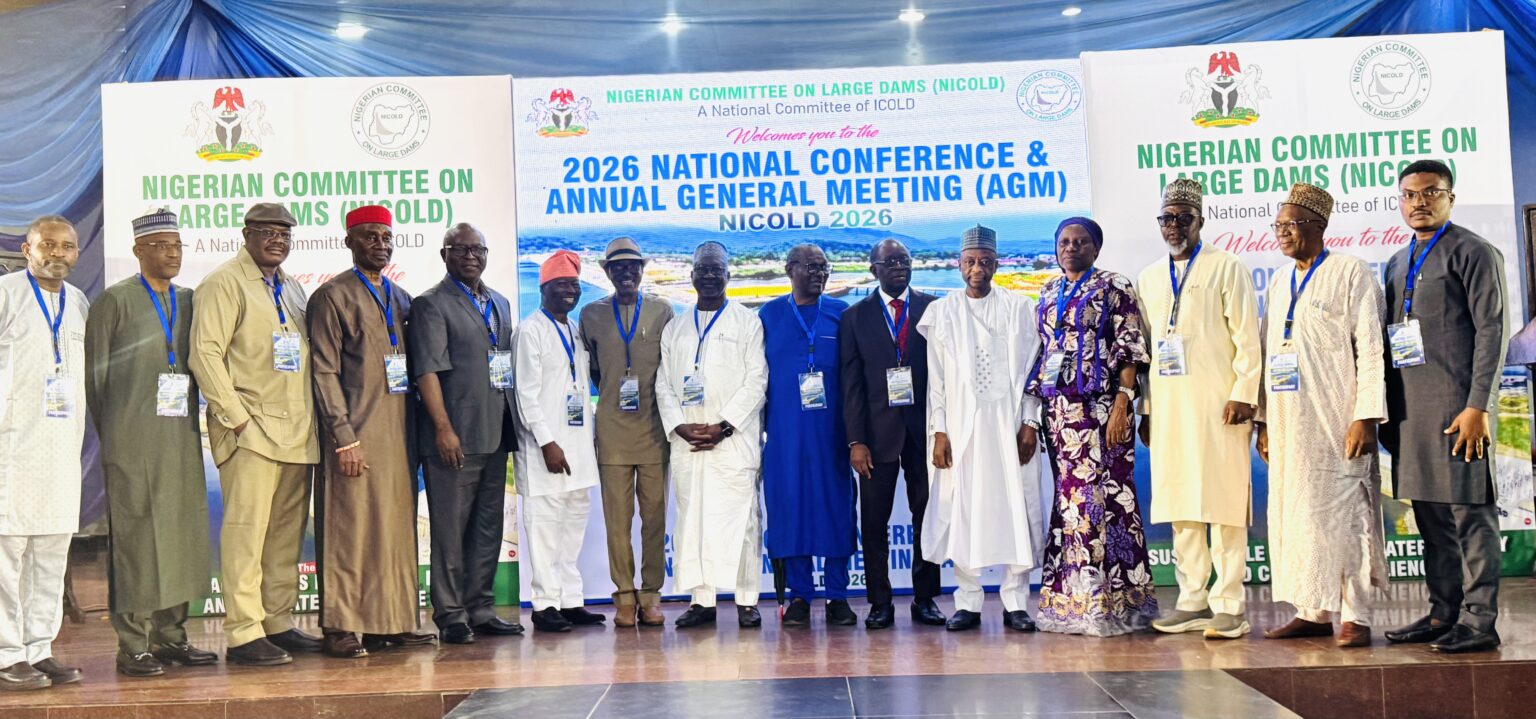
The committee's President, Dr Johnson Adewumi, made the call on Tuesday at NICOLD's 2026 National Conference and Annual General Meeting in Abuja.
The conference, themed “Sustainable Dams for Water, Energy and Climate Resilience”, brought together engineers, policymakers, researchers and other stakeholders to discuss emerging challenges and solutions in dam engineering and management.
Adewumi said while government remained responsible for developing policies and regulatory frameworks, private-sector organisations had an important role in translating those policies into practical projects and programmes.
He encouraged more companies to partner with NICOLD, describing the organisation as a platform for professionals working in dam engineering, construction and technology.
Young engineers urged to acquire specialised skills
The NICOLD president disclosed that the committee had organised seven training sessions on dam operations and maintenance with support from partners, including Mainstream Energy Solutions and DeCrown West Africa Company.
He stressed that developing the next generation of dam engineers was essential to preserving technical expertise and preventing infrastructure failures.
According to him, experienced professionals have a responsibility to transfer their knowledge to younger engineers through mentorship and continuous professional development.
Adewumi, who disclosed that he was 75, emphasised the importance of preparing younger professionals to assume future responsibilities in dam design, construction, operation and management.
He also called for greater adoption of modern technologies, research and innovation to improve dam monitoring, structural assessments and maintenance.
FG highlights investment in dam safety and hydropower
Earlier, the Minister of Water Resources and Sanitation, Prof. Joseph Utsev, called for stronger collaboration and increased investment to improve dam safety, hydropower generation and water resources management.
Represented by the ministry's Acting Permanent Secretary, Ali Dallah, the minister said sustainable dam development remained important to water security, agricultural production, electricity generation and flood management.
He identified the Sustainable Power and Irrigation for Nigeria (SPIN) Project, implemented with support from the Federal Ministry of Power and the World Bank, as a major initiative aimed at improving dam safety, modernising irrigation infrastructure and promoting hydropower development.
Utsev stressed that effective dam management required regular inspections, structural assessments, preventive maintenance and timely rehabilitation to identify potential risks and protect critical infrastructure.
He also warned that changing hydrological conditions and extreme weather events were creating new challenges for dam design and operations.
The minister said climate resilience must therefore be integrated into every stage of dam development, from planning and construction to operation and maintenance.
He added that the ministry, through the Nigeria Hydrological Services Agency, was strengthening hydrological data collection, flood forecasting and early warning systems.
The Annual Flood Outlook, he said, provided important information to support preparedness, reservoir management and decision-making by relevant stakeholders.
Expert calls for reassessment of existing dams
Also speaking, dam safety expert, Mr Matthew Offie, urged authorities to reassess existing dams using current climate data to determine their safety, structural condition and continued functionality.
Offie observed that many dams were designed using historical hydrological information that might no longer accurately reflect present-day weather and rainfall conditions.
He identified changing rainfall patterns, unpredictable flooding and prolonged droughts in some parts of Nigeria as reasons for updating existing hydrological assessments.
He recommended retaining the original engineering principles of existing dams while incorporating contemporary climate information into their operation and management.
Offie also highlighted the potential of satellite data and emerging technologies to make dam assessments more affordable and accessible.
He said his conference paper examined cost-effective approaches to hydrological assessment, drawing on more than 40 years of professional experience to identify practical solutions and prevent the repetition of past project failures.
Flood risks reinforce need for stronger dam management
The importance of dam safety is underscored by Nigeria's recurring flooding challenges and growing demand for reliable water and electricity supplies.
According to figures from the National Emergency Management Agency, floods had affected 315,762 people, displaced 113,367 and killed 231 people across 25 states and 86 local government areas as of September 2025.
The disasters also damaged 46,304 farmlands.
Meanwhile, the Nigerian Electricity Regulatory Commission reported that hydropower plants generated 3,081.88 gigawatt-hours of electricity in the first quarter of 2025, compared with 3,029.07 gigawatt-hours in the preceding quarter.
Beyond electricity generation, dams support irrigation, livestock production, industrial activities, public water supply and flood control.
For Nigeria, strengthening dam infrastructure requires more than constructing new facilities. Regular safety inspections, reliable hydrological information, adequate maintenance funding and skilled professionals will be essential to protecting existing investments and reducing risks to communities.
The challenge now is to translate the recommendations from the conference into measurable improvements in dam safety, water management and climate preparedness across the country.
Wakirike Herald
The Voice of Wakirike People Everywhere
Written by
wk-admin
Comments
- Be the first to comment.