NDDC, UNIPORT Partner to Train Young Niger Delta Filmmakers
By Wakirike Herald
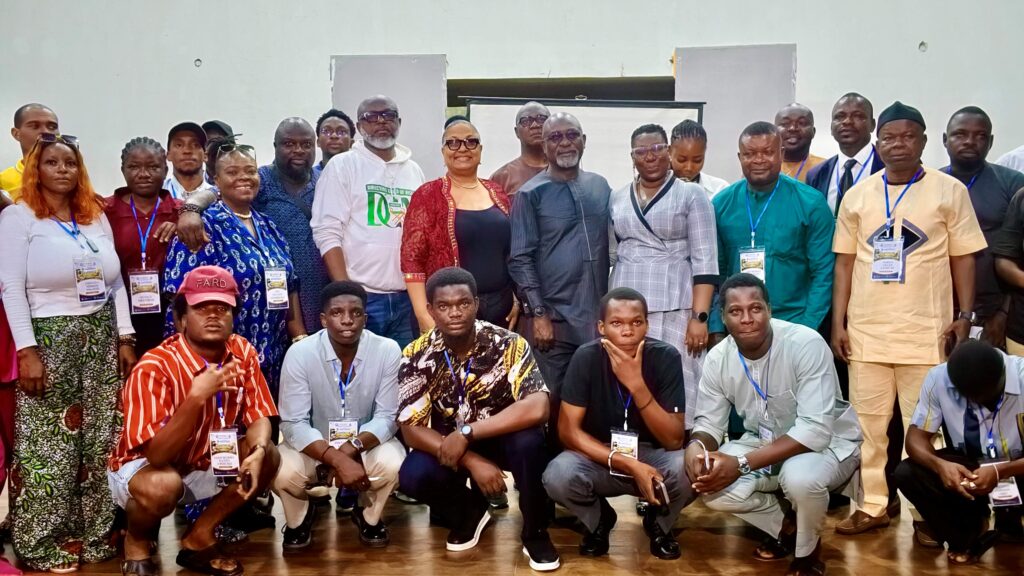
The Niger Delta Development Commission (NDDC) has partnered with the University of Port Harcourt (UNIPORT) to strengthen the region’s creative industry through specialised training in film production.
The collaboration is expected to equip young people with practical filmmaking skills, encourage authentic storytelling and improve their prospects in the growing creative economy.
Dr Selina Dan-Albert, Head of New Media in the NDDC’s Corporate Affairs Department, disclosed this during a four-day technical training programme in film production at UNIPORT.
She spoke in a statement issued on Wednesday in Port Harcourt by the commission’s Head of Corporate Affairs, Mrs Seledi Thompson-Wakama.
Dan-Albert described the initiative as an investment in the creative potential of the Niger Delta, urging participants to develop their professional skills and use filmmaking to showcase the region’s experiences, culture and identity.
“We want the trainees to use their creativity to tell authentic Niger Delta stories. NDDC will continue to support them with capacity-building initiatives,” she said.
UNIPORT Highlights Technical Skills and Digital Innovation
Prof. Edward Imo, Head of the Department of Theatre Arts and Film Studies at UNIPORT, said the programme was designed to provide participants with the technical knowledge required for professional film production.
He expressed confidence that the training would strengthen filmmakers’ ability to communicate the region’s stories effectively and contribute to the development of the creative sector.
Imo commended the NDDC for recognising the department’s expertise and its contribution to practical film production in Nigeria.
He also noted that technological advances had changed filmmaking, making continuous professional development essential for practitioners seeking to remain competitive.
According to him, artificial intelligence and other digital tools could enhance storytelling, but filmmakers must ensure that technology does not overshadow the human experiences, emotions and social concerns that give their work meaning.
“Artificial intelligence and other digital technologies could enhance storytelling. However, filmmakers must preserve the human experiences, emotions and social concerns in their work,” he said.
He called on other government agencies to emulate the NDDC by investing in skills acquisition and professional development.
Creative Industry Offers Employment Opportunities
Mr Francis Abayomi, Consultant and Managing Director of GreenHedge Resource Consults Ltd., said the Niger Delta had considerable opportunities for growth in the creative industries.
He explained that the training was intended to provide young people with practical filmmaking skills, adding that UNIPORT was selected because of its talent pool and contributions to the industry.
Also speaking, Mr Uche Agbo, National President of the Directors Guild of Nigeria, described filmmaking as a potential driver of employment creation and economic growth.
Agbo said the industry could provide young people with opportunities to acquire marketable skills, establish sustainable livelihoods and contribute to efforts to reduce poverty and crime.
He encouraged participants to develop distinctive storytelling styles, emphasising that integrity and authenticity were essential to successful filmmaking.
Building a Stronger Niger Delta Creative Economy
The NDDC-UNIPORT partnership highlights the importance of professional training in helping young people participate in the creative economy.
For the Niger Delta, a stronger film industry could also create opportunities to document indigenous cultures, preserve community histories and present local experiences to wider Nigerian and international audiences.
However, the long-term impact of the initiative will depend on whether participants can translate their training into professional opportunities, viable productions and sustained careers.
Continued access to industry networks, modern equipment, funding and distribution channels could help young filmmakers turn their acquired skills into lasting economic and cultural value.
Wakirike Herald
The Voice of Wakirike People Everywhere
Written by
wk-admin
Comments
- Be the first to comment.