NALDA Develops 6,200 Hectares of Cashew, Cocoa and Oil Palm Plantations in Four States
By Wakirike Herald
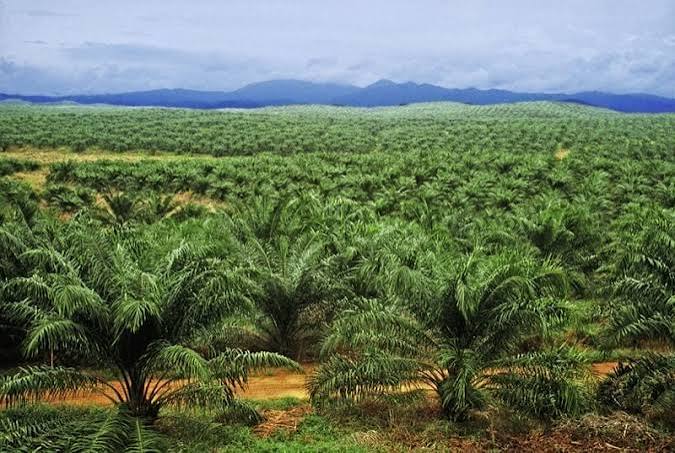
The National Agricultural Land Development Authority (NALDA) is developing 6,200 hectares of cashew, cocoa and oil palm plantations across four states as part of efforts to expand agricultural production, create rural employment and promote sustainable land management.
The Executive Secretary of NALDA, Mr Cornelius Adebayo, disclosed this on Wednesday while addressing delegates at the COP31 Climate Summit in Turkey.
His presentation was made available to the News Agency of Nigeria (NAN) in Abuja.
Adebayo explained that the plantations were being established under the agency's Community-Based Plantation Development Programme, which seeks to promote long-term tree-crop cultivation, restore degraded landscapes and generate additional income for rural communities.
Four States to Benefit From Plantation Development
According to Adebayo, the 6,200 hectares comprise four major plantation projects distributed across Oyo, Ogun, Osun and Ondo states.
The projects include:
-
Oyo State: 1,500 hectares of cashew plantation at Ilero-Babaode.
-
Ogun State: 1,500 hectares of cashew plantation at Joga Orile.
-
Osun State: 2,000 hectares of cocoa plantation at Ifon.
-
Ondo State: 1,200 hectares of oil palm plantation at Omotosho.
He said the projects were designed not only to increase agricultural output but also to improve environmental conditions and strengthen rural economies.
According to him, the plantations could provide opportunities for carbon sequestration, biodiversity enhancement, improved soil conditions and the restoration of productive landscapes.
"These plantations are significant not only for their contribution to agricultural production and rural livelihoods but also for their environmental benefits.
"They provide opportunities for carbon sequestration, biodiversity enhancement, improved soil conditions and the restoration of productive landscapes," he said.
NALDA Targets Emerging Carbon Credit Opportunities
Adebayo disclosed that the agency was working towards systematically documenting, measuring and verifying the environmental contributions of its plantation projects to qualify eligible agricultural assets for carbon-credit opportunities.
He further revealed that NALDA was seeking a Letter of No Objection from the National Council on Climate Change (NCCC) to facilitate the registration and commercialisation of eligible carbon credits generated through its plantation and agroforestry initiatives.
The process is expected to provide a framework for measuring the environmental benefits of the projects and potentially attract climate-related financing.
Adebayo said the initiative reflected a broader shift in the agency's approach to agricultural land development, with greater emphasis on combining food production, wealth creation, employment and environmental sustainability.
He noted that since COP30, NALDA had become more deliberate about ensuring that agricultural development extended beyond increasing cultivated land and food production to include climate-resilient farming systems.
The projects, he added, aligned with President Bola Tinubu's Renewed Hope Agenda, which prioritises food security, economic diversification, rural development and environmental sustainability.
20,000 Hectares Planned for Renewed Hope Mega Farm Estates
Beyond the plantation projects, the NALDA executive secretary disclosed that the agency was developing Renewed Hope Mega Farm Estates across three states, covering a combined 20,000 hectares.
The proposed distribution includes:
-
Ekiti State: 10,000 hectares.
-
Kwara State: 5,000 hectares.
-
Bauchi State: 5,000 hectares.
Adebayo said the estates were being designed as integrated agricultural production centres supported by essential infrastructure to improve farming operations and productivity.
The planned facilities include access roads, irrigation systems, water infrastructure, storage and processing facilities, farm hostels and other supporting amenities.
According to him, the infrastructure would provide farmers with a more organised production environment, improve access to essential services and strengthen their ability to adapt to changing climatic conditions.
He said the integrated approach was intended to address some of the structural challenges affecting agricultural production, particularly inadequate infrastructure and limited access to modern farming facilities.
Youth Agroforestry Campaign Targets One Million Trees by 2030
Adebayo also disclosed that NALDA had planted approximately 5,000 economic trees in selected locations under the first phase of its Youth Agroforestry and Climate Action Campaign.
He said the second phase had commenced, with an additional 56,000 trees targeted for planting.
The agency's broader ambition, he added, was to facilitate the planting of one million trees by 2030.
The campaign is intended to encourage young people to participate in agroforestry, environmental restoration and climate-conscious agricultural activities.
He explained that the initiative was also connected to the Green Hope Open-Field Horticulture Programme, which supports more than 5,000 women across approximately 38 locations nationwide.
According to him, the programme provides participating women with opportunities to cultivate high-value horticultural crops, access productive agricultural land and participate in wider agricultural value chains.
Women and Rural Communities at the Centre of Agricultural Development
The NALDA executive secretary maintained that sustainable agricultural practices could simultaneously strengthen food production, generate employment and contribute to climate-change mitigation.
He said the agency remained committed to expanding climate-smart agricultural practices, strengthening community participation and attracting climate finance, technology and technical expertise through national and international partnerships.
He emphasised that the plantation and mega farm initiatives were intended to create economic opportunities while ensuring that agricultural land development delivered environmental and social benefits.
"Our vision is to demonstrate that agricultural land development in Nigeria can be commercially viable, environmentally responsible and socially inclusive," he said.
Implementation and Climate Financing Will Determine Impact
NALDA's proposed investments represent an effort to connect agricultural expansion with environmental restoration and emerging climate-finance opportunities.
However, the success of the 6,200-hectare plantation programme and the proposed 20,000-hectare mega farm estates will depend on effective implementation, access to infrastructure, long-term maintenance and meaningful participation by host communities.
The proposed carbon-credit opportunities will also require credible environmental measurement, independent verification and compliance with applicable regulatory standards before eligible projects can generate commercial credits.
For rural communities, the most important measure of success will be whether the initiatives translate into reliable employment, improved household incomes, productive agricultural land and stronger market opportunities.
If effectively implemented, the programmes could provide a framework for combining agricultural investment, rural economic development and environmental protection.
Wakirike Herald
The Voice of Wakirike People Everywhere
Written by
wk-admin
Comments
- Be the first to comment.