Missing Medical Records Force Two in Five Nigerians to Repeat Tests, Survey Finds
By Wakirike Herald
Millions of Nigerians already struggle with the cost of accessing healthcare. A new survey has highlighted another burden facing patients: having to pay again for laboratory tests and medical scans because previous results cannot be located.
The Nigerian Health Continuity Survey, an online study involving 1,820 adults across Nigeria’s six geopolitical zones and the Federal Capital Territory (FCT), found that two in five respondents had paid to repeat a laboratory test or scan within the previous two years because an earlier result was missing.
Among respondents who gave a definite answer, excluding those who were unsure, the proportion increased to 52.1 per cent. Nearly half of those affected said they had paid more than once.
The findings point to weaknesses in the management and transfer of patients’ medical information, with households bearing the financial consequences.
Missing records create additional healthcare costs
Conducted between November 5 and 12, 2026, the survey examined the difficulties patients encounter when trying to retrieve information from previous hospital visits, prescriptions and diagnostic tests.
Of the 1,480 respondents who had attempted to access such information, 47.3 per cent described the process as somewhat or very difficult. Only 18.9 per cent said it was very easy.
The consequences extend beyond the inconvenience of searching for medical files. When previous test results are unavailable, patients may have to repeat procedures, incur additional expenses and spend more time navigating the healthcare system.
Williams Popoola, Managing Director of Medbankr, said the problem represented a failure of information continuity rather than necessarily a failure by individual hospitals or laboratories.
He observed that a facility might have completed its work and a laboratory might have produced the required results, but when the information failed to reach the next point of care, the patient or family absorbed the additional cost.
Popoola described the situation as a systems failure with direct financial consequences for households.
Long hospital visits add to household pressure
The survey also identified the amount of time patients spend accessing healthcare as a significant concern.
Among respondents who reported how long their most recent care journey took, 73.4 per cent said it lasted at least two hours, from leaving home to completing the visit.
Another 17.6 per cent said the process took a full day or longer.
The financial burden was equally significant. On their most recent healthcare visit:
-
41.8 per cent spent more than ₦50,000 out of pocket, including transport and medicines.
-
25.3 per cent spent more than ₦100,000.
-
In 65.9 per cent of cases, patients or their families organised the journey themselves.
-
Only 13.2 per cent said a health facility organised the trip.
The findings suggest that the responsibility for arranging appointments, transportation, payments, communication and follow-up often rests with patients and their relatives.
For households with limited financial resources, these additional responsibilities can make access to timely medical attention more difficult.
Patients demand better processes, not only lower prices
When respondents were asked to identify the single change that would most reduce the stress of seeking healthcare, 27.5 per cent selected affordability.
However, 61.5 per cent prioritised improvements in healthcare processes and information management.
Their preferred changes included clearer information before hospital visits, shorter waiting times, easier access to health insurance, improved follow-up arrangements, access to personal medical records and simpler appointment booking.
The results indicate that, while the cost of healthcare remains a major concern, patients also want a system that is easier to navigate and less dependent on repeated paperwork and fragmented information.
National healthcare financing remains a concern
The report placed its findings alongside national data highlighting the financial pressure healthcare places on Nigerian households.
An analysis of the 2023/24 General Household Survey found that 45.5 per cent of Nigerian households experienced catastrophic health spending at a threshold of 10 per cent of their household budget.
Rural households, female-headed households and elderly households were identified as carrying particularly heavy burdens.
The report also noted that out-of-pocket payments account for approximately 72 per cent of Nigeria's current health expenditure, one of the highest proportions globally.
These figures underline the vulnerability of households that must pay directly for medical consultations, tests, medicines and other services.
However, the authors cautioned that the Nigerian Health Continuity Survey was conducted online, with participants recruited through social media and online forums. Its findings therefore cannot be treated as representative estimates for the entire Nigerian population.
Report proposes three measures to improve continuity of care
The authors recommended three interventions to address the problems identified.
First, they urged statisticians responsible for the national household survey to introduce three questions on healthcare continuity. This, they said, would help produce a more representative national estimate of the problem.
Second, health facilities and state agencies were advised to publish bundled cost estimates before patients arrive for appointments. Such information would allow families to understand the likely cost of major tests and procedures before paying registration fees and other initial charges.
Third, the report called for a minimum standard governing the content and format of patient-carried medical summaries. This would help ensure that patients can take essential health information from one facility to another.
Dolapo Fasakin, Product and Growth Manager of Medbankr, said the organisation commissioned the study because individual experiences needed to be examined through evidence.
Fasakin acknowledged that patient-held medical records could address part of the problem but cautioned against presenting any single product or intervention as a complete solution to Nigeria's healthcare continuity challenges.
A healthcare system that remembers its patients
The findings raise an important question about the future of healthcare delivery in Nigeria: why should patients repeatedly pay for information that has already been collected, processed and paid for?
Better record management, secure access to medical histories and improved communication between healthcare providers could reduce unnecessary repeat tests and help patients move more efficiently between facilities.
For a country where direct household payments already account for a substantial share of healthcare spending, reducing avoidable costs should be part of wider health sector reform.
The report does not establish the national prevalence of missing medical records, but it draws attention to a problem that deserves further investigation. Policymakers, healthcare providers and health technology organisations must consider how to make patients' medical information more accessible, secure and transferable.
Ultimately, healthcare continuity should mean that patients do not have to start their medical history all over again every time they visit a new facility.
SEO and Publishing Details
SEO Title: Missing Medical Records Force Two in Five Nigerians to Repeat Medical Tests
URL Slug: missing-medical-records-nigerians-repeat-medical-tests
Meta Description: A Nigerian health survey finds two in five respondents paid to repeat medical tests because earlier records were missing, adding to household healthcare costs.
Article Description: The Nigerian Health Continuity Survey highlights how missing medical records, high healthcare costs and lengthy hospital visits are placing additional pressure on Nigerian households.
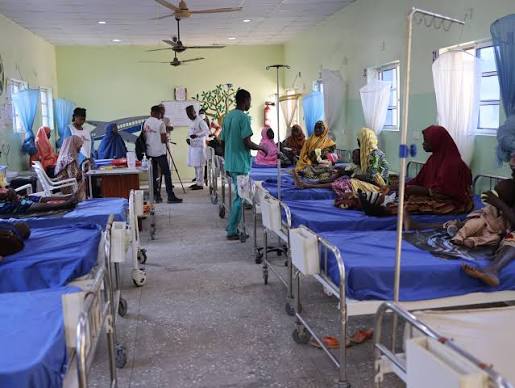
Suggested Image Caption: Missing medical records and repeated diagnostic tests are adding to the financial burden faced by Nigerian patients, according to a new survey.
Image Credit: News Agency of Nigeria (NAN).
Editorial Note: The survey was conducted online and its findings are not nationally representative. The reported percentages should be understood within the limitations of its sample.
Wakirike Herald
The Voice of Wakirike People Everywhere
Written by
wk-admin
Comments
- Be the first to comment.