Kaduna Reintegrates 15,000 Out-of-School Children into Formal Education
By Wakirike Herald
The Kaduna State Government says it has reintegrated approximately 15,000 out-of-school children into the formal education system through its Reaching Out-of-School Children (ROOSC) Project.
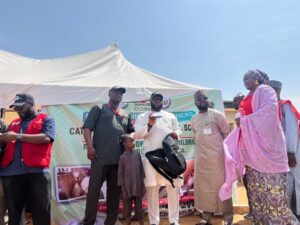
The project's coordinator, Mr Ezra Angai, disclosed this during an exercise to mainstream learners from Catch Up Clubs (CuCs) into formal schools at LGEA Primary School, Babban Saura, Kaduna.
Angai said the exercise was being implemented across 14 local government areas as part of the government's target of returning 100,000 children to education.
He explained that the latest achievement brought the total number of children reached through the project to more than 36,000 across different learning pathways.
According to him, the initiative was introduced by the administration of Governor Uba Sani to address the growing number of children excluded from formal education.
Project identifies 187,719 out-of-school children
Angai disclosed that the project had mapped 360,000 households across Kaduna State, identifying 187,719 out-of-school children in the state's 23 local government areas.
He said the intervention involved identifying affected children, enrolling them and providing appropriate learning opportunities based on their educational backgrounds and individual needs.
The Catch Up Clubs provide three months of remedial lessons to prepare children who were previously outside the formal education system for integration into regular classrooms.
The programme also assesses learners' academic abilities to determine suitable class placements and ensure that children are not assigned to levels beyond their learning capacities.
Angai added that the project had adopted alternative learning approaches, including radio-based education and partnerships with Alaramas and Tsangaya schools, to reach children in underserved communities.
He acknowledged the contributions of the state government, development partners, parents, teachers and community leaders to the implementation of the initiative.
Among the project's partners are the Islamic Development Bank, Kuwait Fund, Save the Children International, Education Above All and the Global Partnership for Education.
Government pledges more classrooms and learning materials
Also speaking, the Executive Chairman of the Kaduna State Universal Basic Education Board (SUBEB), Dr Mubarak Muhammad, said the state government declared a state of emergency on education in 2023 to address challenges affecting access to quality basic education.
Muhammad said nearly 15,000 learners who completed the Catch Up Club programme were being integrated into formal classrooms across the state.
He disclosed that the government had provided learning materials to encourage the children and support their transition into regular schooling.
He added that the administration would continue investing in teacher development, additional classrooms and improved learning environments.
Save the Children supports transition into formal schools
The Project Director of Save the Children's ROOSC Project, Mr Emmanuel Brusa, said the organisation facilitated the transition of learners from Catch Up Clubs into formal schools.
According to him, the children were formally handed over to school head teachers and education secretaries for continued learning, supervision and monitoring.
The Head Teacher of LGEA Primary School, Babban Saura, Mrs Rabi'atu Yahaya Abdullahi, appreciated the government and development partners for supporting the initiative.
However, she appealed for additional classrooms and perimeter fencing to address the growing pressure on the school's facilities.
Abdullahi disclosed that the school, established in 1976, currently had 2,005 pupils accommodated in just 12 classrooms.
The District Head of Babban Saura, Alhaji Dauda Hashimu, also commended the government and its partners for their intervention.
He called for the construction of additional classrooms, noting that the school had sufficient land available for expansion.
Parents welcome children's return to school
Some parents, including Jummai Adamu and Samaila Musa, expressed appreciation to the government and development partners for providing their children with another opportunity to access formal education.
They appealed for the programme to be sustained, expressing hope that it would improve the children's educational prospects and future opportunities.
Sustaining the gains beyond enrolment
Kaduna's reintegration initiative highlights the importance of identifying children excluded from education and creating flexible pathways for their return to learning.
However, the growing enrolment figures also raise questions about the capacity of existing schools to accommodate additional pupils without compromising teaching quality.
The situation at Babban Saura, where 2,005 pupils reportedly share just 12 classrooms, illustrates the infrastructure challenges that may accompany successful reintegration.
For the programme to achieve lasting results, the return of children to school must be matched with adequate classrooms, qualified teachers, learning materials and consistent monitoring.
Ultimately, the success of the intervention will depend not only on how many children are enrolled but also on how many remain in school, acquire essential skills and complete their education.
Wakirike Herald
The Voice of Wakirike People Everywhere
Written by
wk-admin
Comments
- Be the first to comment.