Kaduna Poultry Farmers Groan Under Rising Feed Costs, Seek Government Support
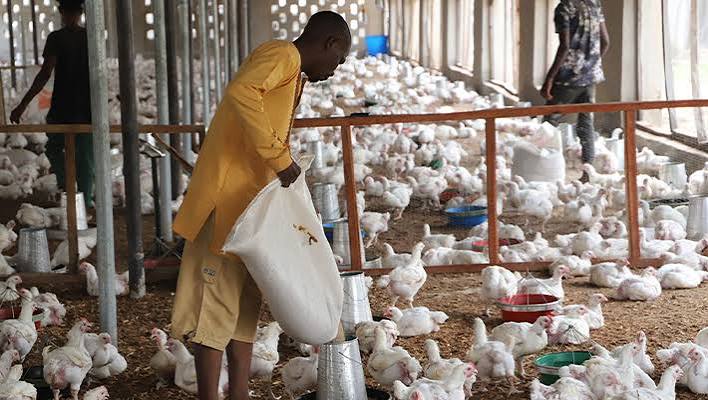
By Wakirike Herald
Poultry farmers in Kaduna State have raised concerns over the rising cost of animal feeds, warning that the development is making it increasingly difficult to sustain production and meet growing demand for poultry products.
Some farmers who spoke with the News Agency of Nigeria in Kaduna said expensive feed ingredients, transportation challenges and limited access to affordable financing were placing additional pressure on their businesses.
They warned that unless the situation improves, some small-scale operators may be forced to reduce the number of birds they keep or scale down production.
Rising feed prices threaten poultry production
Alewo Felix, who operates a poultry farm with about 200 birds, said the high cost of commercial feed had forced her to begin producing feed locally to reduce expenses.
She disclosed that a bag of poultry feed currently sells for between ₦20,000 and ₦25,000, while her farm requires approximately four bags monthly.
However, she said the cost of maize, one of the major ingredients used in poultry feed formulation, had also increased, making local production less affordable.
Felix warned that she might reduce the number of birds on her farm next year if feed and maize prices remained high.
She said her immediate priority was to keep the birds healthy and meet expected demand during the Christmas season.
Farmers seek training in local feed production
Another poultry farmer, Okechukwu Okonkwo, based in Ugwan Sunday, said some operators were turning to locally formulated feeds because commercial alternatives had become expensive.
However, he warned that improper measurement of ingredients could affect the health and growth of birds.
Okonkwo called for government-supported training programmes to equip poultry farmers with the technical knowledge required to formulate balanced feeds.
He specifically recommended training on the use of grains such as millet and agro-industrial by-products as alternative ingredients.
According to him, access to practical training would help farmers reduce production costs without compromising the nutritional requirements of their birds.
Poor roads compound transportation losses
Beyond feed expenses, poultry farmers also identified poor road infrastructure as another challenge affecting their operations.
Aten Bobai, a farmer at Ugwan Pama, blamed part of the rising cost of poultry production on the removal of fuel subsidy, which he said had contributed to higher operating and transportation expenses.
He also recounted an incident in which a vehicle transporting his eggs was involved in an accident while negotiating a bad road in the area.
Bobai said almost half of the crates of eggs were broken during the incident, resulting in significant losses.
The experience illustrates how poor road conditions can increase the cost of moving poultry products to customers and undermine the earnings of small-scale producers.
Farmers appeal for affordable loans and grain support
Danjuma Kato, a poultry farmer in Barnawa, urged the government to support registered poultry cooperatives with supplies of grains for local feed production.
He also called for low-interest loans to help farmers expand their operations and cope with prevailing economic pressures.
Kato suggested that such loans could be distributed through verified local poultry associations rather than relying exclusively on commercial banks, which he said were often difficult for small-scale operators to access.
Meanwhile, Bakam Zamani, who keeps about 150 birds, said he had benefited from lower prices of sorghum and millet, which enabled him to formulate poultry feeds at reduced costs.
His experience suggests that access to alternative grains could help ease some of the financial pressure on poultry producers.
Food security implications of rising production costs
The concerns raised by Kaduna poultry farmers highlight the wider relationship between feed prices, farm profitability and the affordability of poultry products.
When production costs increase, farmers may respond by reducing their stock, raising selling prices or leaving the business altogether. Such developments could affect the availability and affordability of eggs and poultry meat, particularly for households already facing economic difficulties.
Government support through practical feed-formulation training, improved access to grains, cooperative financing and rural road rehabilitation could help strengthen the sector.
For small-scale poultry farmers, however, the immediate priority remains finding affordable ways to maintain healthy birds, sustain production and meet market demand without operating at a loss.
Wakirike Herald
The Voice of Wakirike People Everywhere
Written by
wk-admin
Comments
- Be the first to comment.