Kaduna Plans More Special Education Schools, Specialised Teacher Training for Children with Disabili
By Wakirike Herald
The Kaduna State Government has pledged to establish additional special education schools and strengthen specialised teacher training as part of efforts to improve access to quality education for children with disabilities.
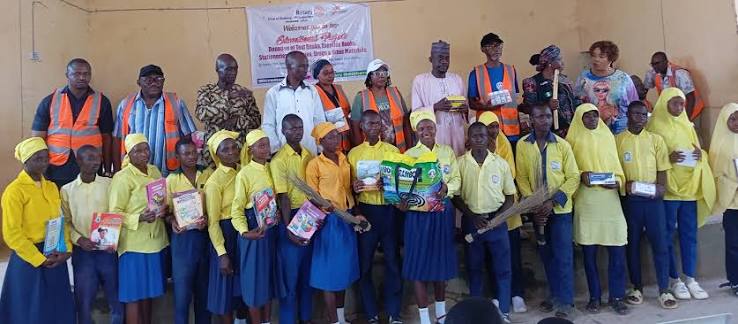
The Commissioner for Education, Prof. Sani Sambo, gave the assurance on Friday during the 2026 World Children’s Day celebration organised by the United Nations Children’s Fund (UNICEF) at the Kaduna State Special Education School (KASSES), Kaduna.
The celebration, held under the theme, “My Day. My Rights. My Future”, provided an opportunity for children, particularly those with disabilities, to express their concerns and aspirations.
Sambo said the performances and contributions of the pupils demonstrated their talents and potential to contribute meaningfully to society when given appropriate opportunities.
He disclosed that he would present UNICEF’s recommendation for additional special education schools to Governor Uba Sani for consideration.
“Disability should never be a barrier to achieving their potential. They deserve every opportunity to learn, participate and contribute meaningfully to society,” he said.
Government considers broader inclusive education reforms
The education commissioner stressed that establishing more specialised schools would not, on its own, address the challenges confronting children with disabilities.
He said adequately trained teachers, accessible learning materials and improved school infrastructure were equally important to ensuring effective learning.
According to him, the government would consider specialised teacher training and other interventions to strengthen inclusive education across the state.
Sambo also encouraged pupils to speak openly about issues affecting their education and welfare, assuring them that their concerns and recommendations would be communicated to the governor.
UNICEF highlights barriers facing children with disabilities
UNICEF Chief of Office in Kaduna, Dr Gerida Birukila, said the exclusion of children with disabilities from education remained a major challenge requiring urgent attention.
She cited statistics indicating that children with disabilities were 49 per cent more likely never to have attended school and 47 per cent more likely to be out of primary school.
Birukila described inclusive education as a fundamental right rather than an act of charity.
She emphasised that children with disabilities needed appropriate learning materials, trained teachers and accessible school facilities to participate fully in education.
“These children are experts on their own lives. Today, they will tell us what they need,” she said.
She urged the Kaduna Government, development partners, media organisations and private sector operators to sustain investment in inclusive education.
Government calls for collective protection of children's rights
The Commissioner for Information and Culture, Mr Ahmed Maiyaki, represented by the Permanent Secretary, Mr Iliya Duniya, reaffirmed the government's intention to support initiatives promoting children's rights and welfare.
He called on individuals, institutions and professional organisations to complement government efforts by creating opportunities for children to express their views and pursue their aspirations.
Similarly, the Chairman of the Kaduna State Universal Basic Education Board (SUBEB), Mohammed Mubarak, said the celebration was designed to give children, particularly those with special needs, a platform to communicate their experiences and expectations.
He maintained that every child, regardless of physical or learning challenges, deserved education, protection, dignity and equal opportunities.
“Children with disabilities are not problems to be solved. They are lights to be celebrated. They are precious, capable and the future of Kaduna State and Nigeria,” he said.
102 new schools and 170 existing facilities under construction and renovation
The Project Coordinator of the Reaching Out-of-School Children (ROOSC) Project, Mr Ezra Angai, announced plans to provide additional Braille materials to the special education school within three weeks.
He also disclosed that the project was constructing 102 new schools and renovating 170 existing facilities across Kaduna State.
According to him, disability-friendly features are being incorporated into the designs, including accessible classrooms, water points and toilets.
However, Angai acknowledged that the initial procurement plans for learning materials had not adequately captured the specific needs of children with disabilities.
He promised to engage the school management to identify the required materials for possible inclusion in the procurement process.
The commitment highlights the importance of involving teachers, parents and children with disabilities in decisions concerning educational infrastructure and learning resources.
Early detection of childhood eye conditions urged
Also speaking, Dr Amina Abdurrahman, representing the Chief Medical Director of the National Eye Centre, Kaduna, Dr Amina Wali, called for early detection and treatment of childhood eye conditions.
She identified cataracts, glaucoma and corneal scarring as conditions that could affect children's sight, noting that some were preventable or treatable when detected early.
She advised parents and caregivers to seek prompt medical attention whenever they noticed abnormalities in their children's eyes.
Turning promises into accessible education
Kaduna's proposed expansion of special education facilities comes against the background of persistent barriers preventing many children with disabilities from accessing and completing basic education.
The proposed schools, specialised teacher training and Braille materials could improve educational opportunities, but their impact will depend on implementation, adequate funding and sustained monitoring.
The ROOSC Project's construction and renovation programme also presents an opportunity to make accessibility a standard feature of public education infrastructure rather than an afterthought.
For children with disabilities, meaningful inclusion means more than admission into school. It requires classrooms they can access, teachers equipped to support their learning, appropriate educational materials and an environment where their voices are respected.
The real test of Kaduna's commitment will be whether these measures translate into improved enrolment, attendance, learning outcomes and equal participation for children across the state.
Wakirike Herald
The Voice of Wakirike People Everywhere
Written by
wk-admin
Comments
- Be the first to comment.