Journalists Receive Indigenous-Language Fact-Checking Training Ahead of 2027 Elections
By Wakirike Herald
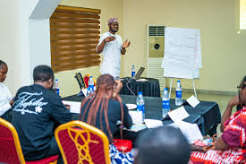
Journalists from Northern Nigeria have received training in fact-checking, artificial intelligence and inclusive reporting in indigenous languages as part of efforts to combat misinformation and improve access to credible electoral information ahead of the 2027 general elections.
The three-day workshop brought together journalists from Plateau, Benue, Taraba, Katsina, Abuja, Adamawa, Kano, Bauchi, Kaduna and other locations.
It was organised under a European Union, Danish Ministry of Foreign Affairs and German Cooperation-supported ECOWAS project on peace, security and governance.
Speaking at the closing session in Kano on Thursday, Mustapha Lawal, a researcher with FactCheck Africa, said the training was designed to address capacity gaps among media practitioners and strengthen the quality of electoral reporting.
He said journalists had an important responsibility to ensure that electoral information was accurate, understandable, inclusive and trustworthy across Nigeria’s diverse language communities.
Indigenous Languages Key to Electoral Information
Lawal described language as an important element of Nigerian identity and a significant factor in how citizens receive and interpret electoral information.
He urged journalists to use indigenous languages to bridge translation gaps, counter false claims and make election-related information accessible to a wider range of voters.
He also called on media organisations to ensure that women, persons with disabilities, rural voters, minority-language communities and other underserved groups were not excluded from access to reliable information.
According to him, broadcasters, editors, fact-checkers, translators and community media practitioners were strategically positioned to verify, interpret and disseminate electoral information responsibly.
In a presentation titled “How Misinformation and Disinformation Travel in Indigenous Languages”, Lawal explained that messages could change meaning as they moved between languages and communication platforms.
He cautioned that journalists and newsrooms could inadvertently amplify false information through inaccurate translations, inadequate verification or premature publication.
He therefore urged editors to strengthen newsroom checks and ensure that electoral claims were verified before publication or broadcast.
Radio, Social Media and Community Networks Shape Information
Hamza Ibrahim, a Nigerian fact-checker and Senior Information Disorder Analyst at the Centre for Information Technology and Development (CITAD), examined how information circulates within indigenous-language communities.
He said Hausa remained a major lingua franca in Northern Nigeria but coexisted with numerous other languages that served distinct communities and audiences.
He identified radio as a widely used communication channel, while social media had created additional opportunities for broadcasting, discussion and audience engagement.
Town criers, he added, continued to play a role in communicating health, electoral and other public information within communities.
Digital platforms, including YouTube, TikTok and WhatsApp, were also increasingly being used to share news, interviews, commentaries and other information.
Ibrahim explained that people were more likely to understand public messages when they were communicated in familiar languages and through examples that reflected their everyday experiences.
He noted that language carried local histories, relationships, humour, authority and community memories. Consequently, the choice of language could determine whether particular audiences felt included or excluded.
The presentation identified political falsehoods, fabricated health advice and conflict-related rumours among the forms of misinformation circulating in indigenous-language spaces across Northern Nigeria.
Journalists Urged to Protect Vulnerable Communities
Abbas Ibrahim, a former Chairman of the Nigeria Union of Journalists (NUJ), Kano State Council, addressed ethical reporting involving vulnerable communities.
He said reports concerning rural residents, women, returning migrants and other vulnerable groups should uphold dignity, accuracy and respect.
He urged journalists to consider the potential consequences of their reports, avoid harmful amplification of unverified information and present sensitive issues without distorting the experiences of affected communities.
He also encouraged media practitioners to give adequate attention to women in politics, persons with disabilities, internally displaced persons (IDPs), rural voters and minority groups.
“Sometimes, you find broadcasters and reporters using words that should not be used, but we must give vulnerable groups a voice,” he said.
The former NUJ chairman further advised journalists to challenge bias, identify hate speech and consider the safety implications of publishing sensitive information about vulnerable sources.
He also highlighted the need to assess the long-term risks associated with retaining or archiving reports that could expose individuals or communities to harm.
AI and Translation Errors Pose New Challenges
During an interactive session, Lukman Adeoti, a technology ecosystem builder, fact-checker and artificial intelligence literacy expert, examined how translated language could contribute to harmful electoral narratives.
In his presentation, titled “Language, Harm and Representation: How Translated Words Become Weapons in Electoral Reporting”, Adeoti explained how inappropriate labels could reinforce cultural stereotypes and stigmatise minority groups.
He warned that inaccurate ethnic and religious framing could distort political realities and intensify tensions, urging journalists to use precise descriptions and avoid language that could cause unnecessary harm.
Adeoti emphasised that media organisations had an ethical responsibility to protect voters’ dignity and represent marginalised groups fairly in electoral coverage.
The workshop also examined the limitations of artificial intelligence tools in indigenous languages, including inadequate digital datasets, dialect variations, speech-recognition errors and cultural blind spots.
These challenges can complicate the verification and translation of election-related claims, particularly where automated systems fail to recognise local expressions, context or differences in meaning.
Participants were also reminded that misinformation could spread quickly through familiar languages and trusted community networks, while fact-checks published in English might fail to reach the same audiences that had encountered the original false claims.
Building Trust Ahead of the 2027 Elections
The training called for stronger indigenous-language information systems that would improve access to verified information, strengthen public trust and encourage informed participation in the electoral process.
The emphasis on language is particularly relevant in a multilingual country such as Nigeria, where the accessibility of political communication can influence how citizens understand candidates, policies, voting procedures and election-related developments.
For the media, the challenge extends beyond translating English-language reports into local languages. It requires understanding cultural context, verifying claims at their source and communicating corrections through the same channels used to spread misleading information.
As preparations for the 2027 general elections continue, the effectiveness of such initiatives will depend on whether participating journalists can apply the lessons in their newsrooms and reach communities that are often underserved by mainstream electoral reporting.
Accurate information in languages people understand can help voters make informed decisions, while responsible reporting can reduce the risk of misinformation deepening ethnic, religious and political divisions.
Wakirike Herald
The Voice of Wakirike People Everywhere
Written by
wk-admin
Comments
- Be the first to comment.