Jonathan Warns Politicians Against Cult-Like Rivalry, Political Violence Ahead of 2027 Elections
By Wakirike Herald
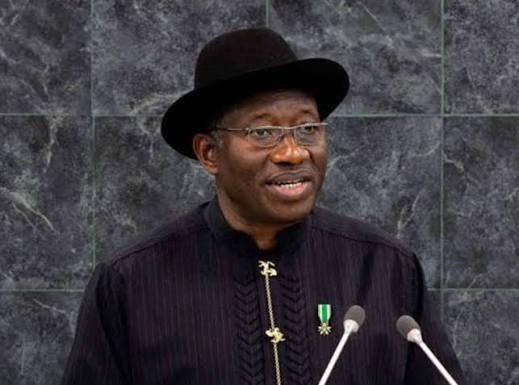
Former President Goodluck Jonathan has warned Nigerian politicians against growing political intolerance, thuggery and electoral violence, cautioning that political parties must not operate like rival cult groups ahead of the 2027 general elections.
Jonathan gave the warning on Tuesday in Abuja at the third National Peace and Awareness Conference, organised by the Goodluck Jonathan Foundation (GJF).
The 2026 conference was themed "Safeguarding Trust and Strengthening Social Cohesion in a Politically Competitive Environment."
The former president, who founded the GJF, expressed concern over the increasing hostility among political actors and the exploitation of young Nigerians as instruments of electoral violence.
He said Nigerians and international friends had contacted him to express concerns about the country's political direction ahead of the 2027 elections.
"People are worried all over the world. Rather than the confidence and optimism we should be inspiring, there is growing apprehension about the likelihood of crises that may follow our elections," he said.
Political opponents are not enemies
Jonathan described the growing intolerance within Nigeria's political environment as unacceptable, warning that politicians increasingly treated their opponents as enemies rather than legitimate competitors.
Drawing a comparison with rival cult groups, he said political competition should never become an excuse for attacks, intimidation or the destruction of lives.
"Cult groups are always rivals; you see the other cult group as an enemy, so you must attack, kill and maim.
"That is not politics. We must not manage our political systems as cult groups," he said.
He condemned the recruitment and exploitation of young people for political violence, stressing that every Nigerian had the constitutional right to contest elections, from councillorship to the presidency, irrespective of political affiliation.
Jonathan urged political leaders to promote an environment where electoral competition was based on ideas, policies and the ability to serve the people.
Former president raises concerns over judicial disputes
The former president also expressed concern over conflicting judicial pronouncements and attempts by politicians to seek favourable courts to determine electoral disputes.
He warned that inconsistent judicial decisions could weaken public confidence in the judiciary and encourage citizens to abandon lawful dispute-resolution mechanisms.
Jonathan particularly questioned situations where courts of coordinate jurisdiction issued conflicting decisions on identical matters and lower courts appeared to review decisions of superior courts.
He called on the National Judicial Council (NJC) to investigate the concerns and promote greater consistency in judicial proceedings.
"The National Judicial Council needs to look into some of these and streamline approaches to litigation in Nigeria so that people will have confidence in the courts.
"When citizens begin to lose faith in the courts and resort to self-help, the consequences can be very disastrous," he said.
INEC and judiciary must guarantee electoral fairness
Using football as an analogy, Jonathan described political parties as players, the Independent National Electoral Commission (INEC) as the referee and the judiciary as the Video Assistant Referee (VAR).
He explained that citizens were also important participants in the democratic process because they had a responsibility to demand fairness and accountability.
He urged traditional rulers, religious leaders and other influential members of society not to remain silent when political actors engage in activities capable of undermining democratic stability.
According to him, defending democracy requires collective responsibility beyond political institutions and electoral management bodies.
Jonathan cautions against ethnic and religious divisions
The former president also warned against the use of ethnic and religious identities to deepen political divisions ahead of the 2027 elections.
He said the deliberate encouragement of ethnic rivalry could threaten national unity and make political disagreements more difficult to resolve.
"There is nothing as bad as when ethnicity or religion is brought into elections and becomes confrontational; you can no longer solve the problem.
"Nothing could be more dangerous to our national existence than the deliberate encouragement of ethnic rivalry," he said.
Jonathan called for reforms in political recruitment, urging Nigerians to prioritise competence, national interest and public service over prejudice and personal ambition.
He maintained that democracy should produce leaders capable of uniting the country and advancing its collective development.
"Our democracy must produce leaders capable of uniting our people and advancing our collective development," he said.
GJF raises concerns over public confidence in 2027 elections
Earlier, the Executive Director of the Goodluck Jonathan Foundation, Ms Ann Iyonu, called for urgent action to rebuild public trust in democratic institutions and strengthen national cohesion.
She identified political realignments, insecurity, economic pressures and declining institutional confidence as factors contributing to an increasingly fragile pre-election environment.
Iyonu cited a 2026 Afrobarometer survey released on November 11, which indicated that fewer than four in 10 Nigerians expected the 2027 elections to be credible.
According to her, most respondents anticipated electoral abuses, including vote buying, political violence, disregard for electoral laws and inaccurate declaration of results.
Despite these concerns, she said Nigerians remained committed to democracy, with a majority expressing their intention to participate in the elections.
She added that respondents also showed a preference for candidates whose policies addressed the country's most pressing challenges.
"These findings serve as a stark reminder that strengthening trust in democratic institutions and processes is not merely a political imperative, but a peace and security necessity," she said.
Nigeria's electoral stability has regional implications
Iyonu described healthy political competition as essential to democracy, provided it remained inclusive and respected established democratic principles.
She warned that Nigeria's ability to organise credible and peaceful elections carried implications beyond its borders, particularly for political stability across West Africa.
According to her, disputed or violence-marred elections in Nigeria could worsen democratic backsliding, weaken regional counterterrorism efforts and disrupt trade.
"At a time when parts of West Africa continue to grapple with democratic backsliding and unconstitutional changes of government, a disputed or violence-marred election in Nigeria could have far-reaching consequences," she said.
She explained that the conference brought together political leaders, security practitioners, civil society organisations, development partners, traditional rulers and religious leaders.
The gathering was designed to build consensus and promote peaceful elections through stronger democratic institutions, public confidence and social cohesion.
The challenge ahead of 2027
Jonathan's warning comes at a critical period as political activities gradually intensify ahead of the 2027 general elections.
Beyond political promises and party realignments, the credibility of the electoral process will depend on the conduct of political actors, the impartiality of institutions and the willingness of citizens to defend democratic values.
The challenge is not simply to organise another election, but to ensure that political competition does not become a source of insecurity, division and violence.
For Nigeria, peaceful elections must be measured not only by the announcement of results but also by the freedom of citizens to participate, the fairness of the process and the confidence that disputes can be resolved through lawful institutions.
Wakirike Herald
The Voice of Wakirike People Everywhere
Written by
wk-admin
Comments
- Be the first to comment.