Infrastructure Takes Largest Share of Makinde’s ₦1.1trn 2027 Budget
By Wakirike Herald
Oyo State Governor, Seyi Makinde, has presented a proposed ₦1.1 trillion budget for the 2027 fiscal year, with infrastructure development receiving the highest allocation of ₦236.1 billion.
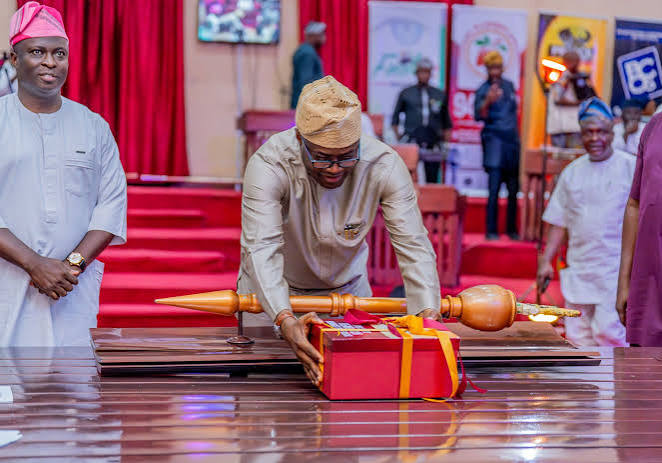
The proposal, tagged “Budget of Sustained Progress”, was presented to the Oyo State House of Assembly in Ibadan on Tuesday for legislative consideration.
According to the governor, the proposed budget comprises ₦670.3 billion for capital expenditure, representing 60 per cent, and ₦445.3 billion for recurrent expenditure, accounting for 39.9 per cent.
Makinde said the infrastructure allocation, representing 21.1 per cent of the proposed budget, reflected his administration’s determination to complete ongoing projects before the end of its tenure.
He explained that the government was prioritising infrastructure to support long-term development and improve connectivity across the state.
Education and Healthcare Receive Major Allocations
Education received the second-largest allocation, with ₦190.5 billion, representing 17.08 per cent of the proposed budget.
The health sector was allocated ₦93.11 billion, accounting for 8.3 per cent.
The governor said the budget was developed through consultations across the geopolitical zones of the state to identify the priorities and expectations of residents.
He noted that the engagement process helped the government understand public concerns and incorporate them into its development plans.
Makinde also compared the proposal with the 2026 budget of ₦891.9 billion, which allocated 51 per cent to capital expenditure and 49 per cent to recurrent spending.
Infrastructure and education were also the leading sectors in the 2026 budget, receiving ₦210 billion and ₦155.2 billion respectively.
Oyo Records Growth in Internally Generated Revenue
The governor disclosed that Oyo State had increased its Internally Generated Revenue (IGR) by more than 288 per cent, rising from ₦26.5 billion in 2019 to ₦103.2 billion.
He said the growth reflected the state's increasing capacity to finance development projects internally and reduce dependence on federal allocations.
On education, Makinde said government interventions and partnerships had helped return approximately 65,000 out-of-school children to classrooms.
He also highlighted the state's participation in the African Continental Free Trade Area (AfCFTA), describing Oyo as the first sub-national government in Africa to sign onto the trade agreement.
In the health sector, he announced the formal induction of 3,933 newly recruited primary healthcare workers.
According to him, the recruitment would strengthen staffing at healthcare facilities and improve the delivery of medical services to residents.
“Our investment in healthcare facilities, which the newly recruited workers will now man, is turning into services for our people,” he said.
Rural Infrastructure and Agricultural Development
Makinde also highlighted projects aimed at improving rural connectivity and supporting agricultural activities.
Among them was the completion of an 8.4-kilometre road at Fashola Farm Settlement, alongside rural market projects designed to improve connections between farmers, businesses and markets.
He said the interventions were intended to strengthen economic activities and improve opportunities for rural communities.
The governor maintained that his administration was providing a development roadmap for the state beyond 2027.
He urged members of the Oyo State House of Assembly to scrutinise the proposed budget carefully before its passage.
The Olubadan of Ibadanland, Oba Rashidi Ladoja; the Eleruwa of Eruwa, Oba Samuel Adegbola; and the Aseyin of Iseyin, Oba Sefiu Olawale, were among the dignitaries who attended the presentation.
Budget Implementation Remains the Key Test
While the proposed allocations indicate the administration's priorities, the effectiveness of the 2027 budget will ultimately depend on implementation, project completion and the measurable benefits delivered to residents.
Legislative scrutiny, transparent procurement and regular monitoring will also be important in ensuring that the substantial capital expenditure translates into functioning infrastructure, improved public services and wider economic opportunities.
Wakirike Herald
The Voice of Wakirike People Everywhere
Written by
wk-admin
Comments
- Be the first to comment.