Ibadan Women’s Forum Trains 100 Women in AI and Digital Skills, Seeks More Sponsorship
By Wakirike Herald
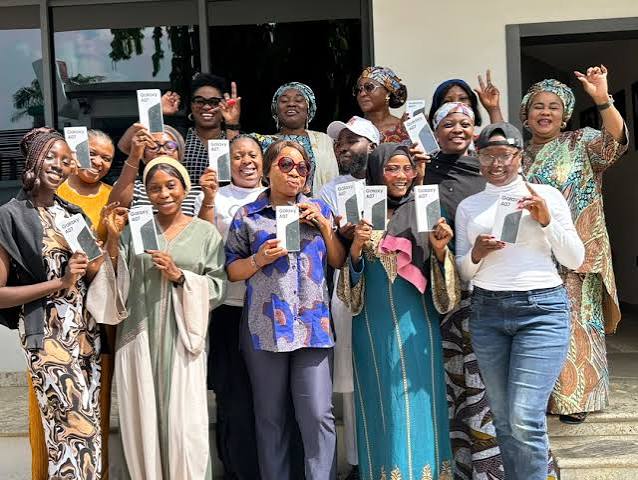
The Ibadan Descendants Sisters Forum (IDSF) has called for increased sponsorship and institutional support to expand digital empowerment opportunities for women, following the successful training of 100 participants in artificial intelligence (AI) and other digital skills.
The two-day training, tagged "Tech for Moms", concluded in Ibadan on Saturday, November 21, 2026, as part of activities marking the forum's fifth anniversary.
The programme was designed to equip women, particularly entrepreneurs and professionals, with practical digital knowledge to improve their businesses, increase productivity and participate more confidently in an increasingly technology-driven society.
Digital skills as a tool for women's economic empowerment
Speaking at the closing ceremony, IDSF President, Mrs Hamidat Agboola, said women needed to embrace digital platforms to expand their businesses, improve sales and increase profitability.
She explained that the training introduced participants to artificial intelligence and digital tools that could support their professional responsibilities, business operations and household management.
Agboola noted that the initiative was also intended to reduce women's dependence on younger family members for basic technology-related tasks.
She encouraged women to become more confident in using digital devices and applications rather than remaining on the sidelines of technological advancement.
According to her, participants learnt how to use digital tools for everyday activities, including preparing household schedules and applying AI to improve business operations and sales.
From business flyers to invoices: Practical lessons in AI
The Vice-President of IDSF and Chairperson of the Planning Committee, Mrs Roheemat Adabanija, said the programme was designed to help women from different professional backgrounds use AI to improve their productivity.
She observed that tasks which previously required considerable time and effort could now be completed more efficiently with appropriate digital tools.
Adabanija highlighted practical outcomes from the training, including participants learning to design business flyers, generate invoices and prepare presentations independently.
She recounted the experience of a participant who previously depended on her son to prepare invoices but successfully generated one herself during the programme.
She described the participation of older women and grandmothers as particularly encouraging, demonstrating that digital learning could benefit women across different age groups.
AI opens opportunities for remote work
One of the facilitators, Dr Adekunbi Omotoso, founder of Apps and Scripts Technologies and co-founder of SheTech Alliance Africa, said artificial intelligence could create opportunities for mothers to undertake professional activities remotely.
She explained that AI tools could assist women in preparing reports, proposals, letters and emails, creating videos, developing presentations and managing business activities.
Omotoso said the programme was designed to bridge the digital knowledge gap by bringing practical technology training directly to women and encouraging them to apply what they learnt.
Another facilitator, Dr Omokehinde Deji-Akinpelu, highlighted the potential of digital skills to create additional income opportunities through remote employment.
She identified virtual assistance and writing services among the areas where trained women could explore work opportunities.
According to her, acquiring these skills could also help women remain relevant in their existing professions while developing additional sources of income.
Participants welcome the initiative
Participants described the programme as beneficial to their personal development and professional activities.
Mrs Mabel Aigbe, a shoe and bag maker, said the training had broadened her understanding of digital technology despite her limited previous experience with technology.
She expressed confidence that the knowledge acquired would help improve her business operations.
Similarly, Mrs Bolatitofunmi Ayooola, a medical social worker, and Mrs Idayat Onibudo, an engineer, commended the initiative, describing the training as useful to their respective professions.
Certificates of Participation were presented to the trainees at the closing ceremony.
Sustaining women's digital empowerment beyond training
The Tech for Moms initiative highlights the growing importance of digital inclusion in expanding economic opportunities for women.
However, meaningful empowerment requires more than introductory training. Participants also need continued access to digital devices, affordable internet connectivity, mentorship and opportunities to apply their newly acquired skills.
For women entrepreneurs, practical support in digital marketing, online payments, customer management and e-commerce could help translate technology knowledge into measurable business growth.
Similarly, women interested in remote employment would benefit from continued guidance on professional portfolios, online job applications, digital security and responsible use of AI.
The call by IDSF for additional sponsorship therefore raises an important question about how community organisations, government agencies, private companies and development partners can work together to make digital education more accessible.
Ultimately, empowering women with relevant digital skills is not simply about teaching them to use technology. It is about expanding their independence, strengthening their economic participation and ensuring they have the tools to compete in a changing world.
Wakirike Herald
The Voice of Wakirike People Everywhere
Written by
wk-admin
Comments
- Be the first to comment.