FG Moves to Map Health Training Institutions Across West Africa to Strengthen Workforce Development
By Wakirike Herald
The Federal Government has reaffirmed its commitment to strengthening health workforce development through improved training institutions, effective accreditation systems and reliable data to guide investment across West Africa.
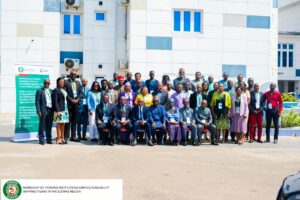
The Coordinating Minister of Health and Social Welfare, Prof. Muhammad Pate, gave the assurance on Thursday, November 12, 2026, in Abuja, during a three-day workshop on Training Institution Services Availability Mapping (TISAM) in the Economic Community of West African States (ECOWAS) region.
Pate, who was represented by Nigeria’s Liaison Officer to the West African Health Organisation (WAHO), Dr Dakum Benji, said the initiative would provide a clearer understanding of the region’s capacity to train qualified health professionals.
Regional database to guide investment in medical education
According to the minister, the mapping exercise is designed to identify existing health training institutions, their academic programmes, training capacities and operational gaps.
He explained that reliable regional information would help governments and relevant institutions determine where new training facilities should be established, existing programmes expanded, teaching personnel deployed and resources allocated.
Pate said the initiative aligns with President Bola Tinubu’s Renewed Hope Agenda and ongoing health sector reforms, particularly efforts to strengthen institutional capacity, expand accreditation and improve regulation.
He urged participating countries to develop a comprehensive regional database, adopt common mapping standards and establish clear responsibilities and timelines for completing the exercise.
The minister also identified curriculum harmonisation, mutual recognition of qualifications and improved mobility of health professionals as important benefits the initiative could support across ECOWAS member states.
He said the broader objective was to ensure that West Africa trained the right number of health professionals, with appropriate skills and in locations where healthcare needs were greatest.
Poor information limits access to postgraduate training
Earlier, Prof. Cyrisque Degbey, Head of the Department of Environmental Health, who represented the Dean of Faculties, said the exercise would provide a reliable assessment of health training capacities across the region.
Degbey noted that updated institutional information was necessary to address human resource challenges and ensure that health professionals acquired competencies relevant to the healthcare needs of their communities.
He commended WAHO for its technical coordination and the Nigerian Government for supporting regional integration and facilitating the workshop.
Similarly, Prof. Yao Tettey, representing Postgraduate Colleges in the West African region, said the initiative could improve access to advanced training opportunities and encourage professional development.
He observed that some health professionals travelled outside West Africa to acquire specialised qualifications because they lacked adequate information about available postgraduate programmes within the sub-region.
Tettey said publishing information about recognised training institutions would enable professionals to identify suitable programmes in other ECOWAS member states.
Accreditation identified as key to professional recognition
Tettey also called on recognised training institutions to obtain both national and regional accreditation through WAHO, stressing that credible accreditation systems were essential to building confidence in professional qualifications.
He warned that inadequate information about institutional accreditation sometimes created uncertainty among employers regarding the validity of certificates presented by health professionals.
He therefore urged regulatory authorities, academic institutions and country representatives to ensure that the mapping exercise captured comprehensive and accurate information.
A regional opportunity with implementation challenges
The proposed regional database could help address longstanding gaps in health education planning by giving governments and institutions a clearer picture of available training capacity.
It could also make it easier for qualified professionals to access postgraduate education within West Africa, potentially reducing the need to seek specialised training outside the region.
However, the success of the initiative will depend on the accuracy and regular updating of institutional records, effective accreditation procedures and the willingness of participating countries to implement common standards.
For West Africa, the task goes beyond identifying existing institutions. It is about building a coordinated health education system capable of producing competent professionals to meet the region's growing healthcare demands.
Wakirike Herald
The Voice of Wakirike People Everywhere
Written by
wk-admin
Comments
- Be the first to comment.