FG Begins ₦1.45 Trillion Modernisation of Apapa and Tin Can Island Ports
By Wakirike Herald
The Federal Government has officially commenced a ₦1.45 trillion modernisation programme for the Lagos Port Complex, Apapa, and Tin Can Island Port, in a major intervention aimed at addressing longstanding infrastructure challenges and improving the efficiency of Nigeria’s maritime sector.
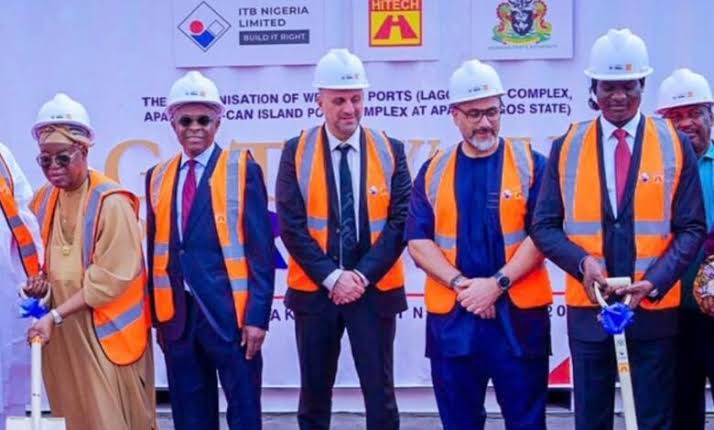
The Minister of Marine and Blue Economy, Dr Adegboyega Oyetola, led the groundbreaking ceremony at Tin Can Island Port on Wednesday, November 25, alongside the Minister of Finance and Coordinating Minister of the Economy, Mr Taiwo Oyedele, and other government officials.
The project, valued at £746 million, is expected to rehabilitate critical port infrastructure, improve cargo handling and reduce the operational bottlenecks that have increased the cost of doing business at Nigeria’s seaports.
According to a statement issued by the Special Adviser to the Minister of Marine and Blue Economy, Dr Bolaji Akinola, the intervention is intended to reposition the two ports as more competitive gateways for international trade.
Ageing Infrastructure Meets Growing Trade Demands
Oyetola said the modernisation had become necessary because of the widening gap between Nigeria’s expanding economy and the capacity of its ageing port facilities.
Apapa Port, established in 1913, is more than a century old, while Tin Can Island Port was commissioned in 1977.
The minister noted that Nigeria’s population, trade volumes and cargo throughput had grown substantially since the establishment of the country's major port facilities.
He said Nigeria’s cargo throughput had reached 129.3 million metric tonnes, nearly 16 times the eight million tonnes recorded in 1977.
According to him, the growth in economic activity has placed considerable pressure on infrastructure that requires comprehensive rehabilitation and technological improvement.
Oyetola warned that failure to modernise the ports could weaken Nigeria’s competitiveness and encourage cargo owners and shipping operators to consider alternative ports in neighbouring countries.
Government Targets Lower Cargo Delays and Logistics Costs
One of the major concerns highlighted by the minister was the length of time cargo remains at Nigerian ports.
He said cargo dwell time ranges between 10 and 18 days, compared with approximately three to five days at leading international ports.
The statement attributed an annual economic loss of up to $4 billion to port congestion, demurrage, storage charges and higher logistics costs.
The modernisation programme is expected to address these challenges through improvements to quay walls, berths, navigation channels, port access facilities, cargo-handling equipment and operational systems.
The introduction of more efficient, digitally enabled operations is also expected to improve cargo movement and strengthen coordination among port users and relevant agencies.
However, the extent to which these improvements will reduce cargo clearance times and operating costs will depend on effective implementation, regulatory coordination and the ability to maintain uninterrupted port operations during construction.
At Least 20,000 Jobs Projected
Oyetola said the project could generate at least 20,000 direct and indirect jobs while supporting industrial development and attracting more international shipping services.
The projected employment opportunities may extend across construction, engineering, logistics, equipment supply, port operations and related businesses.
The minister also linked the initiative to President Bola Tinubu’s Renewed Hope Agenda, which prioritises infrastructure development and economic investment.
For businesses that depend on imported raw materials and exported goods, improved port efficiency could help reduce some of the additional costs associated with delays and unreliable cargo movement.
Nevertheless, the projected employment and economic benefits will need to be measured against actual project delivery, local participation and the quality of the completed infrastructure.
NPA Promises Quality Control and Operational Continuity
The Managing Director of the Nigerian Ports Authority (NPA), Dr Abubakar Dantsoho, described the groundbreaking as an important moment for the authority.
He assured stakeholders that the NPA would provide technical supervision, quality assurance and coordination throughout the construction period.
He said particular attention would be given to safety, environmental standards and continuity of port operations.
The statement also disclosed that Oyetola had approved the establishment of an Inter-Ministerial Committee involving the Federal Ministry of Marine and Blue Economy, the NPA and relevant regulatory agencies.
The committee is expected to develop a business continuity and cargo flow management plan to minimise disruptions while construction work progresses.
The effectiveness of this arrangement will be important for importers, exporters, freight forwarders, clearing agents, transport operators and businesses that rely on the two ports.
A Major Test for Nigeria’s Maritime Competitiveness
The modernisation of Apapa and Tin Can Island ports carries significance beyond Lagos. Together, the facilities are central to Nigeria’s maritime trade network and influence the cost and movement of goods across the country.
For coastal and maritime communities, including those in the Niger Delta, the performance of Nigeria’s port system has wider implications for shipping services, maritime employment, logistics investment and the development of the blue economy.
The challenge now is to translate the announced investment into measurable improvements. Nigerians will expect transparent project delivery, adherence to approved standards and timelines, effective environmental safeguards and clear reporting on expenditure and progress.
The presence of international diplomatic representatives at the ceremony, including Poland’s Deputy Foreign Minister, Marcin Bosacki, Polish Ambassador to Nigeria, Michal Cygan, and British Deputy High Commissioner in Lagos, Jonny Baxter, also reflected international interest in the project.
Ultimately, the success of the ₦1.45 trillion programme will not be determined by the groundbreaking ceremony, but by whether the upgraded ports deliver faster cargo clearance, lower logistics costs, safer operations and greater value to the Nigerian economy.
SEO Title: FG Begins ₦1.45tn Apapa and Tin Can Island Ports Modernisation
URL Slug: fg-begins-apapa-tin-can-ports-modernisation
Meta Description: FG begins a ₦1.45tn modernisation of Apapa and Tin Can ports to upgrade infrastructure, reduce cargo delays and improve maritime competitiveness.
Article Description: The Federal Government has commenced a £746 million modernisation programme for Apapa and Tin Can Island ports, targeting infrastructure upgrades, improved cargo handling and reduced logistics costs.
Suggested Image Caption: From left: Minister of Marine and Blue Economy, Dr Adegboyega Oyetola; NPA Managing Director, Dr Abubakar Dantsoho; Managing Director of ITB-Hitech JV, Engr Ramzi Chidiac; and Finance Minister, Mr Taiwo Oyedele, at the groundbreaking ceremony for the modernisation of Apapa and Tin Can Island ports in Lagos.
Source: News Agency of Nigeria (NAN)
Wakirike Herald
The Voice of Wakirike People Everywhere
Written by
wk-admin
Comments
- Be the first to comment.