FCTA, UNIABUJA Unions Clash Over University Land Allocation as Wike’s Aide Warns Against Politicisat
By Wakirike Herald
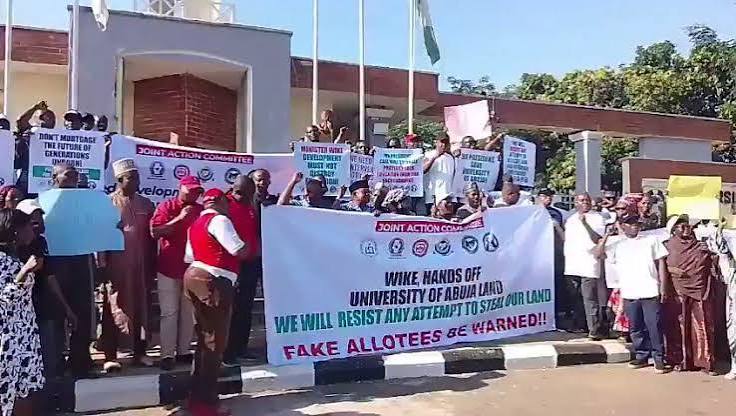
The Federal Capital Territory Administration (FCTA) has cautioned workers’ unions at the University of Abuja (UNIABUJA) against politicising the controversy surrounding the review of the institution’s land allocation.
The warning was issued by Mr Lere Olayinka, Senior Special Assistant on Public Communications and Social Media to the FCT Minister, Nyesom Wike, in a statement released in Abuja on Thursday, November 19, 2026.
Olayinka criticised the statements and protests by union leaders, particularly the Academic Staff Union of Universities (ASUU) chairman, Professor Sylvanus Ugoh.
He argued that trade unionism should not be used to justify irresponsible conduct, especially within an academic institution expected to promote knowledge, critical thinking and responsible public engagement.
The FCTA aide specifically condemned allegations by the university’s Joint Action Committee (JAC) that the FCT minister forged a 2016 government committee report. He described the allegation as reckless and irresponsible.
These accusations remain claims attributed to the unions. The statement supplied by the FCTA aide did not include a response from JAC or ASUU.
FCTA Defends Minister’s Authority Over Land Allocation
Olayinka defended Wike's decision by referring to the Land Use Act of 1978, arguing that the FCT minister has statutory authority to review land allocations without necessarily relying on the recommendations of a committee.
He questioned why university workers' unions were protesting against the government's management of land allocated to a government-owned institution.
According to figures presented by the minister's aide, UNIABUJA had utilised 1,426.67 hectares of its land after 38 years, including 49.56 hectares for staff residential quarters.
He also questioned the institution's previous allocation of portions of its land to private individuals and corporate organisations, including the Economic and Financial Crimes Commission (EFCC), arguing that the university's actual development needs should inform decisions about its landholding.
Land Dispute Has Generated Competing Positions
The controversy centres on the FCTA's decision to reduce UNIABUJA's original allocation of 11,824.04 hectares to approximately 4,685 hectares.
The administration maintains that the review is based on recommendations from earlier joint committees involving representatives of both the FCTA and the university. It has also argued that the reduced allocation would leave the institution with sufficient land for its academic and administrative needs.
However, the university community has challenged the basis of the reduction.
UNIABUJA unions have questioned the authenticity and interpretation of the committee report being cited by the FCTA, demanding evidence that the university's representatives endorsed the recommendations. They have also argued that the institution requires adequate land for future academic expansion, research and infrastructure.
The dispute has also taken a legal dimension, with reports indicating that the university instituted proceedings over the disputed land and that a court ordered parties to maintain the status quo concerning a particular parcel pending determination of the case.
Questions Over University Expansion and Public Interest
The disagreement raises broader questions about how public institutions should balance present land utilisation with long-term development requirements.
While the FCTA has emphasised the need to address encroachment, uncontrolled settlements and underutilised land, the university community maintains that land planning must take account of its future academic, research and infrastructure needs.
A university's development requirements cannot necessarily be measured by the buildings already constructed. Provision for future expansion, laboratories, student accommodation, research facilities and other academic activities also forms part of long-term institutional planning.
The challenge for both sides is to establish a transparent process that protects public land, respects legal obligations and provides sufficient room for the university's future development.
The FCTA's latest warning has added another dimension to the disagreement, but the substantive questions surrounding the disputed committee reports, land allocation and the university's development needs remain important.
A credible resolution will require transparent documentation, respect for due process and constructive engagement between the administration and the university community.
SEO and Publishing Details
SEO Title: FCTA Warns UNIABUJA Unions Against Politicising Land Allocation Dispute
URL Slug: fcta-uniabuja-unions-land-allocation-dispute
Meta Description: FCTA cautions UNIABUJA unions against politicising the land dispute as disagreements persist over the reduction of the university's allocation.
Article Description: The Federal Capital Territory Administration has cautioned UNIABUJA workers' unions against politicising the university's land allocation dispute, defending the government's review while unions continue to question the process.
Suggested Image Caption: The University of Abuja community remains divided over the FCTA's decision to review the institution's original land allocation.
Editorial Note: Allegations concerning the authenticity of the 2016 committee report and the legality of disputed land allocations remain contested. The positions of the FCTA and the university unions have been attributed accordingly.
Wakirike Herald
The Voice of Wakirike People Everywhere
Written by
wk-admin
Comments
- Be the first to comment.