Expert Calls for Stronger Coordination of Youth-Led Conservation Efforts to Restore Africa’s Biodive
By Wakirike Herald
Youth-led environmental initiatives across Africa need better coordination, institutional support and sustained partnerships to accelerate biodiversity restoration, a conservation expert has said.
Dr Adedotun Afolayan, President of the Society for Conservation Biology, Africa Region, said several youth organisations were already contributing to environmental protection through tree planting, reforestation and public awareness campaigns in different communities.
However, she warned that many of these efforts remained fragmented and small in scale, limiting their potential to deliver broader environmental benefits.
Afolayan, who is also Chairperson of the My Environment Well-Being Initiative, made the observation in an interview with the News Agency of Nigeria (NAN) in Ibadan on Thursday, November 19, 2026.
Youth Initiatives Making Grassroots Impact
According to Afolayan, about 60 per cent of ongoing environmental conservation activities are youth-led, although the initiatives often operate independently.
She said the projects were helping communities address environmental challenges at the grassroots level and deserved stronger coordination to achieve greater results.
“There are pockets of work going on in environmental awareness and protection, most of them youth-led,” she said.
She cited school-based reforestation programmes in which pupils plant fruit trees and indigenous species to improve biodiversity within their school environments.
Afolayan disclosed that her organisation had recently introduced indigenous bush mango trees in some schools to encourage the restoration of tree species that were becoming less common in local communities.
The approach, she explained, could help younger generations understand the value of indigenous vegetation while developing a stronger sense of responsibility for environmental protection.
Conservation Requires More Than Tree Planting
The conservation expert stressed that biodiversity restoration should not be reduced to the number of trees planted.
She warned that reforestation programmes focused on a single tree species could undermine ecological diversity, particularly where different indigenous plants perform complementary environmental functions.
According to her, governments should adopt more diverse planting strategies that reflect local ecological conditions and support a wider range of plant and animal life.
Trees, she noted, contribute to temperature regulation, wildlife protection, improved community health and carbon storage.
Her position highlights an important distinction between simply increasing tree cover and restoring functioning ecosystems. Successful conservation requires attention to the variety of species, their ecological relationships and the long-term survival of restored habitats.
African Conservation Groups Seek Common Platform
Afolayan said the Society for Conservation Biology, Africa Region, was working to bring conservation initiatives and its chapters across the continent under a common platform.
She explained that the organisation had documented some of its achievements and shared research findings with policymakers and philanthropists in an effort to attract support for conservation programmes.
She also disclosed that the recent African Congress for Conservation Biology attracted more than 300 participants from across Africa.
The gathering provided conservationists with an opportunity to exchange experiences, showcase successful initiatives and discuss environmental challenges requiring collective action.
Such collaboration, she suggested, could help grassroots organisations move beyond isolated projects and build stronger programmes capable of influencing environmental policy and practice.
Governments Urged to Support Community Conservation
Afolayan called on governments to strengthen partnerships with environmental organisations, conservationists and youth-led groups.
She particularly advocated sustained collaboration to position Oyo State as an example of effective environmental conservation and biodiversity restoration.
For communities across Africa, the challenge extends beyond launching tree-planting campaigns. It includes protecting existing forests, restoring degraded ecosystems, preserving indigenous species and ensuring that conservation programmes receive the funding and technical support needed to endure.
For coastal and riverine communities, including those across the Niger Delta, biodiversity protection also has direct implications for mangrove ecosystems, fisheries, waterways and livelihoods that depend on healthy natural environments.
The wider lesson from Afolayan’s appeal is that young people are already contributing to conservation, but their efforts need stronger institutional backing, scientific guidance and coordination to produce lasting results.
SEO Title: Expert Calls for Coordination of Youth-Led Biodiversity Conservation in Africa
URL Slug: youth-led-biodiversity-conservation-africa
Meta Description: Conservation expert Adedotun Afolayan urges stronger coordination of youth-led environmental initiatives to restore biodiversity across Africa.
Article Description: A conservation expert has called for stronger partnerships among youth-led environmental groups, governments and conservation organisations to expand reforestation and biodiversity restoration across Africa.
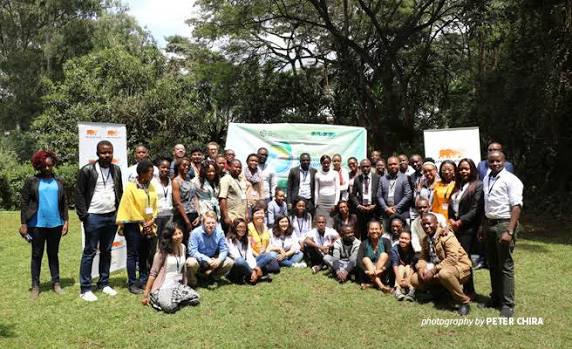
Suggested Image Caption: Youth-led tree-planting and environmental awareness initiatives are contributing to biodiversity conservation, but experts say better coordination is needed to expand their impact.
Source: News Agency of Nigeria (NAN)
Wakirike Herald
The Voice of Wakirike People Everywhere
Written by
wk-admin
Comments
- Be the first to comment.