Enugu Residents Blame Poor Storage Facilities for Rising Onion Prices, Urge Government Intervention
By Wakirike Herald
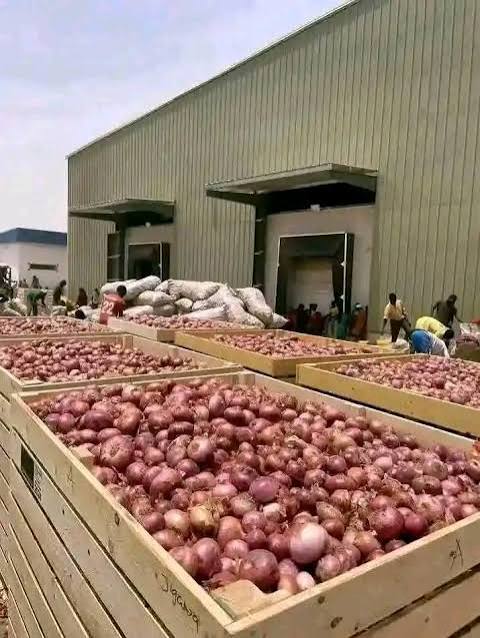
Residents of Enugu State have identified inadequate food storage facilities as a major factor contributing to onion scarcity and rising prices, urging federal, state and local governments to invest in modern preservation infrastructure to reduce post-harvest losses.
The residents made the appeal in separate interviews with the News Agency of Nigeria (NAN) in Enugu on Friday, expressing concern over the increasing cost of the commodity and its impact on household spending.
They argued that the absence of adequate storage facilities forces farmers and traders to contend with avoidable losses, particularly during periods of high production when large quantities of agricultural produce are available.
Onion Prices Surge as Supply Declines
A resident of Achara Layout, Paul Igwe, said Nigerian onion farmers lose substantial income annually because they lack appropriate facilities to preserve harvested produce.
He maintained that investments in storage infrastructure would help farmers retain more of their harvest for subsequent sales rather than lose valuable produce after harvesting.
An onion trader at Garki Market, Gloria Kalu, described the commodity as increasingly expensive because of scarcity and rising market prices.
She said properly managed storage facilities for different agricultural products could help stabilise supply and reduce the price fluctuations associated with seasonal shortages.
Another trader at New Garki Market, Gambo Haruna, attributed the rising cost of onions to the off-season period and inadequate storage facilities.
According to him, a bag of onions now sells for ₦400,000, compared with approximately ₦250,000 in October.
At Mayor Market, another trader, Joy Okoroafor, said a medium-sized onion had increased from ₦200 in October to ₦500.
The price increases have raised concerns about the affordability of the commodity for households and food vendors.
Farmers Seek Better Storage and Rural Roads
A civil servant, Chidi Uzor, said addressing post-harvest losses required more than the provision of storage facilities.
He called for improved road networks connecting farming communities to major markets, explaining that poor transportation infrastructure could contribute to produce deterioration and increased distribution costs.
He argued that investments in rural roads and food preservation facilities would help farmers move their produce efficiently while reducing losses along the supply chain.
Farmer Chijioke James called for urgent national attention to post-harvest food losses, describing the challenge as an issue requiring emergency intervention.
He also identified insecurity, low-yielding seedlings, outdated agricultural inputs and traditional farming methods as factors contributing to food shortages.
Young Farmers Advocate Modern Onion Production Techniques
The Chairman of the Enugu Young Farmers Association, Kenneth Eze, said onions could be cultivated throughout the year if farmers adopted appropriate modern agricultural techniques.
He observed that limited awareness of improved planting methods and seasonal cultivation practices had restricted opportunities for consistent production.
Eze argued that training farmers in modern agricultural techniques could help increase production and reduce the seasonal shortages responsible for sharp price movements.
He also emphasised that providing adequate storage facilities would complement improved production methods and help ensure a more consistent supply of onions throughout the year.
Food Security Requires Investment Beyond Production
The concerns raised by Enugu residents highlight a wider challenge facing Nigeria's agricultural sector: increasing food production alone may not guarantee affordable food prices without adequate storage, transportation and distribution systems.
For onion farmers, traders and consumers, reducing post-harvest losses could help improve market supply, protect farmers' earnings and moderate seasonal price increases.
Government intervention in storage infrastructure, rural road construction, improved seedlings, agricultural training and security could therefore play an important role in strengthening the food supply chain.
Ultimately, the objective should be to build an agricultural system in which farmers can preserve their harvest, traders can access reliable supplies and consumers can purchase essential food items at more affordable prices.
Wakirike Herald
The Voice of Wakirike People Everywhere
Written by
wk-admin
Comments
- Be the first to comment.