Emir Sanusi Celebrates Kano Arabic School’s 90-Year Legacy, Praises Alumni Contributions to Nigeria
By Wakirike Herald
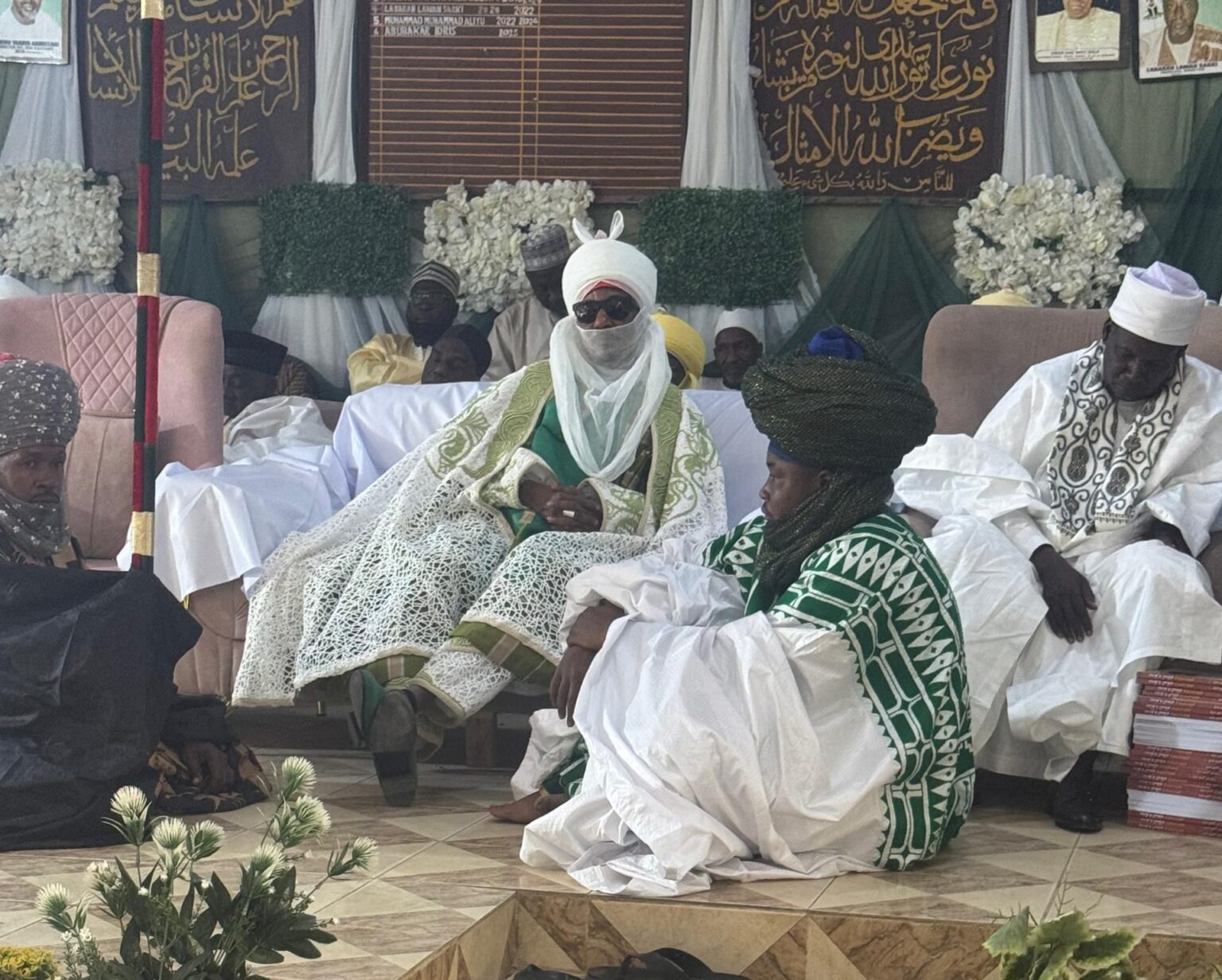
The Emir of Kano, Muhammadu Sanusi II, has commended the School for Arabic Studies (SAS), Kano, for its longstanding contributions to education and national development, describing its alumni as a significant part of Nigeria's intellectual, judicial and traditional leadership history.
Sanusi gave the commendation on Saturday, November 21, 2026, during activities marking the institution's 90th anniversary.
He said the school's greatest legacy was not defined by its physical structures but by the generations of individuals it had produced and their contributions to society.
According to the Emir, it would be difficult to document Nigeria's history without acknowledging the achievements of former students who have distinguished themselves in scholarship, traditional institutions and the judiciary.
Nine decades of Arabic and Islamic education
The Grand Patron of the SAS Old Students Association (SASOSA), Prof. Sheikh Ahmad-Galadanci, said the institution was established to develop Nigerian expertise in Arabic and Islamic education, including Islamic jurisprudence and related disciplines.
Galadanci, who gained admission into the school in 1946, recalled that it was initially known as Madani Secondary Al-Kubra, a name it retained until 1948.
He explained that the institution emerged from the need to develop local capacity in Arabic and Islamic scholarship rather than depend entirely on external sources of expertise.
Over the decades, the school has contributed to the development of generations of Nigerians who have served in educational, religious, judicial and public institutions.
Alumni support drives infrastructure improvements
The Director of SAS, Abubakar Idris-Gwammaja, acknowledged the contributions of former students towards improving the school's infrastructure and academic environment.
He disclosed that Hamza Daura had spent approximately ₦13 million renovating 12 classrooms.
He also said Chapter Nine of the alumni association renovated about six classrooms, while Chapter 19 undertook classroom renovation and provided a borehole.
According to the director, the school management was also strengthening academic standards through regular monitoring of teachers' attendance and the introduction of extracurricular activities, including quizzes and debates.
He expressed optimism about the school's academic performance, noting improvements in students' dedication and participation.
Alumni association secures government attention
The Chairman of SASOSA, Umar Muhammad, explained that the association introduced SAS Day, which later developed into SAS Week, to reunite former students and provide an opportunity to assess the institution's condition.
He said the initiative had helped attract attention to the school's infrastructure and educational needs.
Muhammad recalled that Kano State Governor Abba Yusuf visited the institution and subsequently announced an allocation of more than ₦300 million for its general renovation at a State Executive Council meeting.
The proposed intervention represents an important opportunity to address infrastructure challenges and improve the learning environment, although the extent and timetable of the renovation works will determine the benefits to students and staff.
Former students call for restoration of academic standards
Former Commissioner for Commerce, Industry and Cooperatives in Kano State, Ishaq Mahmoud-Umar, described the institution as a major influence on his professional development.
A member of the 1969 graduating class, he said the quality of teaching and values promoted during his time at the school had left a lasting impression on him.
He encouraged the management to work towards restoring the institution's former academic standing and attracting capable students interested in Arabic studies from across Northern Nigeria.
Similarly, Prof. Auwal Abubakar said the school had experienced a decline in some aspects of its academic and extracurricular activities compared with earlier years.
He recalled a period when Arabic and English debating societies, alongside drama activities, played prominent roles in student development.
Abubakar, who credited the school with shaping his career as an Arabist and providing a foundation for further studies, urged alumni to strengthen their collaboration and contribute more actively to the institution's progress.
Looking towards the centenary in 2036
The Organising Secretary of the anniversary, Sulaiman Ahmad, said the celebration was designed not only to reunite former students but also to encourage discussions about the school's future.
He disclosed that the association was already looking towards the institution's centenary in 2036, with a vision of a modern school equipped with improved facilities, information and communication technology centres and expanded academic opportunities.
Ahmad called on alumni in Nigeria and the diaspora to support the vision, describing the institution as Ummul Madaris, meaning the mother of schools.
He stressed the importance of preserving its educational heritage while preparing it for the demands of contemporary learning.
A legacy that must be sustained
The School for Arabic Studies has produced several prominent Nigerians whose contributions span academia, public administration, traditional institutions, business and the judiciary.
Among its notable alumni are Prof. Muhammad Sani Zahradeen, Prof. Auwal Yadudu, Prof. Umar Sani-Fagge, Prof. Tijjani Naniya, Prof. Abubakar Rashid, Prof. Abu Bakr Juando, Justice Muhammad Lawal Uwais, Alhaji Abdussamad Isyaku Rabiu and Alhaji Sani Zangon Daura.
As the institution celebrates nine decades of existence, the anniversary presents an opportunity to reflect on both its achievements and the responsibilities required to sustain its reputation.
The proposed government renovation, alumni interventions and renewed attention to academic performance could provide a foundation for improvement.
However, lasting progress will require consistent investment in qualified teachers, modern learning facilities, curriculum development, student welfare and institutional accountability.
For an institution whose influence has extended across generations, the challenge is to ensure that its next decade produces another generation of scholars and leaders capable of contributing meaningfully to Nigeria's development.
Wakirike Herald
The Voice of Wakirike People Everywhere
Written by
wk-admin
Comments
- Be the first to comment.