Edo 2027: Opposition Parties Raise Alarm Over Political Intimidation, Electoral Violence
By Wakirike Herald
Growing concerns over political intimidation, destruction of campaign materials and violence in Edo State have raised questions about the preparedness of relevant authorities to guarantee peaceful and credible elections in 2027.
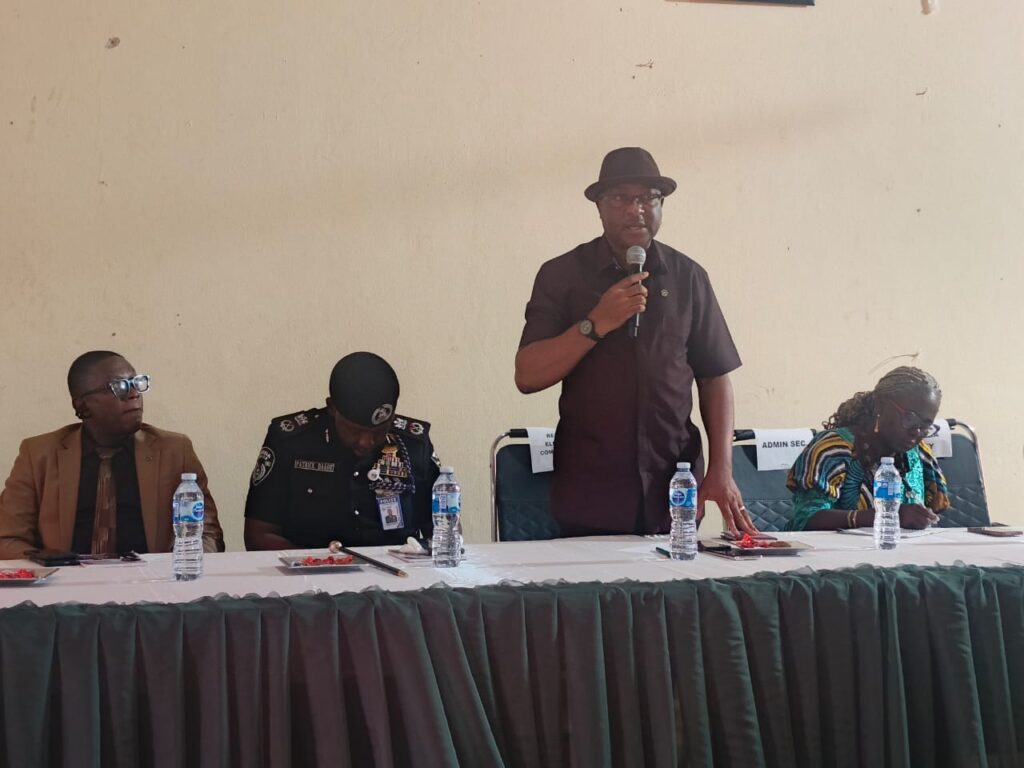
The concerns featured prominently at a stakeholders’ forum convened by the Independent National Electoral Commission (INEC) in Benin City, where representatives of political parties called for stronger security measures, equal treatment and decisive action against electoral offences.
The meeting came amid heightened public attention following the October 23 attack on popular Benin-based entertainer Osagie Idiedia, popularly known as MC Porkupyne.
Opposition politicians cited the incident as an indication of the security challenges confronting political participation in the state, although the circumstances surrounding the attack remain under police investigation.
MC Porkupyne Attack Raises Political Tension
The entertainer was reportedly attacked by unidentified assailants while returning from an outing, triggering allegations of political intimidation and calls for the perpetrators to be brought to justice.
Governor Monday Okpebholo, however, attributed the incident to cult-related activities, dismissing suggestions of government involvement as unfounded.
The governor said intelligence available to the state government indicated that the attack was cult-related.
The Edo State Police Command said investigations were ongoing to establish the circumstances of the incident and identify those responsible.
The governor’s position and the police investigation remain separate accounts, with the findings of the investigation yet to be publicly established.
Against this backdrop, the INEC forum provided an opportunity for political parties, electoral officials and security agencies to discuss concerns before electoral competition escalates into confrontation.
INEC Assures Parties of Equal Treatment
Opening the meeting, Edo Resident Electoral Commissioner (REC), Mr Obo Effanga, assured political stakeholders that INEC remained committed to providing a level playing field for all registered political parties.
He explained that the engagement was organised to hear complaints, address emerging concerns and remind political actors of their responsibilities under the Electoral Act and other relevant laws.
Effanga warned against violence, threats, attacks on political opponents, disruption of political meetings, intimidation of electoral officials and journalists, and destruction of campaign materials.
He also cautioned against cyberbullying and the circulation of false information, stressing that political activities must respect public order and the rights of other participants.
“Violence and threats of violence should not be part of politics and campaigns,” he said.
The REC disclosed that 13 political parties attended the meeting, although invitations had been extended to all registered parties.
He maintained that peaceful elections required not only an impartial electoral umpire but also responsible conduct by political parties and their supporters.
Opposition Parties Demand Stronger Security and Accountability
Despite INEC’s assurances, representatives of several opposition parties expressed concerns about alleged intimidation, destruction of campaign materials and what they described as inadequate consequences for electoral violations.
The Edo State Chairman of the Peoples Democratic Party (PDP), Mr Noshagare Ogiebor, alleged that campaign materials belonging to his party had been destroyed.
He called on the police to investigate the incidents and ensure that anyone found responsible was held accountable.
Mr Smart Osimhen raised concerns about the alleged proliferation of arms during election periods, vote-buying, the collection of Permanent Voter Cards (PVCs) by party agents and possible irregularities in the handling of result sheets during collation.
Similarly, the State Chairman of the BOOT Party, Mr Osiriame Edeipo, questioned the short notice given for the stakeholders’ meeting.
He argued that previous peace accords and security engagements had not always produced sustained results, calling for equal application of the law irrespective of political affiliation.
The Legal Adviser to the National Democratic Congress (NDC) in Edo, Mr Mathew Edaghese, also alleged that supporters of his party had experienced violence.
He called for concrete enforcement measures against perpetrators rather than repeated appeals for political tolerance.
The Labour Party State Chairman, Ms Helen Uwangue, said the perceived absence of consequences for electoral offences could encourage further violations.
“Opposition parties have suffered intimidation in the past. So, we want assurance that all parties will be protected equally. No party should use security to oppress others,” she said.
Uwangue also urged INEC to maintain transparency, publish electoral guidelines promptly and guard against manipulation during the collation of results.
The African Democratic Congress (ADC), through its Deputy State Chairman, Mr Sylvester Ewanehi, similarly alleged increasing political intimidation against opposition parties and called for sincerity among political actors.
The Action Peoples Party (APP) State Chairman, Mr Ugbebor Uyi, argued that INEC should not distance itself from responsibility for electoral offences by placing the burden entirely on security agencies.
He maintained that the commission should actively promote fairness and draw the attention of relevant authorities to violations capable of undermining the electoral process.
APC Rejects Allegations of Political Violence
However, the All Progressives Congress (APC) offered a different perspective.
The party’s State Assistant Secretary, Mr Samuel Obuoh, rejected suggestions that the APC was involved in political violence, explaining that the party was campaigning across wards.
He urged political parties to concentrate on presenting their candidates and manifestoes to voters rather than exchanging accusations.
According to him, electoral competition should be based on convincing voters through policies and programmes.
The Edo State Chairman of the Social Democratic Party (SDP), Mr Segun Jegede, also appealed for peaceful conduct before, during and after the elections, while drawing attention to longstanding complaints about electoral manipulation.
The different interventions reflected wider concerns about the security of political participants, the transparency of electoral administration and public confidence in the eventual results.
Police Promise Cooperation, Urge Parties to Provide Evidence
Responding to the concerns, the Commissioner of Police in Edo, Mr Patrick Daaor, who also chairs the Inter-Agency Consultative Committee on Election Security (ICCES) in the state, assured political parties of the cooperation of security agencies.
He advised parties to notify their Divisional Police Officers (DPOs) before organising rallies and other public activities to enable the police to make appropriate security arrangements.
Daaor also stressed that effective investigations into political violence required specific information and cooperation from complainants.
He cautioned political actors against making allegations without providing evidence.
“The DPO is not a magician,” he said.
On the attack involving MC Porkupyne, the police commissioner reiterated that investigations were ongoing.
The police had earlier announced that a thorough investigation had been ordered to establish the circumstances surrounding the incident and identify those responsible.
INEC Addresses Concerns Over Voters’ Register and Candidate Information
Beyond political security, the stakeholders’ meeting also examined concerns about voter registration, the voters’ register and candidate information.
One issue raised involved allegations of artificial intelligence-generated photographs appearing in candidate-related information.
Effanga explained that the online voters’ register currently on display was an interim register designed to allow eligible individuals to make claims and objections before the production of the final register.
He encouraged anyone who suspected irregularities to identify specific entries for investigation.
The REC added that biometric accreditation, including the verification of voters through photographs and fingerprints, would help establish voters’ identities during elections.
On candidates’ lists, he explained that any subsequent changes must comply with the law and be processed through INEC’s national headquarters, including where applicable, on the basis of court orders.
He also clarified the respective responsibilities of INEC and law enforcement agencies, noting that criminal laws were enforced by security agencies, while the commission would draw their attention to incidents affecting the electoral process.
Regarding PVC collection, Effanga said available cards could be collected at INEC’s local government offices across the state.
However, cards arising from fresh registration and updates undertaken in 2025 and 2026 were still being awaited.
What Edo Must Address Before the 2027 Elections
The News Agency of Nigeria (NAN) reports that, under the published electoral timetable, the presidential and National Assembly elections are scheduled for January 16, 2027, while State Houses of Assembly elections are scheduled for February 6, 2027.
Edo State is expected to participate in the State House of Assembly election on February 6, as Governor Okpebholo’s tenure is not due to expire within the current electoral cycle.
With the elections approaching, the concerns raised at the INEC forum point to several responsibilities that electoral and security institutions must address.
For INEC, these include transparent electoral administration, reliable voter information, timely communication of guidelines and strict adherence to established electoral procedures.
For the police and other security agencies, the expectations include impartial protection of political participants, prompt investigation of complaints and accountability for offenders, regardless of political affiliation.
Political parties, on their part, must demonstrate restraint, discourage violence among their supporters and respect the rights of other participants in the democratic process.
Ultimately, the credibility of the 2027 elections in Edo State will depend not simply on whether voting takes place peacefully, but also on whether voters can participate without intimidation, electoral officials can perform their duties without interference and the results reflect the freely expressed choices of the electorate.
The assurances given at the stakeholders’ forum will therefore be measured against the actions that follow. Public confidence must be earned through fairness, transparency, security and accountability, not merely through promises of peaceful elections.
Wakirike Herald
The Voice of Wakirike People Everywhere
Written by
wk-admin
Comments
- Be the first to comment.