DRC Rebel Group Announces Halt to Advance Towards Bunia, Says It Will Withdraw from Captured Areas
By Wakirike Herald
KINSHASA, November 24, 2026 – The Convention for the Popular Revolution (CRP), an armed group operating in the eastern Democratic Republic of the Congo (DRC), has announced a halt to its advance towards Bunia and plans to withdraw from areas it recently captured.
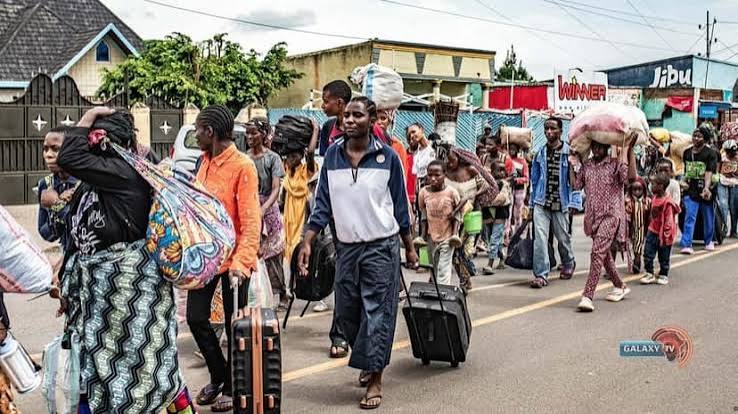
The announcement, made on Tuesday, comes amid renewed fighting between the group and Congolese government forces in Ituri Province, where thousands of civilians have reportedly fled towards the provincial capital.
In a statement, the CRP, led by Thomas Lubanga, said the decision was in line with commitments reached during discussions with Congolese authorities in Uganda.
The group also reaffirmed its stated commitment to the peace process facilitated by Uganda.
However, it accused the Congolese army and its allied forces of repeatedly attacking civilians and its positions. The allegations have not been independently established.
Renewed Fighting Displaces Civilians in Ituri
The announcement comes as insecurity worsens in the Djugu region of Ituri, where renewed clashes between armed fighters and government troops have reportedly forced thousands of residents to flee since the weekend.
The violence has disrupted commercial activities, schooling and road transportation in affected communities.
The situation has also raised concerns about the security of Bunia, the provincial capital, as displaced residents seek refuge from the fighting.
At the time of the report, the Congolese military had not issued a detailed statement on the latest clashes, leaving important questions about the circumstances of the fighting and the extent of the reported displacement unresolved.
Uganda-Mediated Talks Face a Test
The CRP's announcement follows efforts to revive dialogue between the armed group and the Congolese authorities.
On October 9, Ugandan President Yoweri Museveni hosted talks in Entebbe involving Lubanga and senior Congolese government and military officials.
The latest declaration appears to represent an attempt by the group to implement commitments made during those discussions. However, the practical implications will depend on whether the withdrawal takes place and whether fighting subsides.
The Congolese authorities have yet to provide a detailed public response to the announcement or clarify the arrangements for monitoring compliance.
Lubanga’s Controversial History
The CRP is led by Thomas Lubanga, a former militia leader whose record is closely associated with the conflict in eastern DRC.
In 2012, the International Criminal Court sentenced Lubanga to 14 years in prison after convicting him of war crimes involving the recruitment and use of children under the age of 15 in armed conflict.
He was released in March 2020 after serving his sentence.
His leadership of the CRP places the latest developments within a conflict marked by recurring armed violence, political tensions and prolonged humanitarian suffering.
Insecurity Compounds Ituri’s Humanitarian Crisis
Ituri has faced prolonged insecurity and has remained under a state of siege since May 2021, as authorities have struggled to contain armed violence.
The province is also among the areas affected by the Ebola outbreak declared in the DRC in May 2026.
Renewed fighting and population displacement threaten to complicate humanitarian operations, including efforts to provide healthcare and contain the disease.
Displaced families may face additional difficulties accessing medical services, clean water, food and other essential support. Continued insecurity can also restrict the movement of health workers and humanitarian organisations.
Peace Requires More Than a Declaration
The CRP's announcement offers a possible opening for de-escalation, but a declared withdrawal does not automatically guarantee security for affected communities.
The immediate priorities include ending hostilities, protecting civilians, ensuring safe passage for displaced residents and allowing humanitarian organisations to reach vulnerable populations.
The Congolese authorities and the armed group will also need to demonstrate that commitments made through dialogue can translate into verifiable action on the ground.
For residents of Ituri, the most meaningful measure of progress will be whether families can return home, children can resume schooling, businesses can reopen and humanitarian workers can operate without fear of renewed violence.
Wakirike Herald
The Voice of Wakirike People Everywhere
Written by
wk-admin
Comments
- Be the first to comment.