Bayelsa to Host Global Delta Governance Centre as Kiyaramo Commends Diri
By Wakirike Herald
The Convener of the Africa Blue Economy Roundtable (ABER), Dr Piriye Kiyaramo, has commended Bayelsa State Governor Douye Diri for approving the state as host of the proposed DeltaUnite Global Governance Centre.
The centre is expected to strengthen international cooperation on river delta governance, environmental protection and sustainable development, positioning Bayelsa for a greater role in global discussions on the future of vulnerable coastal and riverine communities.
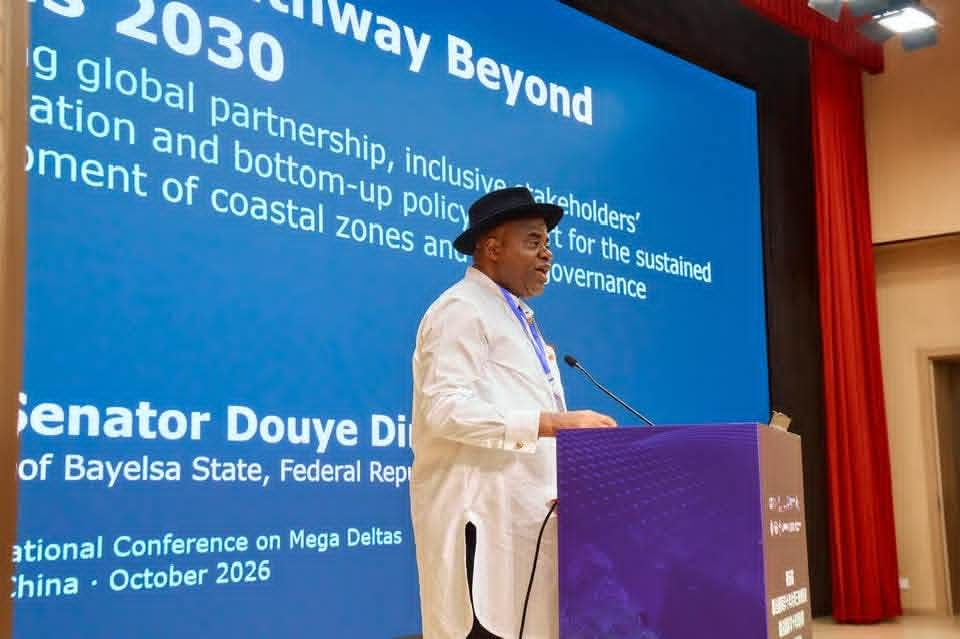
Kiyaramo gave the commendation in a statement following Diri’s announcement in Shanghai, China, during the opening of the Fifth United Nations Ocean Decade Conference on Mega Deltas.
The conference also marked the formal commencement of China-Africa Cooperation on River, Coastal Zone and Delta Governance at East China Normal University (ECNU).
Delegates from 23 countries attended the gathering, including United Nations officials, policymakers, researchers, environmental organisations and representatives of communities affected by delta-related challenges.
Yenagoa Positioned for International Delta Cooperation
Kiyaramo described the approval as an important development for Bayelsa, the wider Niger Delta and millions of people living in delta regions across Africa.
He said the proposed centre would provide opportunities for Bayelsa to contribute to international efforts to develop policies and practical solutions for communities facing environmental degradation, climate pressures and other challenges associated with river deltas.
“By approving the Global Governance Centre in Yenagoa, Diri has positioned Bayelsa as a key player in global delta governance,” Kiyaramo said.
He explained that the initiative aligned with ABER’s advocacy for a proposed United Nations Convention on River Deltas (UNCRD), which seeks to strengthen international cooperation on the protection and governance of delta ecosystems.
According to him, the Shanghai conference provides a scientific platform for examining the challenges confronting major deltas, while the proposed Yenagoa secretariat would support governance, policy coordination and collaboration between relevant stakeholders.
The proposal could provide Bayelsa with opportunities to attract research partnerships and encourage the exchange of expertise between African countries and international institutions.
China-Africa Partnership Could Support Blue Economy Development
Kiyaramo identified several areas in which Chinese expertise could contribute to sustainable development across African delta communities.
These include floating solar technology, mangrove restoration, blue carbon accounting and aquaculture.
He said cooperation in these areas could support environmental protection while creating opportunities for economic development in communities whose livelihoods depend on rivers, creeks, fisheries and coastal resources.
The ABER convener also highlighted the potential role of African institutions in ensuring that technological partnerships deliver practical benefits at community level.
“ECNU cannot work in 500 African delta communities. ABER can. We are the Pan-African delivery mechanism to ensure Chinese delta technology becomes community-owned African solutions,” he said.
The statement reflects ABER’s proposed approach of linking international research and technology with local participation, although the implementation arrangements and funding for the initiatives were not detailed.
Proposed Research and Community Development Initiatives
Kiyaramo said ABER’s Blue Council Africa would collaborate with the DeltaUnite centre to advance research, encourage local participation and promote economic opportunities in delta communities.
Among the proposed initiatives is an Africa-China inventory covering underwater minerals, blue carbon stocks and traditional delta knowledge.
Other plans include establishing Delta Living Laboratories in Yenagoa and other African communities. These facilities are intended to support research, test practical solutions and encourage collaboration between scientists, governments and local residents.
The proposed programmes would also focus on economic inclusion, particularly women's participation in cold-chain enterprises and youth involvement in data management.
Kiyaramo said a 50-50 parity framework was envisaged to promote gender inclusion in the initiatives.
If implemented effectively, such programmes could help strengthen local capacity and create opportunities for women and young people in emerging areas of the blue economy.
However, the extent of these benefits would depend on funding, institutional coordination, community participation and the eventual delivery of the proposed projects.
Community Participation Central to Delta Governance
Kiyaramo said Diri's support for the initiative aligned with the United Nations Sustainable Development Goals, particularly those relating to clean water and sanitation, climate action, life below water and global partnerships.
He stressed that communities directly affected by environmental challenges should participate in designing and implementing policies intended to protect their livelihoods and ecosystems.
The emphasis is particularly relevant to the Niger Delta, where communities depend heavily on fisheries, waterways and other coastal resources, while facing environmental pressures that can affect livelihoods and local economies.
Effective delta governance therefore requires more than international agreements and scientific research. It also depends on the involvement of residents, traditional institutions, local researchers and economic stakeholders in decisions affecting their communities.
Proposed UN Convention Reaches White Paper Stage
The ABER convener also commended Mr Freeman Oluowo, Coordinator of the African Centre for Climate Actions and Rural Development (ACCARD) and International Facilitator of DeltaUnite, for confirming that work on the proposed United Nations Convention on River Deltas had reached the White Paper stage.
The proposed convention is intended to advance international cooperation on the governance and protection of river delta regions.
Kiyaramo said Bayelsa's position within the Niger Delta, combined with ABER's presence in Yenagoa, offered opportunities to strengthen international engagement on sustainable delta development.
“Shanghai gave us the science. Yenagoa will now give the world the governance. Bayelsa is ready to lead,” he said.
Diri Highlights Need for Practical Solutions
Diri, who chaired the opening session of the Shanghai conference, said the proposed centre would provide a platform for communities, scientists, governments and investors to identify priorities and develop practical responses to challenges affecting delta regions.
The governor also linked his support for the initiative to the proposed United Nations Convention on River Deltas.
For Bayelsa, the proposed centre presents an opportunity to connect the state's environmental and development priorities with international research and policy discussions.
The next test will be translating the announcement into an operational institution with clear responsibilities, sustainable funding and measurable outcomes for communities across the Niger Delta and other delta regions in Africa.
Wakirike Herald
The Voice of Wakirike People Everywhere
Written by
wk-admin
Comments
- Be the first to comment.