African Fashion Confederation Calls for Common Policies to Boost Global Competitiveness
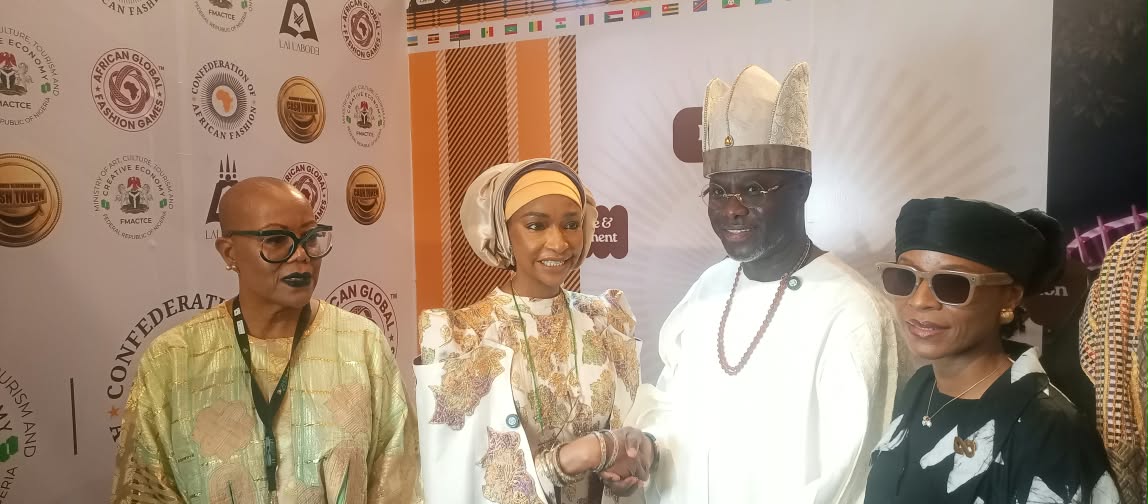
By Wakirike Herald
The Confederation of African Fashion (CAFA) has called on African countries to adopt common fashion policies and standards to strengthen the continent's fashion industry and improve its competitiveness in the global market.
CAFA President, Lai Labode, made the call at a news conference on Thursday during the ongoing Creative Africa Nexus (CANEX) WKND 2026 in Lagos.
He said Africa had abundant creative talent but lacked the coordinated structures, policies and production systems needed to translate its potential into a stronger international industry.
“Nigeria and the rest of Africa, we don’t have a shortage of talent.
“What Africa needs is structure,” Labode said.
CANEX, established by the African Export-Import Bank (Afreximbank), provides a platform for promoting and developing Africa's creative and cultural industries.
CAFA Seeks Unified Fashion Regulations
Labode said African countries needed common policies covering textile production, intellectual property rights, quality standards and logistics to create an integrated fashion industry capable of competing internationally.
He argued that the continent needed a unified framework rather than fragmented arrangements between English-speaking and French-speaking African countries.
The CAFA president also urged governments to support the intellectual property protocol under the African Continental Free Trade Area (AfCFTA), expressing concern over its limited adoption.
He said only two countries had signed the framework, calling for stronger government participation in protecting the creative rights of African designers.
According to him, CAFA is developing central platforms to help designers promote, market and export their products to international markets.
He identified investment in textile processing, intellectual property protection and the development of internationally competitive African fashion brands as important priorities.
Labode also disclosed plans to establish approximately 10 fashion houses across Africa, alongside proposed centres in New York, Paris, Milan and London to expand the international reach of African designers.
Liberia's Special Envoy Advocates Continental Collaboration
Also speaking, the Special Envoy in the Office of Liberia's President for Trade and Investments, Maisie Dunbar, called for greater cooperation among African countries to strengthen their respective fashion industries.
Dunbar said the proposed African Fashion Industry Growth Charter offered an opportunity for governments and industry stakeholders to work towards shared objectives.
She maintained that collective support for the charter would demonstrate Africa's determination to develop its fashion, textiles and creative industries.
“I think, by having it out there from the Federation of African Fashion, and all African countries combined and supporting it, it makes us look like we’re all united to grow our fashion, to grow our fabrics,” she said.
Dunbar noted that every African country possessed distinctive fabrics, cultural expressions and traditional designs that deserved recognition, promotion and protection.
Describing fashion as an important component of African heritage, she also commended Labode for his efforts to promote Nigerian fashion internationally.
Federal Government Highlights Intellectual Property Protection
The Minister of Arts, Culture, Tourism and the Creative Economy, Hannatu Musa Musawa, identified partnerships, intellectual property protection and capacity building as essential to developing Nigeria's fashion industry.
Musawa said the Federal Government was working with private-sector stakeholders to establish policies that would protect the intellectual property rights of fashion designers across the country.
She explained that stronger collaboration between government and industry players could support economic growth, expand business opportunities and create employment.
The minister also disclosed that the government was working towards establishing fashion hubs across Nigeria to provide training, infrastructure and production support for creative entrepreneurs.
“We need to partner with the private sector,” she said.
CAFA Plans Integrated African Fashion Production Chain
Earlier, CAFA Mission Coordinator, Reginald Ekeanyanwu, said the African Fashion Industry Growth Charter was designed to support an integrated production chain covering commercial cotton cultivation, textile processing, manufacturing, artisans and fashion designers.
He explained that the organisation also planned to introduce common quality standards, a trademark and an e-commerce marketplace to improve the visibility and commercial reach of African fashion products.
Ekeanyanwu said CAFA was engaging African governments and diplomatic missions to secure wider adoption of the proposed charter.
The initiative is intended to strengthen cooperation across the continent, improve access to international markets and position African fashion as a more organised and competitive global industry.
For Africa's fashion sector, the central challenge is no longer simply the availability of creative talent. It is building the industrial capacity, regulatory environment, intellectual property safeguards and commercial networks that can turn that talent into lasting economic opportunities.
Wakirike Herald
The Voice of Wakirike People Everywhere
Written by
wk-admin
Comments
- Be the first to comment.