₦66 Per Litre Petrol Discount Fails to Ease Transport Costs, Abuja Motorists Say
By Wakirike Herald
Several motorists who spoke to the News Agency of Nigeria (NAN) in Abuja on Wednesday, November 18, 2026, said difficulties accessing the Nigerian National Petroleum Company Limited (NNPCL) mobile application prevented many Nigerians from benefiting from the intervention.
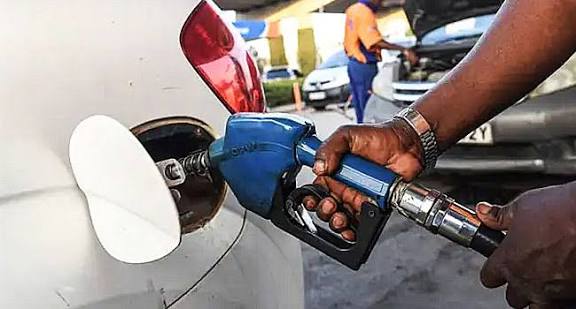
The Federal Government introduced the 30-day discount programme on October 31, with eligible motorists able to purchase petrol at reduced prices through NNPCL retail outlets using the company's mobile application.
The Minister of Finance and Coordinating Minister of the Economy, Mr Taiwo Oyedele, had clarified that the arrangement was not a return to petrol subsidy. He also indicated that public transport operators would receive priority under the initiative.
However, motorists say the programme's implementation challenges and limited impact on transport fares have weakened its effectiveness.
App and Network Challenges Limit Access
Some beneficiaries acknowledged that the discount provided savings on fuel purchases but complained about long queues and difficulties using the application.
A Jabi resident, Mr Kingsley Okachi, commended the Federal Government for introducing the intervention, although he said accessing discounted petrol sometimes involved lengthy waiting periods.
Another motorist, Mr Abdulrahim Malik, said network challenges prevented many Nigerians from benefiting.
He disclosed that he successfully downloaded the application and purchased petrol at ₦1,339 per litre after completing the required procedures.
However, Mr Dele Babafemi, a resident of Bwari, said he could not access the application and therefore missed out on the discount.
The difficulties, according to motorists, raise concerns about the accessibility of a programme that depends on digital registration and successful transactions.
Commuters Still Struggle with High Transport Fares
Beyond the challenges of accessing discounted petrol, motorists and commuters expressed concern that the intervention had not produced noticeable reductions in transportation costs.
Mr Chike Agwu, a resident of Dei-Dei, said transport fares remained high despite the reduction in petrol prices.
He explained that workers continued to struggle with the cost of daily transportation, adding that the discount had made little difference to their financial circumstances.
Agwu said commuters were yet to experience any meaningful relief from rising transport expenses.
Similarly, Mr Abubakar Yahaya of Dutse called for a comprehensive review of the programme and additional measures to reduce transportation costs.
He said economic hardship had forced some workers to reduce the number of days they travelled to their workplaces because of the rising cost of transportation.
Economist Questions Sustainability of Intervention
An economist and public affairs analyst, Dr Aliyu Ilias, described the initiative as cumbersome, particularly for commercial transport operators.
Ilias said he personally activated the application to understand how the programme worked but found the process too complicated for the average commercial driver.
He questioned how authorities intended to ensure that savings from discounted petrol would translate into lower fares for commuters.
According to him, a reduction in fuel prices should produce measurable benefits for passengers, but effective monitoring and enforcement would be necessary to achieve that objective.
He also warned that without proper oversight, the programme risked becoming more of a publicity exercise than a practical intervention for ordinary Nigerians.
Ilias urged the Federal Government to consider Compressed Natural Gas (CNG) as part of a broader strategy to strengthen energy security and reduce dependence on short-term interventions.
He argued that affordable transportation was essential to reducing the cost of food and other basic commodities because transportation expenses influence the movement of agricultural produce from farms to markets.
Another economist, Mr Gabriel Oyetola, also called on the government to explore alternative measures to reduce transportation costs and ease the economic burden on citizens.
Questions Over the Programme's Wider Impact
The concerns raised by motorists highlight an important gap between reducing the price of petrol and lowering the overall cost of transportation.
For the intervention to deliver meaningful benefits, authorities may need to address accessibility challenges, simplify the application process and establish transparent mechanisms for monitoring participating transport operators.
There is also a need to clarify how the promised priority for public transport operators is being implemented and how its benefits are reaching commuters.
Ultimately, the effectiveness of the 30-day programme will depend not simply on the amount deducted from petrol prices but on whether ordinary Nigerians experience measurable reductions in their daily transportation expenses.
Wakirike Herald
The Voice of Wakirike People Everywhere
Written by
wk-admin
Comments
- Be the first to comment.