2027 Elections: Disability Rights Group Demands Clear Inclusion Plans from Political Parties
By Wakirike Herald
ABUJA, November 24, 2026 – The Joint National Association of Persons with Disabilities (JONAPWD) has challenged political parties and candidates preparing for Nigeria’s 2027 general elections to present clear and measurable plans for disability inclusion.
The association said persons with disabilities (PWDs) must be recognised not merely as voters or symbols of political diversity, but as active participants in governance, policy development and public leadership.
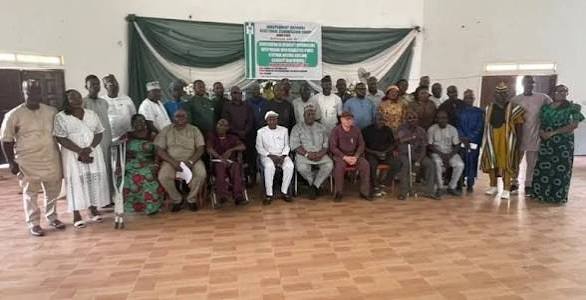
Its National Chairman, Mr Abdullahi Aliyu, made the call on Tuesday in Abuja during the Conference of Stakeholders on Disability Inclusion in Nigeria (COSDIN 3.0).
Aliyu urged political parties and aspirants seeking the support of disability communities to engage directly with them and explain what they intend to do to advance their rights and participation.
JONAPWD rejects token representation
Aliyu criticised what he described as the practice of selecting a few persons with disabilities to create an appearance of inclusion without giving them meaningful opportunities to influence decisions.
He insisted that disability inclusion should extend to opportunities to contest elections, occupy elective and appointive positions, participate in policy formulation and contribute to decisions affecting their communities.
He urged political parties to move beyond symbolic gestures and demonstrate their commitment through practical proposals.
The association also called on persons with disabilities and their organisations to take a stronger role in shaping advocacy priorities, rather than allowing others to dominate discussions about their rights and welfare.
Association demands ₦2 billion annual budget
Beyond political representation, JONAPWD called on the Federal Government to increase the annual budgetary allocation to the National Commission for Persons with Disabilities (NCPWD) to at least ₦2 billion.
Aliyu said adequate funding, institutional capacity and accountability were essential to implementing the Discrimination Against Persons with Disabilities (Prohibition) Act, 2018.
He warned that establishing disability commissions at federal and state levels would have limited impact without the financial resources and operational capacity needed to fulfil their statutory responsibilities.
The association wants disability inclusion to move from policy statements to measurable improvements in education, employment, leadership, public services and political participation.
Development partners stress enforcement of disability rights
Mr Omar Alihashi, Head of Political Affairs at the Canadian High Commission in Nigeria, said meaningful disability inclusion was important to the country's democratic, economic and social development.
He described persons with disabilities as voters, entrepreneurs, professionals and potential public office holders whose experiences and leadership should inform public decisions.
Alihashi stressed that implementation of the 2018 Disability Act must produce practical results through accessible institutions, effective enforcement and accountability.
He also highlighted Canada's support for Nigerian organisations working on disability rights, the prevention of gender-based violence and democratic participation through initiatives supported by its Fund for Local Initiatives.
Civil society calls for measurable outcomes
The Convener of the Nigeria Civil Society Situation Room, Dr Yunusa Ya’u, said the establishment of disability commissions in several states was a positive step but did not automatically guarantee meaningful inclusion.
He observed that persons with disabilities continued to encounter barriers in classrooms, decision-making institutions and other public spaces.
Ya’u said the 2027 elections offered an opportunity for disability organisations to develop a common inclusion agenda and use it to engage political parties and candidates.
He stressed that political participation was necessary to influence the policies and implementation decisions that shape the lives of persons with disabilities.
ECOWAS highlights regional disability framework
Representing the President of the ECOWAS Commission, Programme Officer for Social Affairs, Mrs Abimbola Oyelohunnu, outlined regional efforts to strengthen disability inclusion through policy development, improved data collection and capacity building.
She said ECOWAS adopted its Regional Action Plan on Disability Inclusion in 2024 to integrate disability considerations into its programmes and institutional activities.
According to her, the regional organisation has also supported the provision of assistive devices to approximately 1,000 children with disabilities in two member states.
She identified technology, staff training, early identification of disabilities among children and recognition of caregivers within social protection programmes as areas requiring greater attention.
Oyelohunnu also called for the care economy to be recognised within social protection policies, noting that many people caring for children with disabilities remain unrecognised and unsupported.
Economic empowerment linked to political participation
The Country Director of the Westminster Foundation for Democracy in Nigeria, Mr Adebowale Olorunmola, said economic and political inclusion were closely connected.
He argued that economic empowerment could expand the ability of persons with disabilities to participate in public life and contribute to national development.
Olorunmola also commended JONAPWD for sustaining the stakeholders’ conference and developing a 10-year strategic plan intended to monitor progress, strengthen accountability and support the implementation of disability inclusion commitments.
The West Africa Programme Manager of the Disability Rights Fund, Mr Theophilus Odaudu, urged participants to translate discussions and policy commitments into practical and measurable actions.
2027 presents an opportunity for disability inclusion
The conference, themed “Beyond Participation: Advancing Disability Leadership and Accountable Governance in Nigeria”, brought together government representatives, development partners and disability rights advocates.
Its central message was that inclusion must extend beyond access to voting. It must also encompass political leadership, accessible public institutions, economic opportunities and the ability to influence decisions.
As political parties prepare for the 2027 elections, disability communities are demanding specific commitments that can be assessed after the polls.
For Nigeria, the test will be whether political promises, existing laws and institutional frameworks translate into equal opportunities, stronger representation and practical improvements in the lives of persons with disabilities.
Wakirike Herald
The Voice of Wakirike People Everywhere
Written by
wk-admin
Comments
- Be the first to comment.